




Metrics
About the project
What is Bittensor, once the TAO ticker is set aside? A blockchain network that pays its token to whoever produces useful AI work: answers from a model, rented GPU time, storage, predictions. The work is split into subnets, each a separate contest with its own task and scoring code, and the chain has room for 128 of them as of October 2026. The project’s website calls the result a “decentralized machine intelligence network”.
Under it runs Subtensor, a chain built with Substrate, the toolkit behind Polkadot. A block lands every 12 seconds and mints new TAO, which the protocol shares out first between subnets, then inside each subnet between those who did the work and those who checked it.
Price, supply card and the basics of buying are on our Bittensor (TAO) coin page. This page is about the machinery and the people: how a subnet decides who gets paid, who can change the rules, what broke between 2024 and 2026, and why 2026 reopened the question of control. In February both co-founders gave up their executive titles, according to community outlets. In April one of the best-known subnet teams walked out and called the network’s decentralisation a show.
What is Bittensor in practice: subnets, miners and validators
The documentation sums up a subnet as a place that produces a digital commodity, such as compute, inference, storage or prediction. Three roles meet there. The owner registers the subnet and writes the task, plus the code that grades the answers. Miners do the task: serve a model, rent out a graphics card, train part of a network. Validators send work to miners, grade what comes back and publish weights saying how much each miner deserves.
The weak spot is obvious. A validator could grade its own miners generously and pocket the rewards.
Yuma Consensus is the protocol’s answer. It compares each validator’s weights with what the stake-weighted majority reports, clips any weight above the level backed by a “kappa” share of stake (about half, by default), and pays more to validators whose grades match that consensus. A small group voting for itself sees its weights cut and earns less. Co-founder Jacob Steeves, known as Const, puts it bluntly on the project’s about page: “Yuma Consensus is the central processing unit (CPU) of Bittensor.”
Owners can switch it off. The docs describe Null consensus, an alternative in which only one validator, the one with the most stake, may set weights. It trades the cross-checking of Yuma for simplicity, and it lifts the cap on participants: subnets get a budget of 2,500 slots under Null against 256 under Yuma.
dTAO: one token per subnet
Since February 2025 (first block 4,920,351, according to the docs), every subnet has its own token, called alpha, and a pool that pairs it with TAO. Staking TAO into a subnet means buying its alpha through that pool. The upgrade, dynamic TAO or dTAO, turned subnets into something close to listed assets, each with a market price.
The rule that decides how much new TAO each subnet gets has not sat still. At launch it followed pool prices. In November 2025 a model based on net stake flows, Taoflow, took over, according to several ecosystem guides. The docs read on 26 October 2026 describe price averages again, discounted for miner rewards that owners route to themselves and passed through an “emission gate” that thins out the weakest subnets; the gate’s midpoint is, by default, the 32nd-largest share.
Each alpha token is capped at 21 million units. Inside a subnet, every owner used to split new alpha the same way: 18% to the owner, 41% to miners, 41% to validators and the people staking with them.
Etao: subnet owners choose the split
Etao changed that. Shipped in runtime versions 480 and 481, it lets an owner reset the split with one transaction, inside fixed limits: between 0% and 33% for the owner, at most 50% for validators, at least 33% for miners. Holders who stake TAO on the root network, without picking a subnet, keep their baseline share, paid before the split. The project’s GitHub release carrying both versions was published on 19 October 2026; secondary reports, including CoinMarketCap’s update page, date the switch to 20 October.
Root carries a governance-set parameter, TaoWeight, fixed at 0.18 on mainnet. With the default split, the Etao release note puts root’s cut at about 5.4% of a subnet’s emission, taken from the validators’ slot.
TAO supply: a 21 million cap and a halving set by issuance
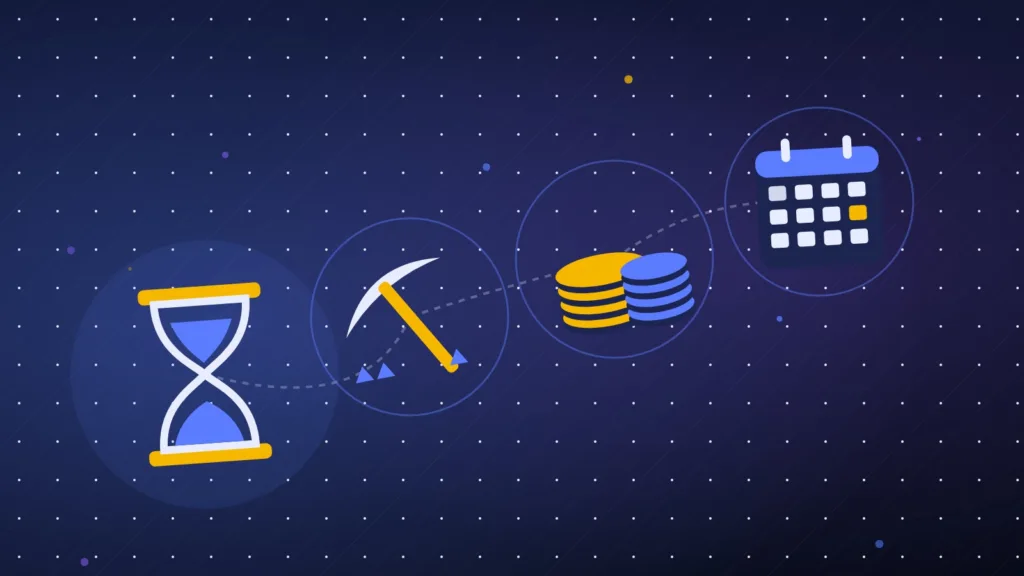
TAO has a hard cap of 21 million coins, like bitcoin, and its emission also halves in steps. The trigger differs. A bitcoin halving comes every 210,000 blocks. TAO’s comes when total issuance crosses the midpoint of what is left to issue: 10.5 million first, then 15.75 million, and so on. TAO that the protocol recycles, from registration burns and transaction fees, is subtracted from issuance and can be minted again, which pushes each halving further out.
The first halving happened in December 2025. The docs, read on 26 October 2026, say emission is now 0.5 TAO per block, roughly 3,600 TAO a day. Neither the docs nor Taostats give a day or a block: Grayscale Research had expected it as soon as 14 December, and Forklog reported it done on 15 December. Because a TAO halving also halves what flows into each subnet pool, alpha issuance slowed at the same moment.
The next step comes at 15.75 million TAO issued and cuts emission to 0.25 TAO per block, about 1,800 a day. No official date exists. TAO Media wrote “around late 2029” in an article of 1 August 2026, and called it a projection.
Circulating supply depends on who counts. Grayscale’s registration statement of 23 October 2026 gives about 10.8 million TAO “as of the date of this prospectus”; CoinGecko showed 11.34 million on 26 October. Neither explains the gap. The same filing says about 7.5 million TAO, some 64% of circulating supply, was staked with roughly 143 active validators on 30 September 2026. For how supply rules shape a coin in general, see our tokenomics explainer.
There was no ICO: TAO has been mined since the start. That did not make the start even. According to Grayscale’s filing, the Opentensor Foundation was one of the only miners until May 2021 and one of a small number of validators until about October 2023. It also owned the only subnet from April to October 2023, collecting 18% of all emissions over that period, and “may still own a significant amount of all TAO”.
The chain still runs on Proof of Authority
Decentralisation meets a hard limit at the chain level. The chain consensus page of the docs says Subtensor “currently uses Proof of Authority”. Aura produces blocks, GRANDPA finalises them, and only approved authorities may write or finalise blocks; running a node or holding TAO does not get anyone into that set, which changes through privileged on-chain administration. Grayscale’s filing adds that the Opentensor Foundation is the network’s administrator, the only party that can admit nodes, and owns or controls a majority of them.
The docs plan a move to Nominated Proof of Stake, the stake-backed model explained in our proof of stake glossary entry, “within roughly the next year”. They call that a planning estimate, not a fixed activation date. An EVM layer runs on the chain (chain ID 964), but it holds little: DefiLlama counted about $29,000 locked there on 26 October 2026.
Bittensor history: Kusanagi, Nakamoto, Finney and the 2026 turn
The early record is thin, and most of it comes from Grayscale’s filing. The opentensor GitHub organisation dates from February 2020. A first version of the network, codenamed Kusanagi, was halted in May 2021, when the current Proof of Authority model was adopted. Its code was reworked and relaunched in November 2021 as Nakamoto, the date the project’s academic paper gives for the official launch. That paper, “Incentivizing Intelligence: The Bittensor Approach”, lists Steeves and Ala Shaabana among its authors. A separate whitepaper is signed by Yuma Rao, a pseudonym.
Finney, the version running today, launched in March 2023 with subnets. From February 2023 to December 2024 Bittensor also held a Polkadot parachain slot, won in auction 36 according to The Block Research, while running as its own chain.
March 2024 brought the first outage on record: an update removed code the chain needed and blocks stopped, until a fix began restoring the network within an hour, the filing says.
Then came the theft of 2 July 2024. A malicious release of the Bittensor Python package, version 6.12.2, sent decrypted coldkeys to an attacker; users who had installed it between 22 and 29 May and then staked, delegated or transferred were exposed. About 32,000 TAO, then worth around $8 million, left victims’ wallets, The Block reported. The draining began at 19:06 UTC. Fifteen minutes after abnormal transfers were spotted, validators went behind a firewall in “safe mode”: blocks kept coming, transfers stopped. The docs date safe mode from 2 to 12 July 2024. The Block said the chain itself was not affected; how the poisoned release reached PyPI was not explained in the reports we could read.
In May 2025, per the filing, block production and emissions paused for several hours after a surge in activity strained the chain’s syncing. dTAO had gone live that February. Taoflow followed in November, the first halving in December, and on 30 December 2025 Grayscale filed to turn its Bittensor trust into an exchange-traded fund.
2026 was the year of departures. The founders stepped back in February, a wallet package was backdoored in March, Covenant AI left in April. In a Discord message reported by HackerNoon on 8 July, Const said subnets with no miner distribution or no working code would stop receiving emissions, with a review every Monday; HackerNoon put the list at more than 50 subnets. The stand-alone SDK repository was archived after a last commit on 10 July, and work moved into one monorepo. Etao followed in October, and Grayscale’s second amendment on 23 October.
Who runs Bittensor: two foundation names and a sudo key
On 12 and 13 February 2026, according to TAO Media and SimplyTao, Steeves stepped down as chief executive of the Opentensor Foundation and Shaabana, the co-founder known as ShibShib, stepped aside from his executive role as chief operating officer. Neither left the project. SimplyTao quoted Steeves saying he would keep doing the work, “just not with the same legal authority”. Both are community outlets, and neither links a primary announcement that Coindaro could open. Grayscale’s filing of 23 October 2026 still calls Steeves CEO and Shaabana COO of the foundation.
A new structure was promised at the time. TAO Media described two houses, one for validators and one for subnet owners, and a three-person Triumvirate drawn by blind random vote from roughly the top 25 subnet owners and top 12 validators, rotating every six to eight months. The timetable: the full governance system by the end of the first quarter, node decentralisation in six months, in three phases ending with any operator able to run a node.
The docs read on 26 October 2026 describe something else. The old senate vote has been removed from the runtime. Privileged operations, runtime upgrades included, “are dispatched through sudo, held by a multisig of Rao Foundation keys”. The Triumvirate and Senate proxy types are deprecated and deny all calls. The release-process page adds that a mainnet upgrade waits for “the triumvirate” to approve it, two signatures out of three, out-of-band. Who those three are, and whether they were chosen the way February promised, the docs do not say. Block production is still Proof of Authority, so on the project’s own account neither February deadline has been met.
Which foundation is in charge is itself unclear. The code moved from the opentensor GitHub organisation to one called RaoFoundation; the old subtensor address redirects there, and the monorepo now holds the chain, the Python SDK, the command-line tool, the docs and the website. Const’s essay on bittensor.com is signed “core dev @ Rao Foundation”. Grayscale’s filing still speaks of the Opentensor Foundation, which it calls an American non-profit. Coindaro found no public statement on whether one replaced the other or who leads either today.
The filing lists governance “by voluntary consensus and open competition” among the factors that could hurt TAO, and warns that Yuma Consensus, Proof of Authority and dTAO “may not function as intended”.
Covenant AI leaves, Steeves denies
On 9 April 2026 Covenant AI announced it was leaving. It ran three subnets, Templar (subnet 3, a decentralised model-training run), Basilica and Grail, which FalconX counted among the 15 largest by market value. Its founder, Sam Dare, called Bittensor’s governance “decentralization theatre”. According to The Block and Cointelegraph, he said Steeves kept effective control of the three-person upgrade multisig and deployed changes on his own, and accused him of suspending emissions to Covenant’s subnets, removing the team’s moderation rights, deprecating its subnet infrastructure and applying pressure through visible token sales.
Steeves answered on X on 10 April: “I do not have the ability to suspend emissions.” He said he had no privilege beyond those of any TAO holder, and that he had sold some alpha on the three subnets because they were not running and burned nearly all their emissions, for less than 1% of what he had invested in Dare’s teams. He did not take up the multisig claim, The Block noted. TAO fell 15% on 9 April, from $338 to a low of $285 within two hours, The Block reported; Cointelegraph counted about 18% over 24 hours.
No independent party has settled the dispute. The documented part is narrower: a sudo multisig of Rao Foundation keys can upgrade the chain, and its signers are not published.
Security record: two poisoned packages and no public audit
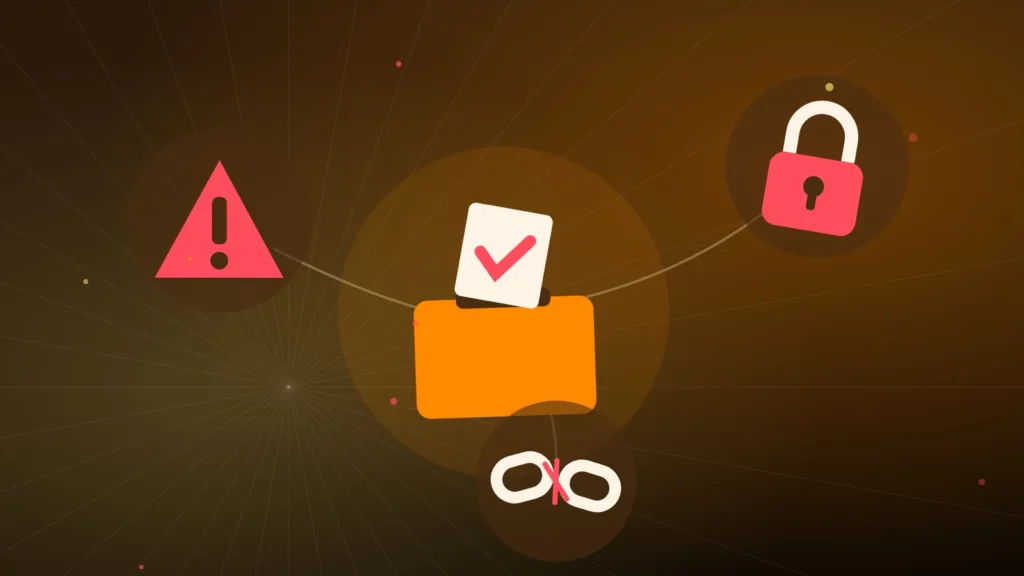
The second package attack started on 15 March 2026. Version 4.0.2 of bittensor-wallet went up on PyPI around 05:06 UTC and was pulled around 12:06 UTC on 17 March, about 48 hours later. StepSecurity found that a native Rust extension hooked keyfile decryption and shipped keys out over HTTPS to lookalike domains, with raw TLS and DNS tunnelling as fallbacks, and that the release workflow had been edited to drop its build provenance attestation. The firm’s advice: “Any coldkey or hotkey whose keyfile was decrypted while 4.0.2 was installed should be considered compromised.” Version 4.0.1 is the clean one. No count of victims or losses has been published.
Both big incidents came through Python packages that people install to manage keys, not through the chain code. For a TAO holder, the wallet software on the computer is the exposed part, and the docs now advise pinning exact versions or installing from a signed tag. Our private key explainer covers why a leaked key means lost funds.
On audits the answer is short: Coindaro found no public report by an independent security firm on Subtensor, its runtime or the SDK, and DefiLlama lists none. After the 2024 theft the foundation promised more frequent outside audits; no such report has surfaced that we could find. The monorepo runs GitHub’s CodeQL scanning, and the docs include an “extrinsic coverage audit” of the EVM precompiles, but both are the project’s own work.
Funding and who holds TAO
Bittensor has no venture round on record, and DefiLlama lists none. The TAO that exists was mined. Big holders came in through the market. Fortune reported in April 2024, citing people familiar with the investments, that Polychain held about $200 million of TAO, DCG about $100 million and dao5 about $50 million, and that Polychain had incubated Bittensor in 2019. Grayscale’s filing says DCG, its own parent, is reported to be one of the largest holders, and that the largest wallets are believed to hold “a significant percentage” of circulating TAO, without a figure.
Fresh money has gone into companies around the network rather than into the protocol. xTAO raised $22.8 million in July 2025 from a group including DCG, Animoca Brands and FalconX before listing on the TSX Venture Exchange, The Block reported.
Bittensor ETF filing and other regulated products
Grayscale’s Bittensor Trust is quoted on the OTCQX market under the ticker GTAO. Its registration statement, first filed on 30 December 2025 and amended on 2 April 2026, was amended again on 23 October 2026. The filing would rename the trust Grayscale Bittensor ETF and list it on NYSE Arca under the same ticker, with BitGo Bank & Trust as primary custodian and Coinbase Custody as additional custodian. The trust may not stake its TAO until a tax-related condition is met. We covered the details in our report on the Grayscale Bittensor ETF amendment. No trading date is set.
In Europe, Safello’s Bittensor Staked TAO product (ticker STAO) has traded on the SIX Swiss Exchange since 19 November 2025, with a 1.49% management fee, and Safello says it is also listed on Nasdaq Stockholm and, since 2 June 2026, Euronext Paris. Two listed companies hold TAO on their books: TAO Synergies on the Nasdaq and xTAO in Canada. Holders who stake directly earn a share of emissions; our staking explainer covers the general mechanics.
Bittensor subnets to know in 2026
A handful of subnets draw most of the attention. These lines describe what each does, not what it earns.
- Chutes (subnet 64) runs serverless compute for open-source AI models and was the largest subnet by market value in FalconX’s report of 13 May 2026.
- Targon (subnet 4), from Manifold Labs, sells GPU compute inside confidential Intel TDX environments.
- Ridges (subnet 62) pays miners to build software agents that fix bugs and write tests.
- Gradients (subnet 56) is aimed at training models rather than serving them.
- Templar (subnet 3) ran decentralised training until its team, Covenant AI, left in April 2026.
Activity is concentrated. Pine Analytics counted, on 23 March 2026, that the ten largest subnets took about 56% of emissions. FalconX, citing Taostats, found 67 of 128 subnets burning 99% or more of their incentives on 16 April 2026. DefiLlama tracked about $453 million of liquidity in the dTAO subnet pools on 26 October 2026.
Bittensor risks and our score of 4 out of 5
Coindaro rates Bittensor 4 on a scale of 1 (lowest risk) to 5. The network runs and pays out, and it has come back from two thefts. But one organisation still decides who produces blocks, upgrades go through keys whose holders are not public, and the economics lean on new issuance far more than on paying customers.
- Control sits with a small group: Proof of Authority, node admission by the foundation, upgrades through a sudo multisig, and a February 2026 governance plan the docs do not show in force.
- The software supply chain has failed twice, in July 2024 and March 2026, and no independent audit report is public.
- Rewards outrun revenue: Pine Analytics estimated in March 2026 that Chutes received about 14.4% of emissions, roughly $52 million a year, against $1.3 million to $2.4 million of outside revenue, the higher figure self-reported and neither audited.
- The rules that move money between subnets keep changing: prices, then flows in November 2025, then prices again, then owner-set splits in October 2026.
- The chain has stopped before: for up to an hour in March 2024, ten days of safe mode in July 2024, several hours in May 2025.
- TAO trades with AI sentiment: 24/7 Wall St tied its slide of late October 2026 to a sell-off in AI stocks after 22 October.
Grayscale’s own prospectus calls Yuma Consensus and dTAO “still experimental”.
What to watch next
Nominated Proof of Stake is the first test: the docs give it roughly a year from October 2026, as an estimate. The second is whether any elected body takes over from the sudo key, and whether the names behind the upgrade signatures become public.
The third is conviction. When Covenant left, Steeves answered indirectly by talking about lock-based subnet ownership, The Block reported. The docs now describe that mechanism: locked alpha builds a score that cannot be spent, keeps earning rewards, and can hand a subnet to a new owner once one hotkey holds enough of it and the subnet is more than a year old. Whether a subnet has changed hands that way yet, Coindaro could not confirm.
Further out sit a trading date for Grayscale’s ETF, which has none, and the second halving at 15.75 million TAO issued, projected by TAO Media for around late 2029.
Strengths and points of vigilance
Strengths
- Yuma Consensus clips weights that a stake majority does not back, so a small validator group cannot simply vote its own miners up.
- Supply is capped at 21 million TAO, and the first halving, in December 2025, cut emission to 0.5 TAO per block.
- There was no ICO and no venture round on record: TAO has entered circulation through mining since launch.
- Since Etao in October 2026, subnet owners can tune the reward split within fixed limits, and Null consensus allows up to 2,500 participants per subnet.
- Regulated access is growing: a Grayscale trust with an ETF filing in the US and a staked TAO product on SIX, Nasdaq Stockholm and Euronext Paris.
Points of vigilance
- The chain still runs on Proof of Authority, the Opentensor Foundation admits nodes, and upgrades go through a sudo multisig whose signers are not named.
- Two compromised wallet packages, in July 2024 and March 2026, and no public audit by an independent security firm.
- Emissions far exceed outside revenue: Pine Analytics put Chutes at about $52 million a year of rewards against at most $2.4 million of revenue in March 2026.
- The rules that share emission between subnets changed three times between November 2025 and October 2026.
- The governance plan of February 2026 had not replaced the sudo key by October 2026, and Covenant AI left calling the setup "decentralization theatre", which Steeves denies.
Where to trade
Where to trade
Centralised exchanges
- Visit
- Coinbase review 8.0/10ACH transfer (US) · Apple Pay / Google Pay · Bank card · Crypto deposit · PayPal · SEPA transfer · Wire transferVisit
- Kraken review 8.2/10ACH transfer (US) · Apple Pay / Google Pay · Bank card · Crypto deposit · SEPA transfer · Wire transferVisit
- Visit
- Visit
Some links are affiliate links: the site may earn a commission at no extra cost to you. Ranking by our editorial rating, not by commission.
Team
- Jacob Steeves (Const) Co-founder; stepped down as CEO of the Opentensor Foundation in February 2026 according to SimplyTao and TAO Media (Grayscale's S-1/A of 23 October 2026 still lists him as CEO); signs "core dev @ Rao Foundation" on bittensor.com
- Ala Shaabana (ShibShib) Co-founder; stepped aside from his executive role as COO of the Opentensor Foundation in February 2026 according to SimplyTao (Grayscale's S-1/A of 23 October 2026 still lists him as COO)
Roadmap
- 2021-05La prima rete, Kusanagi, viene fermata; si adotta la Proof of Authority (Grayscale S-1/A)Done
- 2021-11Rilancio come Nakamoto, la data di lancio ufficiale indicata dall'articolo accademico del progettoDone
- 2023-03Finney, la rete attuale, parte con le subnetDone
- 2025-02dTAO entra in funzione: un token alpha e un pool per subnetDone
- 2025-12Primo halving: l'emissione scende a 0,5 TAO per blocco (il giorno esatto non è indicato da documentazione e Taostats)Done
- 2026-02I fondatori lasciano i ruoli esecutivi, secondo testate della community; annunciati nuovo piano di governance e per i nodiDone
- Q1 2026Sistema di governance promesso con un Triumvirato estratto a sorte: il 26 ottobre 2026 la documentazione mostra ancora un multisig sudo
- 2026-07Repository dell'SDK archiviato; lo sviluppo passa al monorepo RaoFoundation/subtensorDone
- 2026-08Apertura promessa della produzione dei blocchi a operatori indipendenti (sei mesi da febbraio): la documentazione descrive ancora la Proof of Authority
- 2026-10Etao (runtime 480 e 481): i proprietari di subnet fissano la propria ripartizione delle ricompenseDone
- 2027Passaggio dalla Proof of Authority alla Nominated Proof of Stake, «entro circa un anno» secondo la documentazione (stima di pianificazione)
- 2029Secondo halving a 15,75 milioni di TAO emessi, proiettato verso fine 2029 da TAO Media (nessuna data ufficiale)
Crypto-assets are volatile and you can lose all the money you invest. Nothing published on Coindaro is investment advice.
Related

Project
Tydro: the Aave-based lender on Kraken’s Ink, where four wallets hold four fifths of the deposits
Active
Tydro explained: the Aave V3 lending market on Kraken's Ink, its fixed-rate kBTC loans, why TVL quadrupled in…

Project
Variational Omni: zero-fee perps with one in-house market maker behind every trade, and what makes it risky
Active Arbitrum
Variational Omni explained: zero-fee perps on Arbitrum against one market maker, the planned VAR airdrop, who controls it,…

Project
Midnight (NIGHT): private smart contracts paid for in DUST, 13 chosen nodes and half the supply in two related hands
Active Cardano
Midnight crypto explained: how the NIGHT token generates DUST to pay fees, who runs the 13 federated nodes,…

Project
Lighter (LIT): zero-fee perpetuals on an Ethereum zk-rollup, a $10.4M theft through one trader’s API keys, and what makes it risky
Active Ethereum
Lighter exchange explained: zero-fee perps on an Ethereum zk-rollup, the LIT token, who controls upgrades, and the $10.4M…

Project
Safe (SAFE): the multisig standard behind $57 billion, and why its add-on modules make it risky
Active Arbitrum, Avalanche, Base, BNB Chain, Ethereum, Optimism, Polygon
Safe, formerly Gnosis Safe, explained: how the multisig wallet works, the SAFE token, the Bybit theft and the…
Project
Kava (KAVA): the Cosmos and EVM chain whose own lender lost 53.9 million KAVA, and what makes it risky
Active
Kava crypto (KAVA) explained: the Cosmos and EVM chain, zero inflation, validators, the Kava Lend exploit of 53.9…