On 11 March 2021, Christie’s closed an online auction at $69,346,250 for “Everydays: The First 5000 Days”, a digital artwork by the artist known as Beeple, as CoinDesk reported that day. The buyer could not hang the work on a wall. Anyone with a browser could, and still can, save the same picture to a hard drive.
So what is an NFT, and what did that buyer get for the money? The short answer: one line in a ledger kept by a program on a blockchain, saying that token number N of a given contract belongs to a given address. The picture, the right to use it, the perks and the price all sit outside that line. They depend on a link, a licence, a company or a market.
Five years on, trading has shrunk to a fraction of its peak and several brands have shut their NFT programmes, while ticket presales, internet names and game items still run on the same mechanism. The previous lesson of this path, on what Web3 promises and where it falls short, ended on the question of what is really stored on a chain. For NFTs, the answer has four layers.
What is an NFT: one line in a contract’s ledger
NFT stands for non-fungible token. Fungible things are interchangeable: one dollar bill is as good as another, and so is one unit of a stablecoin. Our lesson on coins and tokens covers those. A non-fungible token is the opposite case, where it matters which one you hold: seat 14B is not seat 31F, even if both are tickets for the same flight.
On Ethereum, an NFT lives inside a smart contract, a program that keeps a table. Each row of the table links a number, the token ID, to the address of its owner. Ask the contract who owns token 4,212 and its ownerOf function answers with one address. Transfer the token and the row changes. Nothing else moves.
The standard that fixed this design, ERC-721, puts it in two sentences. “Every NFT is identified by a unique uint256 ID inside the ERC-721 smart contract,” the text reads, and the pair made of the contract address and the token ID is then a “globally unique and fully-qualified identifier for a specific asset on an Ethereum chain”. That pair is the real name of an NFT.
ERC-721 and ERC-1155, the two Ethereum standards
ERC-721 was created on 24 January 2018 by William Entriken, Dieter Shirley, Jacob Evans and Nastassia Sachs. Its own summary calls it “a standard interface for non-fungible tokens, also known as deeds”. The authors had property titles in mind as much as pictures: NFTs, they wrote, “can represent ownership over digital or physical assets”.
A second standard, ERC-1155, followed on 17 June 2018. Three of its six authors signed with addresses at Enjin and Horizon Games, two gaming firms, and it shows. One contract can manage many token types at once, fungible or not: 10,000 identical potions and a single legendary sword can sit in the same contract and move in one transaction.
Solana and compressed NFTs
Other chains do the same job with different plumbing. On Solana, the Metaplex project maintains NFT standards, and one of them, the compressed NFT, stretches the idea of “a line in a ledger” a long way. According to Metaplex’s documentation, a compressed NFT exists only as a leaf of a Merkle tree, that is, as a fingerprint among thousands of others, while “the entire NFT data is stored in the transaction that created the compressed NFT”.
That makes it cheap to issue millions of items. It also means that wallets cannot read the item from an account on the chain: they rely on indexing services that replay past transactions, and the same documentation warns that not every access provider supports the interface needed.
Bitcoin has its own variant, inscriptions, where the file itself is written into a Bitcoin transaction. That is a different mechanism with its own trade-offs, covered in our lesson on Ordinals, Runes and BRC-20.
What the token points to: metadata, files and where they live
A row linking a number to an address has no picture in it. To attach one, ERC-721 offers an optional extension: a function called tokenURI that returns a web address for each token. At that address sits a small text file, the metadata, with three standard fields: a name, a description and an image, the last one being yet another link, this time to the picture.
A typical NFT is therefore a chain of three things: the token on the blockchain, which points to a metadata file, which points to an image. Only the first is guaranteed to be on the chain, and the standard is frank about the link: “The URI MAY be mutable (i.e. it changes from time to time).” Its authors were thinking of a token standing for a house, whose description naturally changes. The same freedom lets an issuer swap a picture after the sale.
Where the two files live decides how solid the NFT is.
| Where the file lives | What the token holds | Who can change or lose it | Example |
|---|---|---|---|
| On the blockchain itself | the data, or code that draws the picture | nobody, short of rewriting the chain; costly, so files stay small | Bitcoin inscriptions |
| A content-addressed network such as IPFS | a link containing the fingerprint of the file | the file cannot be swapped without changing the link, but it disappears if nobody keeps hosting it | Bored Ape Yacht Club: the contract answers with an ipfs:// link for token 1 (read on 16 November 2026) |
| Arweave, a network built for permanent storage | a link to the stored file | designed to be permanent; depends on that network lasting | the texts of the “Can’t Be Evil” licences |
| A company’s web server | an ordinary web address | whoever runs the server can change or delete the file; it vanishes if the company closes | Moxie Marlinspike’s 2022 test NFT |
The last row is the experiment told in the previous lesson: in January 2022 the founder of Signal made an NFT whose image changed depending on who looked at it, because the token only held a link to a server he controlled. Nothing in the NFT standard forbids it.
What you really own: the token, not the picture and not the copyright
The US tax authority gave one of the cleanest definitions. “An NFT is a unique digital identifier that is recorded using distributed ledger technology”, the IRS wrote in Notice 2023-27 of March 2023, one that may be used to certify the authenticity and ownership of an associated right or asset. Where that asset is a digital file, the notice adds, the file “typically is separate from the NFT”. An identifier, and something associated with it: two different objects.
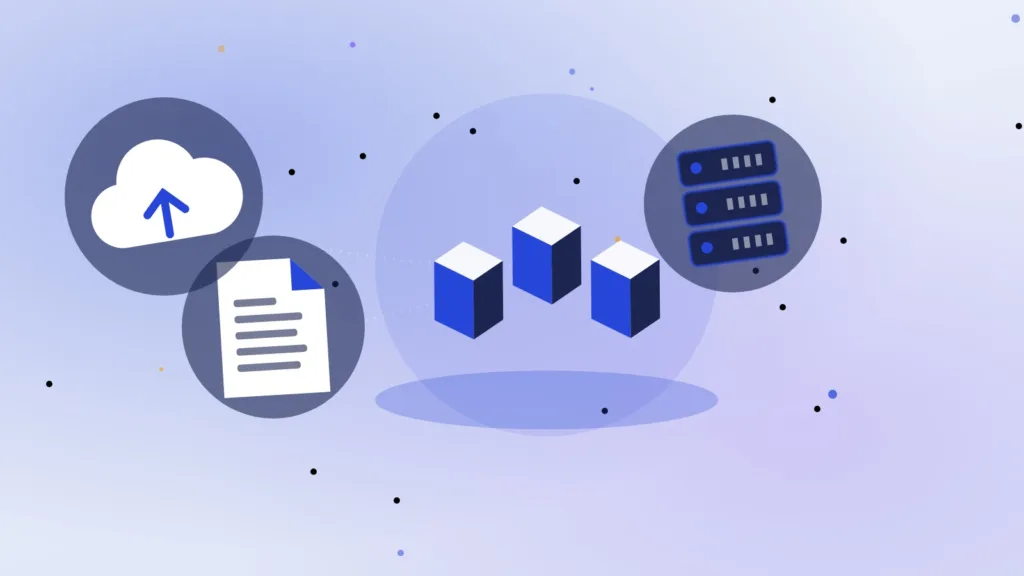
In practice an NFT has four layers, and each has a different master.
| Layer | What it is | Where it lives | Who can change it |
|---|---|---|---|
| The token | token ID N in contract C, owned by address A | on the blockchain | you, with your key; sometimes also the contract’s administrator, if the code allows it |
| The metadata and the file | name, description, picture or other media | on-chain, on IPFS or Arweave, or on a server | depends on the storage: nobody, or the issuer |
| The rights | what you may do with the work: display, sell prints, make derivatives | in a licence, usually a text on a website | the issuer or the rights holder, unless the licence is fixed and irrevocable |
| The service | the game, the ticket office, the club, the marketplace that recognises the token | on a company’s systems | the company |
Owning the first layer is what a blockchain can enforce. Nobody can move your token without your key, which is new compared with an item in a game account that the publisher can delete. The other three layers are promises made by people.
Buying a painting does not make you the owner of its copyright, and an NFT is no different. In August 2022, lawyers at the venture firm a16z, itself a large crypto investor, spelled it out: a buyer is usually purchasing a token ID, and US copyright law does not automatically give the buyer of an artwork the right to reproduce, adapt or even publicly display it. Those rights have to come from a licence or an assignment by the creator.
Their diagnosis of the market: many projects publish no licence at all, or licences that create more confusion than they remove. The firm released six free licences called “Can’t Be Evil”, “designed specifically for NFTs and inspired by the work of Creative Commons”, ranging from all rights waived to personal use only. Their texts are stored on Arweave so that a project cannot quietly rewrite them, and a contract can point to the one it uses.
When a collection says holders “own” their character, look for the licence text. If it grants commercial rights, read which ones, and whether the issuer can change the terms. If there is no text, you hold a token you can resell, and nothing more can be assumed.
Can an NFT be copied?
Anyone can copy the file, perfectly and for free, like any picture on the internet. What cannot be copied is the row in the ledger: there is only one token 4,212 in a given contract, and only one address owns it at a time.
That does not stop fakes. Anybody can deploy a new contract, give it the same collection name and point its tokens at the very same pictures. The result looks identical in a wallet or on a marketplace page. Only the contract address differs. A block explorer shows that address for any token, and it should match the one published by the project itself.
History offers an awkward case of “which one is the original”. The work usually described as the first NFT, Kevin McCoy’s “Quantum”, was registered in early May 2014 on Namecoin, an early blockchain derived from Bitcoin. When Sotheby’s sold “Quantum” in June 2021 for about $1.4 million with fees, the token that changed hands was, in the words of the art site Hyperallergic, “a recent Ethereum mint of the Namecoin original”. Same artwork, two chains, two records. A token proves which record you hold. Which record matters is decided by people and markets.
From Quantum to Beeple: how a niche became a mania
“Quantum” stayed a curiosity. The next step was CryptoPunks, pixel portraits by Larva Labs tracked by an Ethereum contract before any NFT standard existed: the ERC-721 text lists “the eponymous punks in CryptoPunks” among existing NFTs and notes that their contract was only “partially ERC-20 compatible”.
At the end of that year, a game about breeding cartoon cats did what no white paper had managed. CryptoKitties became so popular that it slowed Ethereum down: on 4 December 2017, CoinDesk reported that the game had grown to make up 20 percent of all computations on the network. The ERC-721 text, written a few weeks later, cites the CryptoKitties contract several times as prior art.
The boom itself waited for 2021. Beeple’s sale in March put NFTs on front pages. According to DappRadar figures reported by Decrypt, NFT trading reached about $25.1 billion in 2021. OpenSea, then the largest marketplace, had its record month in January 2022, with about $5 billion of trading, the same article says.
The collapse, in numbers
The fall began inside 2022. The yearly total looks flat, because the first months were enormous, but by December the monthly figure was a small fraction of January’s.
| Period | NFT trading volume | Source |
|---|---|---|
| 2021 (year) | about $25.1 billion, about 58.6 million trades | DappRadar via Decrypt, 4 January 2023 |
| January 2022 | about $5 billion on OpenSea alone, its record month | Decrypt, 4 January 2023 |
| 2022 (year) | about $24.7 billion, wash trades excluded; about 101 million trades | DappRadar via Decrypt, 4 January 2023 |
| December 2022 | about $684 million, wash trades excluded | DappRadar via Decrypt, 4 January 2023 |
| First quarter of 2025 | about $1.5 billion | DappRadar via Cointelegraph, 10 July 2025 |
| Second quarter of 2025 | about $823 million, about 12.5 million sales | DappRadar via Cointelegraph, 10 July 2025 |
Dollars fell much faster than the number of sales. There were more trades in 2022 than in 2021 for about the same money, which means many cheap items and few expensive ones. By 2025 the whole market traded in a quarter less than one marketplace did in a month at the top.
Even the peak figures deserve suspicion. DappRadar’s 2022 total is given after removing suspected wash trading, sales in which the same person sits on both sides to inflate volume or prices. Anyone can create ten wallets in a minute, so the practice is cheap.
The royalty war of 2023
The collapse also broke a promise made to artists. NFTs were sold to creators as a way to earn a percentage on every resale, for ever. But a royalty is not part of the token: it is paid only if the marketplace handling the sale chooses to collect it. In February 2023, under pressure from the rival marketplace Blur, which charged a creator royalty of 0.5%, OpenSea reduced its own, according to The Block.
On 17 August 2023, OpenSea announced the end of its Operator Filter, the tool that blocked sales on marketplaces ignoring royalties. As The Block reported, creator fees became optional for new collections after 31 August 2023, and for older collections using the filter after 29 February 2024. OpenSea’s own words: “To be clear, creator fees aren’t going away – simply the ineffective, unilateral enforcement of them.”
Brands leave, the Punks move to a foundation
Large companies that had rushed in walked out one after another. Starbucks closed its Odyssey programme, which rewarded customers with NFT “stamps”, on 31 March 2024; the company said the beta “must come to an end to prepare for what comes next”, The Block reported. RTFKT, the digital sneaker brand Nike had bought in 2021, was to wind down by the end of January 2025, Retail TouchPoints reported on 3 December 2024.
Reddit had sold NFTs to its users under the plainer name of Collectible Avatars. In August 2025 it announced that its avatar shop would close on 11 November 2025 and that its built-in wallet, the Vault, would be retired; users were given until 1 January 2026 to copy out their recovery phrase, Crypto Briefing reported from Reddit’s announcement. The tokens stay on the chain. The service that made them easy to use does not.
The best-known collection changed hands too. On 13 May 2025, Yuga Labs sold the intellectual property of CryptoPunks, which it had bought from Larva Labs in March 2022, to the Infinite Node Foundation, a non-profit focused on preserving digital art, for an undisclosed sum, per The Block. Notice what was sold: the rights to the images and the brand, in a deal between two organisations. No holder’s token moved.
Uses beyond pictures, and their limits
Take the speculation away and a simpler tool is left: a unique, transferable entry in a public ledger that any application can check. Several uses rest on it, each with a catch.
Tickets and access passes
On 27 March 2023, Ticketmaster launched token-gated sales: a sale that “can only be unlocked or accessed with a specific NFT”. The service was built for the metal band Avenged Sevenfold, whose 10,000 “Deathbats Club” NFTs gave fans first access to tickets for its New York and Los Angeles shows. About 1,000 tickets were bought that way, the band’s singer told Decrypt.
The NFT is a key to a presale. The ticket itself stays in Ticketmaster’s database, under Ticketmaster’s rules. Membership NFTs work the same way: the token proves you are on a list, and a company decides what the list is worth.
Intellectual property and music
Musicians and authors have used NFTs to sell editions, to share royalties with fans and to timestamp their work. Those experiments, and the platforms that closed since, are told in our lesson on blockchain, intellectual property and music. The NFT side of the story fits in one sentence: a token can carry a licence or a share of income only if a contract in the legal sense says so, and that contract lives off-chain. When the promise of income is the selling point, securities law comes into play.
Names, identity and credentials
Names are a use where the token does real work. A .eth name from the Ethereum Name Service is a token: ENS’s documentation says users can transfer a name “just like with any other ERC721 token”. The ethereum.org site presents ethereum.eth as its alternative domain name “powered by NFTs”. The name is the product, with no picture involved. The catch: a name is rented, with an expiry date recorded in the contract, and it lapses if nobody renews it.
Credentials pull the other way. A diploma or a proof of attendance should not be for sale. On 26 January 2022, Ethereum’s co-founder Vitalik Buterin borrowed a word from the game World of Warcraft for the idea: “What if NFTs could be soulbound?”, meaning tied to one holder and impossible to transfer. The idea runs into a problem already met in this path: whatever is attached to a public address is visible to everyone. That is one reason why diplomas and official identity went mostly another way, as explained in our lesson on digital identity and diplomas.
Games and collectible cards
Games were the first mass use, from CryptoKitties onwards, and ERC-1155 came out of the gaming world. The pitch has not changed. Axie Infinity’s white paper says players “have complete ownership of their digital assets and can buy, sell, and trade them”. That is true of the token. But a sword is only a sword inside the game that draws it, on servers run by its publisher. If the studio closes or changes the rules, the item survives as a row in a ledger with nothing to do.
France has given such games a category of their own. A three-year trial, whose decree took effect on 7 February 2026, lets games built on “monetisable digital objects” operate under the supervision of the gambling regulator, the ANJ, provided they declare themselves first. Those objects “may take the form of NFTs or game currency tokens”, the ANJ writes, and its receipt for a declaration “does not constitute a guarantee of compliance”.
Tokens that stand for physical things
A watch, a bottle of wine or a building can be represented by an NFT, and the ERC-721 authors expected it. The token moves on the chain; the object does not. Somebody has to store the watch, insure it and hand it over, and the token is worth what that somebody’s promise is worth. Italy’s tax agency made the legal point in its circular of 27 October 2023: the physical asset circulates under its own rules, and the ownership of works of authorship, real estate and registered movable goods cannot, at least under Italian law, be transferred through an NFT.
The risks, briefly
Four risks come with almost every NFT purchase. The first is fake volume, already described: wash trades make a collection look alive. The second is illiquidity. Each item is unique, so there may be no buyer at all on the day you want to sell; the “floor price” shown on a marketplace is the cheapest asking price, not an offer anyone has made to you.
The third is the project itself. Teams have sold out a collection on promises of games and rewards, then vanished with the money; two prosecuted cases are told in our lesson on rug pulls. The fourth is theft: copycat collections, fake minting sites and signature requests that hand over everything in a wallet, all covered in our guide to avoiding crypto scams. The next lesson of this path walks through a first purchase step by step, with the checks to run before signing anything.
What the law says: securities, MiCA and tax
United States: the SEC and the IRS
The SEC has never said that NFTs as such are securities. It has gone after the way some were sold. On 28 August 2023 it charged Impact Theory, a Los Angeles media company that had raised about $30 million from hundreds of investors by selling “Founder’s Keys” between October and December 2021. Buyers had been encouraged to see a key as an investment in the business, and the order found that the keys were investment contracts. Without admitting or denying the findings, the company agreed to pay more than $6.1 million, according to the SEC. On 13 September 2023 came a similar order against Stoner Cats 2 LLC, which had raised about $8 million with NFTs to finance an animated web series and agreed to a $1 million penalty.
The largest marketplace was in the agency’s sights too. OpenSea said it had received a Wells notice, a letter in which SEC staff warn that they plan to recommend charges, in August 2024. On 21 February 2025 its chief executive, Devin Finzer, wrote: “The SEC is closing its investigation into OpenSea.” That is the company’s account, reported by Decrypt; an SEC spokesperson told the outlet that the agency does not comment on whether an investigation exists.
Since 17 March 2026 the line is written down. An SEC interpretation, which the CFTC joined (Release 33-11412), lists “digital collectibles”, described as crypto assets “designed to be collected and/or used”, and “digital tools” such as a membership, a ticket or a credential among crypto-assets that are not securities. The same text keeps the door open: a non-security asset becomes subject to an investment contract when an issuer sells it with promises of managerial efforts from which buyers would reasonably expect profits. That is the Impact Theory pattern.
On tax, the IRS treats NFTs as digital assets: selling one, or paying for one with crypto, is a taxable event, as our guide to US crypto taxes explains. Notice 2023-27 adds a twist. Until further guidance, the IRS looks through the token to what it represents: an NFT certifying ownership of a gem is a collectible, like the gem, while one giving the right to use a plot of land in a virtual world generally is not. Gains on collectibles held for more than a year face a maximum rate of 28%. Whether a digital file counts as a “work of art”, which would make a picture NFT a collectible, was left open in the notice.
United Kingdom
HMRC’s cryptoassets manual is short on the subject: “Non-Fungible Tokens (NFTs) are separately identifiable and so are not pooled and no matching rules are applied”, its page on pooling reads. A bitcoin holder averages the cost of all coins; each NFT keeps its own purchase cost for capital gains tax, as our guide to UK crypto taxes explains. On the property side, the Property (Digital Assets etc) Act 2025 received Royal Assent on 2 December 2025. In the Law Commission’s words, it “makes clear that a thing is not prevented from being the object of personal property rights” merely because it fits neither of the two existing categories. The Commission had concluded in 2023 that crypto-tokens, NFTs included, can be regarded as property. None of this says anything about the picture.
European Union and France
MiCA, the EU’s crypto rulebook presented in our lesson on the regulation, “does not apply to crypto-assets that are unique and not fungible with other crypto-assets” (Article 2(3)). Read the recitals before concluding that every NFT is out. Fractions of an NFT are not unique. Issuing tokens “in a large series or collection should be considered an indicator of their fungibility”. And recital 11 adds: “The mere attribution of a unique identifier to a crypto-asset is not, in and of itself, sufficient to classify it as unique and non-fungible.” A 10,000-piece collection is therefore not automatically outside MiCA; national authorities judge by substance.
In France, article 91 of a law of 25 June 2026 added article 150 VH ter to the tax code. It applies to sales made from 1 January 2026. Its rule: leaving aside the provisions on professional profits, gains on the sale of unique, non-fungible crypto-assets in MiCA’s sense are subject to income tax under the regime that applies to the goods or rights they represent.
How to read any NFT: four checks
Four questions sort out any particular item, a $5 game item as well as a famous collection.
Which contract and which token ID? Compare the address on the project’s own site, character by character, with the one shown by the marketplace or the explorer.
Where do the metadata and the file live, and who can change the link? On-chain or content-addressed storage survives the issuer. A link to a company server lasts as long as the company wants it to.
What licence comes with it? No text means no rights beyond holding and reselling the token.
Which service must stay alive for the token to be useful? A ticket office, a game, a brand programme: Starbucks, Nike and Reddit showed that this layer can close.
The next lesson of this path turns to the purchase itself: wallets, marketplaces, fees, and what you are really approving when a site asks you to sign.