On 20 March 2025, a court in Marseille accepted a digital fingerprint written into the Bitcoin blockchain as evidence that a fashion house held the rights to designs drawn years earlier. Almost ten years before that, the British singer Imogen Heap had used a blockchain to pay the people behind a song automatically, and the song earned $133.20. Both stories use the same technology. Only one of them worked.
That split sums up blockchain in the music industry and in intellectual property more broadly. The loud promise, royalties paid by code the moment a track is played, has mostly faded: the platforms that tried it closed, pivoted or stayed small. The quiet promise, a dated proof that a file existed on a given day, is cheap, often free, and has started to appear in court rulings and in national law.
This lesson follows our lesson on land registries and real estate, which ended on a similar point: a blockchain can record a document and its date, but it cannot decide who owns what. Here we look at the two uses separately, with the figures that came out of each experiment, then at what the law in the United States, the United Kingdom, France, Italy and the European Union says about a blockchain timestamp. Facts are as of October 2026.
Blockchain in the music industry promised royalties paid by code
A single song carries several rights. There is the recording, usually owned by a label or by the artist, and there is the composition, split between songwriters and their publishers. Each side has its own collecting bodies, contracts and percentages. When a track is streamed, money flows from the service to labels, distributors, publishers and collecting societies before part of it reaches the people who made it.
The amounts are large. Spotify says it paid more than $11 billion to the music industry in 2025, up more than 10% on 2024, and its head of music, Charlie Hellman, called it “the largest annual payment to music from any retailer in history” in a note of 28 January 2026. The complaint of many artists has never been the size of the pot. It is how slowly and opaquely their share travels through the chain.
That is where the blockchain pitch came in, from about 2015. A smart contract is a program stored on a blockchain that runs exactly as written. Feed it a payment and a list of wallets with percentages, and it splits the money in the same transaction: 50% to the singer, 25% to the producer, 25% to the co-writer, with no back office and a public record of every payout. Our overview of blockchain use cases gives the wider picture across sectors.
Imogen Heap’s Tiny Human earned $133.20 through a smart contract
Imogen Heap, a British singer and producer, released her song “Tiny Human” in late 2015 as the test case of Mycelia, her project for fairer payments to music makers. The track was sold through Ujo Music, a project of the Ethereum software company ConsenSys, and payments were split among the contributors by a smart contract on Ethereum.
According to the journalist David Gerard, a well-known sceptic of the sector who published the payout figures, the song sold 222 copies at 60 cents each, for a total of $133.20 by the August 2016 payout. It was taken off sale during 2016. To buy it, a fan needed an Ethereum wallet and some ether, which at the time usually meant buying bitcoin on an exchange first and converting it. Gerard calls the process “ridiculously glitchy and buggy”, and he quotes a buyer on Reddit warning that the exact ether amount was “a bit of a gamble”.
Ujo tried again in late 2017 with “EGO”, an album by the producer RAC. Gerard counted 139 EGO tokens on the Ethereum token address, which he took as the number of sales, and estimated the revenue at about $1,390. The album was also on Spotify. The music files were served from Amazon’s S3 cloud storage, not from a decentralised network. Ujo said, in remarks to the trade site Music Ally quoted by Gerard, that on the first day of the release RAC “made more money from tips than he did from sales”. Gerard adds that sales were small either way.
The team was candid about its position. Gerard quotes Ujo describing itself as “a few bright-eyed technologists with a special hammer, looking for the right nail”. The payment rail worked: money went where the contract said. What did not exist was an audience willing to buy music through crypto wallets, or a reason for listeners to leave the services they already used.
We found no announcement of Ujo’s closure and no activity after these releases in the sources we checked, so we do not give an end date.
Royal, music NFTs and the securities question
The second wave came with the NFT boom of 2021. An NFT is a token with its own identity on a blockchain, and music platforms used it in two ways: as a collectible (a limited edition of a track or an album) and as a claim on future income.
Royal took the second route. The company, led by the DJ Justin Blau (who performs as 3LAU) and JD Ross, raised a $16 million seed round in August 2021 backed by Paradigm and Founders Fund, then a $55 million Series A in November 2021 with Andreessen Horowitz (a16z), The Chainsmokers and Nas among the backers. It sold what it called “limited digital assets”: tokens that entitle the holder to a share of a song’s streaming royalties. The first test was 3LAU’s own single “Worst Case”: MusicTech reported on 27 September 2021 that 50% of its streaming rights would go to 333 fans, ahead of the release on 8 October 2021.
Bigger names followed. Royal’s January 2022 drop with the rapper Nas crashed shortly after it opened and the mint was delayed, The Block reported on 12 January 2022. Diplo sold royalty shares of “Don’t Forget My Love” in March 2022 and The Chainsmokers offered 4,000 tokens tied to their album “So Far So Good” on 17 May 2022, and the first royalty payouts to token holders came in July 2022. As of October 2026, Royal’s website presents the company as “programmable money for creators” and no longer as a royalty marketplace. We could not confirm when the marketplace stopped, so we give no date.
Royalty tokens also raise a legal question that collectibles do not. If you buy a token because you expect income from the work of others, regulators may see an investment contract, which is a security under US law. The clearest signal so far did not involve music. On 13 September 2023, the SEC settled charges against Stoner Cats 2 LLC, the company behind an animated series, which had sold more than 10,000 NFTs at about $800 each on 27 July 2021, raising about $8 million. The SEC found the NFTs were crypto asset securities sold in an unregistered offering. The company agreed to a $1 million civil penalty without admitting or denying the findings. The order also noted that the NFTs paid the company a 2.5% royalty on every resale.
That order covers one case, on its own facts, and it does not say that every NFT is a security. It does show the risk for any platform that sells fans a share of future royalties without the disclosures that securities law requires in the United States.
Why automatic royalties are harder than a smart contract
The Heap and Royal stories point to the same limit. A smart contract only knows what it is told. It cannot find out by itself who wrote a song, what share each writer agreed, whether a sample was cleared, or how many times the track was played on a service that does not publish its logs on a blockchain. Someone has to feed that data in, and that someone is an oracle: a source the contract has to trust.
In music, the trusted sources already exist. They are the labels, publishers, distributors and collecting societies that hold the contracts and the play counts. If their data is wrong or incomplete, a smart contract pays the wrong people faster and more transparently, which is not an improvement. If their data is right, they can pay without a blockchain. This is why most serious projects ended up working on the data layer (who owns what) rather than on the payment rail.
Italy’s collecting society, SIAE, gives the institutional version. It announced a partnership with the Algorand blockchain on 6 December 2019, after first developing the project on Hyperledger with Rome’s La Sapienza University and the start-up Blockchain Core. It gave two reasons for the switch, Algorand’s public nature “by design” and its high performance, a trade-off we explain in public vs private blockchains. On 24 March 2021, the news agency Italpress reported that more than 4 million NFTs had been created that week to represent the rights of more than 95,000 SIAE authors.
Those tokens are a registry of rights, a public record of metadata. Nothing we found shows SIAE paying royalties through them, and we found no update on the project’s status in 2026. It is a useful case precisely because it is modest: a society that already holds the data put a copy of it on a public ledger, without changing who decides or who pays.
Blockchain timestamping as proof of prior creation
The second use starts from a simple fact of copyright law. In most countries you do not register a song, a photo or a text to own it. The US Copyright Office says in its general FAQ that a work is protected “the moment it is created and fixed in a tangible form”. In the United Kingdom, the government says copyright protection is automatic, you do not apply or pay a fee, and there is no register of copyright works. France and Italy follow the same principle.
That leaves creators with a problem of proof. If someone copies your chorus or your design and claims it first, you have to show that your version existed earlier. Drafts on a laptop carry dates that anyone can change. This is where a blockchain helps, without storing the work itself.
The tool is a hash, a short fingerprint calculated from a file. Change one pixel or one note and the fingerprint changes completely, which our guide to cryptography and hash functions explains in detail. Write that fingerprint into a block, and the block’s position in the chain gives it a date that nobody can quietly move afterwards, for the reasons set out in why a blockchain is immutable.
OpenTimestamps, an open-source project, does exactly this on Bitcoin. Its website states the scope plainly: “A timestamp proves that some data existed prior to some point in time.” The site says the hash is calculated in your browser, so only the fingerprint leaves your computer. The public calendar servers are free to use, need no account and rely on donations, so the user pays nothing. Confirmation in the Bitcoin blockchain takes a few hours, after which the proof can be completed and checked against a specific block.
The limits are just as concrete. A timestamp proves when a file existed. It does not prove who made it, whether it is original, or who owns it. A person who copies your work can stamp the copy before you stamp the original. And the stamp creates no right: copyright already exists from creation, and the timestamp is only evidence of a date. That reading is ours, drawn from what the tool claims and what it does not claim, and it matches how courts have treated the evidence so far. We applied the same reasoning to diplomas in our lesson on digital identity and diplomas on a blockchain: the chain checks that a document is unchanged, not that it was true.
What courts and the law say about blockchain timestamps
France: a first-instance ruling in Marseille
The case in the opening is AZ Factory v. Valeria Moda, decided by the first civil chamber of the Tribunal judiciaire de Marseille on 20 March 2025 (no. 23/00046), as reported on 4 April 2025 by the legal news site Legalis and on 12 August 2025 by a blog written by students of a cyberjustice master’s programme, which gives the case number. It is a judgment of first instance. AZ Factory sells pyjamas, under the names “Love With Alber” and “Hearts with Alber”, based on sketches by the designer Alber Elbaz. On a market, it found garments identical to its designs but of much lower quality, and sued.
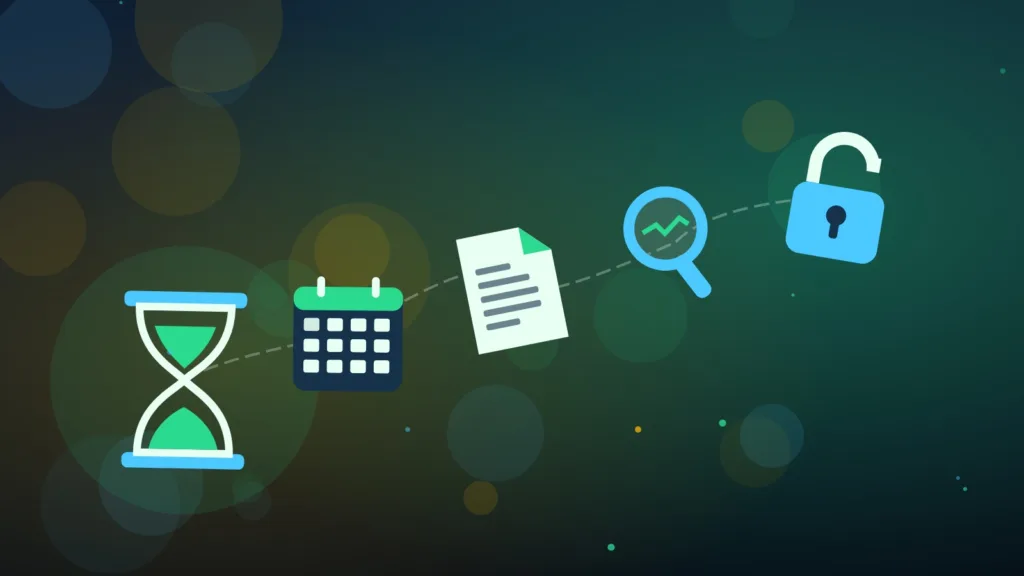
To show its rights, AZ Factory produced two timestamp reports dated 5 May 2021 and 15 September 2021, made through the BlockchainYourIP service, which had anchored fingerprints of the designs in the public Bitcoin blockchain. The court found the designs original and accepted the blockchain as a means of proving ownership of the economic rights, absent any serious challenge. According to the student blog, the court described the reliability of the timestamp as comparable to a deposit at France’s intellectual property office, INPI. It also relied on other evidence: two EU trademarks shown on the labels and the public posting of the garments on social networks.
Commentators describe the ruling as the first French recognition of blockchain evidence of this kind. It is a first-instance decision, so it binds no other court, and we found no information on an appeal. The blockchain proof was one element among several, next to the trademarks, the public posts and findings by a commissaire de justice (a court officer), and commentators note that not every blockchain offers the same reliability.
France: the e-Soleau remains the official route
The French state offers its own dated proof. INPI’s e-Soleau is an online deposit that, in the office’s words, serves to establish proof of a creation at a precise date. As of October 2026, INPI’s page lists a fee of 15 euros for up to 50 MB, then 10 euros per additional 50 MB, for five years of storage, a period that can then be extended. The receipt shows the date and time of filing in UTC and a fingerprint of each document. INPI itself reminds users that copyright arises automatically on creation. Like a blockchain stamp, it gives no title of ownership.
Italy: the law gives a distributed ledger the effect of a timestamp
Italy went further than a court ruling. Article 8-ter of Decree-Law no. 135 of 14 December 2018, added when it was converted by Law no. 12 of 11 February 2019 and in force since 13 February 2019, defines distributed ledger technologies and smart contracts. Its third paragraph, on Normattiva, says storing an electronic document on such a ledger “produce gli effetti giuridici della validazione temporale elettronica” under Article 41 of the EU eIDAS regulation. In plain English: it has the legal effect of an electronic timestamp.
The same article asked the Agency for Digital Italy (AgID) to set technical standards within 90 days. We could not verify whether those standards were ever adopted, so the practical reach of the rule remains uncertain.
European Union: eIDAS timestamps and the new electronic ledgers
Across the EU, Article 41 of Regulation (EU) 910/2014, known as eIDAS, says an electronic timestamp shall not be denied legal effect and admissibility as evidence solely because it is electronic or because it is not a qualified timestamp. Only a qualified timestamp, issued by a supervised trust service provider, enjoys a presumption that its date, time and data integrity are accurate. An OpenTimestamps proof is not qualified: a judge may admit it, but you have to convince the judge it is reliable.
The revised regulation, Regulation (EU) 2024/1183 of 11 April 2024, added the recording of data in electronic ledgers as a new trust service and set the requirements for qualified electronic ledgers in Article 45l. The Commission then adopted Implementing Regulation (EU) 2025/2531 on 16 December 2025, published in the Official Journal the next day, which lists the reference standards. A ledger that meets them is presumed to comply with those requirements. The act describes an electronic ledger as a sequence of data records meant to preserve their integrity and the accuracy of their chronological order. That is the job a public blockchain does for a hash, but only a service run by a supervised provider can be qualified.
United States and United Kingdom: registration, not blockchains
In the US, the stronger tool is not a timestamp but registration. The Copyright Office says you must register before suing for infringement of a US work, that registered works may qualify for statutory damages and attorney’s fees, and that registration within five years of publication counts as prima facie evidence in court. It also says that mailing a copy of your work to yourself, the old “poor man’s copyright”, is not a substitute for registration. A blockchain stamp is a modern version of that envelope: useful evidence of a date, no replacement for the register. We found no US or UK ruling on blockchain timestamps in our sources. The UK has no copyright register, so dated evidence of creation carries more weight there.
How to make a free blockchain timestamp for a song or a design
The steps below use OpenTimestamps because it is free and needs no account or crypto. No money is at risk at any point.
- Keep the original file and your drafts (project files, stems, sketches, dated emails) in a folder you never edit again. The stamp proves a file, so a re-exported copy will not match.
- Open the OpenTimestamps website and drop the file into the stamper. The fingerprint is calculated on your computer; the file stays with you.
- Download the small proof file ending in .ots that the site produces and store it next to the original, with a backup elsewhere.
- Wait a few hours: the client’s documentation says confirmation in Bitcoin takes that long. Until then the proof is incomplete; the command-line “ots upgrade” command adds the path to the Bitcoin block into the .ots file itself.
- Check it: drop the .ots proof, then the original file, into the website’s verify box, or run “ots verify”, which needs access to a Bitcoin Core node (a pruned one is enough). A confirmed proof points to a specific Bitcoin block and its date.
- Add the routes that carry legal weight where you live: registration with the US Copyright Office, an e-Soleau with INPI in France, or a qualified timestamp from an EU trust service provider if you expect a dispute.
Publishing the work with a visible date (a release, a dated post) adds another independent trace. None of these steps proves that you are the author. They prove that you held this exact file at that time.
Results so far: royalty platforms faded, timestamps stayed
Ten years after Tiny Human, the record of royalty and collectible platforms is mostly a list of closures. Sound.xyz, a platform where artists sold music as tokens, says on its website that it has been offline since 16 January 2026, as its team moves to a new product called Vault; items collected stay on-chain and artists can still claim remaining funds. Catalog, which sold one-of-one music records, now shows the banner “Catalog is no longer active” on its site, and its farewell page says the project had reached its “natural completion point”; records are kept on the Arweave storage network. Nina Protocol, a blockchain-based music platform founded in New York in 2021, began a six-week wind-down on 28 May 2026: uploads and purchases stopped, users had until 15 June to withdraw funds and export music, and the full shutdown was set for 15 July 2026, Paste Magazine reported on 29 May. SoundCloud then bought the platform, Stereogum reported on 22 July 2026, without disclosed terms.
Audius, a music streaming service launched with a token, is still running. Its announcements page lists posts through 21 May 2026, including the “Open Audio Protocol” and “artist coins” launched on 8 October 2025, with coins from Kodak Black ($YAK, 11 November 2025) and Almighty Jay ($JAY, 16 December 2025). Audius did not publish user figures on that page, so we give none. It is a service where listening works like any other app; the token, governance and artist coins sit on top.
| Project | Date | What it tried | Result (as of October 2026) |
|---|---|---|---|
| Tiny Human (Imogen Heap, Ujo) | Late 2015 | Smart-contract payment splits on Ethereum | 222 sales, $133.20 by August 2016; taken off sale in 2016 |
| EGO by RAC (Ujo) | Late 2017 | Album sold for ether | About 139 sales, about $1,390 (Gerard’s estimate) |
| SIAE on Algorand | December 2019 (partnership) | Registry of authors’ rights as NFTs | 4 million+ NFTs for 95,000+ authors by 24 March 2021; no payments found |
| Royal | $16M seed August 2021, $55M Series A November 2021 | Royalty-share tokens for fans | Site now presents “programmable money for creators” |
| Stoner Cats (not music) | NFT sale 27 July 2021 | NFTs with a 2.5% resale royalty | SEC order 13 September 2023, $1M penalty |
| Sound.xyz | Offline 16 January 2026 | Music sold as tokens | Closed, team moved to Vault |
| Nina Protocol | Wind-down from 28 May 2026 | Blockchain music platform | Shut down 15 July 2026, then bought by SoundCloud |
| Audius | Artist coins 8 October 2025 | Streaming with a token and artist coins | Operating, posts through May 2026 |
On the proof side, the picture is the reverse. OpenTimestamps still runs for free. A French court accepted a Bitcoin timestamp in March 2025, Italy has written the effect of a ledger timestamp into law since February 2019, and the EU now has a legal category for qualified electronic ledgers. None of it makes the headlines that a $55 million funding round did, and none of it pays an artist.
For a reader weighing a project that uses blockchain in the music industry, the lesson is concrete: ask whether it needs fans to buy tokens to work (most such platforms have closed), and whether it relies on data that someone off-chain must supply honestly (all royalty systems do). The next dates to watch are the first qualified electronic ledgers offered by trust service providers under eIDAS, and any appeal or follow-up ruling after Marseille.