Manila, August 2021. A player opens a card-battle game on a cheap phone, sends three cartoon creatures into a fight and collects a token called SLP for each win. That month one SLP traded for nearly $0.40. By February 2022 the same token was worth about a penny, Decrypt reported. Same game, same hours, a very different paycheck.
That game was Axie Infinity, and the model has a name: play-to-earn, a game that pays its players in crypto tokens they can sell for real money. The wider family is called GameFi, a contraction of “game” and “finance”. For about a year it looked like a new kind of job. Then the pay collapsed, a hacker took about $600 million from the game’s own network, and many of the studios that copied the idea closed.
This lesson explains in plain words what a blockchain game is, why play-to-earn worked for a while, why it broke, what is left in November 2026 and how to try one without paying or getting robbed. It follows the lesson on crypto and AI, where software earns and spends tokens; here it is people who were promised an income. Nothing below is a recommendation to play, buy or sell anything.
A blockchain game in four words: item, token, market, wallet
In an ordinary online game you buy a sword or a costume in the publisher’s shop. It sits in your account on the publisher’s servers. You cannot sell it for dollars, at least not within the rules, and if the publisher closes your account the sword goes with it.
A blockchain game changes four things.
- The item is an NFT (non-fungible token), a unique entry on a blockchain, the public ledger kept in copies by thousands of computers. That entry says which address owns this creature, this card or this plot of virtual land.
- The in-game money is a token, a crypto asset the game creates and hands out as a reward. Unlike gold coins in a classic game, it trades on exchanges against dollars.
- The market is open. Anyone can buy or sell items and tokens, inside the game or on outside marketplaces, without asking the studio.
- The wallet is yours. Items and tokens sit at an address controlled by your private key, a secret code only you hold, not in an account the publisher can delete.
Our lesson on NFTs covers how these tokens work and what owning one really gives you. One sentence of it matters here: nobody can move your token without your key, which is new compared with an item in a game account. What the token is worth is another matter, and that is the story of this lesson.
A few words come back all the time. GameFi is any game with tradable tokens or NFTs. Play-to-earn (often written P2E) is the version where playing itself pays. A guild is a group that buys game NFTs and lends them to players. A scholar is a player who borrows them and shares the earnings with the guild. A faucet is anything in the game that creates tokens, such as a reward for winning a fight. A sink is anything that destroys them, such as a fee to upgrade a creature. When the faucets run faster than the sinks, the number of tokens grows and each one tends to be worth less. Keep those two words in mind: they explain most of what follows.
Players sold game items long before crypto
Trading game goods for real money is older than Bitcoin. In the 2000s, players of online games such as World of Warcraft paid strangers for gold, the in-game currency, so they could skip hours of repetitive play. The people who earned that gold for a living were called gold farmers. A Manchester University study estimated about 400,000 of them worldwide, around 80% in China, earning $145 a month on average, in a trade valued at roughly $500 million a year, a figure the study itself called a “best guess”, Game Developer reported on 25 August 2008. Publishers treated it as cheating.
One big publisher tried to make it official. Blizzard’s Diablo III let players sell loot to each other for gold or for real money in auction houses run by the company. In September 2013 Blizzard said it would close them on 18 March 2014. Its production director John Hight said the auction house “ultimately undermines Diablo’s core game play: kill monsters to get cool loot”, as Engadget quoted him. Players had started shopping for gear when the game was meant to be about hunting for it.
Crypto arrived with the opposite bet: the market would be the point of the game. The first sign came in December 2017 with CryptoKitties, collectible cats sold as NFTs on Ethereum, which at one point in early December took up a fifth of Ethereum’s computations. The NFT lesson linked above tells that episode. The lesson the industry drew was that people would pay real money for a digital creature they could resell.
Axie Infinity, the play-to-earn case that explains the rest
Axie Infinity was created by Sky Mavis and launched in 2018, according to the complaint the US Securities and Exchange Commission (SEC) filed against Coinbase in June 2023. It became the model every other play-to-earn game copied, so its rise and fall are worth following step by step.
How the game paid
To play you needed a team of three Axies, round cartoon creatures that are NFTs. You bought them from other players. You then fought battles and won Smooth Love Potion (SLP), a token with no supply limit that the game created for every reward. SLP had one use inside the game: it was spent, and destroyed, when you bred two Axies to make a new one. That new Axie could be sold to the next newcomer.
A second token, Axie Infinity Shards (AXS), worked more like a share in the project’s future. The SEC’s complaint describes it this way: players could earn AXS, spend it in the game and stake it (lock it up for a reward), and its supply was capped at 270 million.
Many players could not afford three Axies. Guilds filled the gap. The best known, Yield Guild Games (YGG), bought Axies in bulk and lent them to scholars, many of them in the Philippines, in exchange for a share of the SLP they won. The scholar brought the hours, the guild brought the capital.
The boom of 2021 in dated numbers
A phone game that paid in a sellable token spread fast. By early August 2021 Axie had more than a million players and some 40% of them were in the Philippines, Rest of World reported on 30 September 2021. Luis Buenaventura, YGG’s country head there, told the outlet that players were making about $400 a month on average.
The Philippine tax office noticed. “Unfortunately, the labor of playing a game is something where you’re all paid an income,” Marissa Cabreros, deputy commissioner of the Bureau of Internal Revenue, said in the same article. A game had become work, and work is taxed.
| Measure | At the top | After the fall | Source |
|---|---|---|---|
| SLP price | Nearly $0.40 (August 2021) | About a penny or less (early February 2022) | Decrypt, 5 February 2022 |
| AXS price | About $165 (November 2021) | About $50 (early February 2022) | Decrypt, 5 February 2022 |
| Average price of an Axie NFT | $494.15 (July 2021) | About $37.38 (April 2022), 92% lower | The Block, 16 May 2022 |
| Axie NFT sales in a month | More than $848 million (August 2021) | $19.4 million (April 2022), 98% lower | The Block, 16 May 2022 |
| Daily users, Sky Mavis figures | 2.5 million (The Block) to more than 2.7 million (Decrypt), November 2021 | 1.2 million (April 2022) | Decrypt and The Block |
| Daily users in 2026 | About 5,500 (DappRadar data cited by Caladan) | CoinDesk, 23 April 2026 |
The peak of 2.7 million daily players is disputed, and the table shows why. Decrypt wrote “above 2.7 million” for November 2021, The Block gave 2.5 million for the same month. Both numbers come from Sky Mavis, and co-founder Jeff Zirlin, quoted by Decrypt, said they were “based on the average number of users who open the game each day”. An app opening is not a distinct person: someone running fifty accounts for a guild is counted fifty times. The 2026 figure has another origin. It comes from DappRadar, a site that counted the wallets active in each application, and was quoted by Caladan, a trading firm that published a report on blockchain games in April 2026.
Why the pay collapsed
Look at the faucet and the sink. Every battle won created new SLP. The only thing that destroyed SLP was breeding, and breeding made sense only if a newcomer would buy the baby Axie. As long as new players arrived faster than old ones cashed out, the price held.
When arrivals slowed, the machine ran backwards. In February 2022 Sky Mavis blamed token inflation: about four times as much SLP was being created each day as was burned through breeding, according to Decrypt. The studio removed SLP rewards from the single-player mode and from daily quests. It was too late for the price, which had already lost more than 95% from its August peak, from nearly 40 cents to about one.
A scholar who still played the same hours in early 2022 now earned a small fraction of the 2021 income. Guilds held Axies bought near $500 that sold for under $40. Nobody had stolen anything. The reward simply depended on the next buyer, the way a pyramid depends on its next layer, which is why it stalled. That is a description of the mechanism, not a claim of fraud: no regulator has called Axie a Ponzi scheme. Our lesson on Ponzi schemes in crypto explains the real thing and how to tell the difference.
The Ronin hack: five keys out of nine
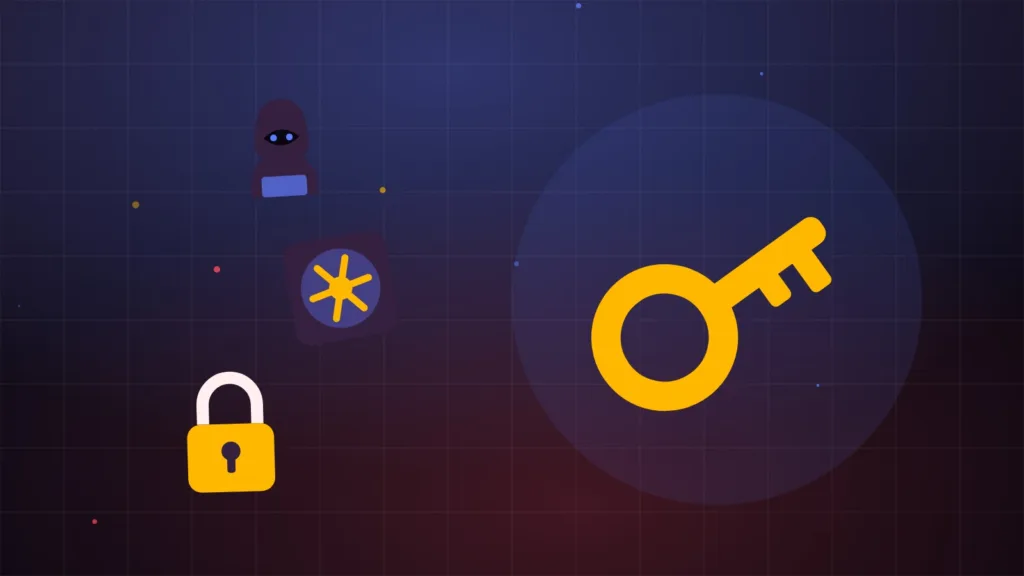
Axie ran on Ronin, a blockchain Sky Mavis built for the game. Players moved money between Ethereum and Ronin through a bridge, a smart contract holding reserves of two or more tokens, supplied by users, that a decentralized exchange uses to execute trades automatically at a price set by a formula.">pool of locked funds guarded by nine validators, the machines whose signatures approve withdrawals. Five signatures were enough.
On 23 March 2022 an attacker who controlled five of the nine validator keys drained 173,600 ETH (ether, Ethereum’s coin) and 25.5 million USDC (a token worth one dollar each) in two transactions, about $600 million at the time (the US Treasury put it at almost $620 million). Nobody noticed until 29 March, when a user could not withdraw 5,000 ETH. US authorities linked the theft to North Korea’s Lazarus group in April 2022. Sky Mavis later raised $150 million in a round led by Binance to reimburse users.
The players’ Axies were never touched. Their savings were, because the money sat in a bridge protected by a handful of keys held too close together. Two of our lessons go through this hack in detail: the one on DeFi hacks and exploits for the keys, and the one on sidechains and rollups for what kind of chain Ronin was.
The bridge slipped again on 6 August 2024. An upgrade introduced a bug and about 4,000 ETH and 2 million USDC, roughly $12 million, left the bridge. This time white hats, hackers who report flaws and do not keep the money, were involved. Ronin said the ETH came back the same day, that it expected the USDC to follow and that it planned a $500,000 reward for them, Decrypt reported.
Ronin has changed shape since. On 12 May 2026 it hard forked, meaning it switched all its software at one block, into an OP Stack chain that posts its data to EigenDA. OP Stack is a kit used to build networks on top of Ethereum, EigenDA a separate service that stores their data. Ronin now calls itself an Ethereum layer 2, a chain that borrows Ethereum’s security. The risk-rating site ETHBEAT (formerly L2BEAT) did not agree on 12 November 2026: “Ronin is not even a Stage 0 project”, Stage 0 being the lowest rung of its scale. Since 7 September 2026 withdrawals settle through a permissioned dispute game again, which in plain words means a short list of approved parties still decides. ETHBEAT counted $0.18 billion secured on Ronin that day, against the roughly $600 million taken from its bridge in two transactions four years earlier.
Where Axie stands in 2026
The game still exists, at a fraction of its old size. The latest outside count is about 5,500 daily users, the DappRadar figure in Caladan’s report, which CoinDesk covered on 23 April 2026. DappRadar had announced its own closure five months earlier, so that number is the last of its kind.
In August 2026 Sky Mavis said Season 16 of Axie Classic, the original battle game, would be the last “under its current structure”. It ran from 12 August to 2 September with more than 36,000 bAXS, a reward token of the game, in prizes. After it, the studio said, regular seasons and active development would pause. Sky Mavis says Classic is not being shut down and that it is working toward handing the game to its community, though “the details aren’t settled yet”, according to BlockchainGamer on 12 August 2026.
One founder has moved on. Aleksander Larsen, named as chief operating officer in the SEC’s 2023 complaint, gave up his operational role at Sky Mavis, Axie and Ronin while staying a shareholder and board member, Cointelegraph Magazine wrote on 26 February 2026. He tied the choice to the hack: “Leading the crisis management of that situation changed me”, he said in that article.
Move-to-earn and virtual land: the same curve twice
In spring 2022 the idea jumped from the sofa to the pavement. STEPN, a phone app, sold NFT sneakers. You walked or ran with the app open and its GPS check paid you in a token called GST, which you spent to repair and upgrade the sneakers. A second token, GMT, played the role AXS played for Axie. “Move-to-earn” was born.
GST peaked at $9.03 and GMT at $4.11 at the end of April 2022. A month later STEPN said it would stop GPS service for accounts in mainland China at midnight on 15 July 2022, Beijing time. GST fell from about $2.08 to $1.53 after the announcement, Decrypt reported on 27 May 2022. The structure was the one you now know: rewards created by activity, value supported by new buyers of sneakers. When a large group of buyers was cut off, the token gave way.
The other craze of 2021 and 2022 was land. Decentraland and The Sandbox sold plots of virtual worlds as NFTs. Then came an awkward count. On 7 October 2022 CoinDesk reported that the data site DappRadar showed 38 active users in 24 hours for Decentraland and 522 for The Sandbox. The tokens of each project were then worth about $1.3 billion in total, according to Messari figures in the same article.
Both platforms objected, with reason. DappRadar counted wallets that made a transaction with the platform’s smart contracts, the programs that run on the blockchain, not visitors who logged in and walked around. “DappRadar doesn’t track our users, only people interacting with our contracts,” Decentraland’s creative director Sam Hamilton told CoinDesk, putting the average at 8,000 users a day. The episode is useful for any beginner: an “active user” figure means nothing until you know what was counted. Even the platform’s own number was small for a world valued above a billion dollars.
The Sandbox restructured in August 2025. Co-founder Arthur Madrid moved from chief executive to chairman, co-founder Sebastien Borget became a global ambassador and confirmed layoffs without giving a number, Cointelegraph reported on 28 August 2025. Its token SAND traded at $0.28 that day, nearly 97% below its November 2021 high of $8.40. Decentraland went looking for players where they already are: on 31 March 2026 it announced a desktop version on the Epic Games Store and an Android app, in a press release that gave no user count. Crypto was not alone in misjudging virtual worlds: Meta’s Reality Labs division has lost about $73 billion since 2021, TechCrunch wrote on 19 March 2026.
What worked in play-to-earn, and five reasons the pay failed
Before the failures, a word on what did work, since the two are easy to mix up. The ownership part held. Through the collapse of SLP, the Axies stayed at their owners’ addresses. The markets worked too: anyone could sell a creature or a token at any hour without the studio’s permission, which is also how sellers could all leave at the same time. And the reach was real, since 131 million Telegram accounts received a game token in one distribution in September 2024, as told below.
What did not work was the pay. In every case in this lesson, the income of early players came from the purchases of later ones, and it stopped when the purchases did.
The causes repeat from one game to the next.
- The rewards were paid by newcomers. The money a veteran took out was the money a beginner had just put in to buy creatures or sneakers. No outside customer was paying for anything.
- Bots and multiple accounts took a large share. If tapping a screen pays, software taps faster than people, and one person can run a hundred accounts.
- Many players came to extract, not to play. They sold every token the day they earned it, so the selling never stopped.
- Tokens were created faster than they were destroyed. Faucets everywhere, few sinks: Axie’s four to one in early 2022 is the textbook case.
- Fun came second. A game that people play only for the pay loses them the day the pay drops, and nobody stays for the game itself.
The pattern repeated in 2024 on Telegram, the messaging app, with “tap-to-earn” games where you tap a picture to collect points later converted into a token handed out for free, an operation called an airdrop. Hamster Kombat launched in March 2024 and claimed more than 300 million sign-ups. Its token went live on 26 September 2024 with a distribution to 131 million accounts, after 2.3 million were excluded as bots and cheaters, The Block reported. Caladan’s report says the game lost 96% of its users within six months.
Notcoin and Catizen were other well-known names of that wave. Nothing had to be bought to start, which made these games safer for the wallet than Axie, but the reward was again a token with no use that everyone sold at once. Our lesson on airdrops and points farming explains why free tokens attract farmers and what that does to the price.
What studios tried next, and where it stood in November 2026
After 2022 the industry changed its vocabulary. “Play-and-earn” and “play-to-own” promised a good game first, with ownership as an extra. Some studios went free-to-play with optional NFTs. Big publishers ran experiments. Guilds turned into publishers. The table gives the last state reported for each attempt, with the date of the source.
| What was tried | Example | Last verified state |
|---|---|---|
| A big publisher adds NFTs | Ubisoft, Champions Tactics: Grimoria Chronicles (2024, Oasys blockchain) | Ubisoft said in May 2026 it would move the game away from blockchain features, then announced that the servers would shut down on 30 October 2026 (Kotaku, 31 July 2026) |
| A big publisher adds NFTs | Square Enix, Symbiogenesis | Wound down in July 2025 (CoinDesk, 23 April 2026) |
| A guild becomes a publisher | Yield Guild Games, YGG Play | Closure announced with 35 jobs cut; YGG said it would supply gaming data to train AI models instead (Cointelegraph, 7 July 2026) |
| A game in development for seven years | Ember Sword | Shutdown announced in May 2025, the studio saying it could not find funding (Decrypt, 22 May 2025); $18 million spent over seven years and no refunds, according to Caladan |
| A game financed by an NFT sale | Pixelmon | Raised $70 million in a 2022 NFT sale; development ended in September 2026 (CoinDesk; crypto.news, 9 November 2026) |
| Small studios on game chains | Proof of Play (Pirate Nation); Uncharted (Fishing Frenzy) | Closed in August and June 2026; Proof of Play had raised $33 million (crypto.news, 9 November 2026) |
| A platform for other studios’ games | Immutable | The SEC sent it a warning of possible charges in October 2024; Immutable said on 25 March 2025 that the investigation had ended (The Block) |
| Fantasy football with collectible cards | Sorare | Prosecuted by Britain’s Gambling Commission, trial set for 7 June 2027 (see below) |
The distribution channels explain part of this. Steam, the largest PC game store, still lists among the things it will not publish: “Applications built on blockchain technology that issue or allow exchange of cryptocurrencies or NFTs.” That is rule 13 of its onboarding page as read on 18 November 2026. Apple lets apps sell NFTs through its own payment system, but its App Store review guidelines add a condition that removes most of the point for a game: “Apps may allow users to view their own NFTs, provided that NFT ownership does not unlock features or functionality within the app.”
A blockchain game therefore could not reach PC players through the main store, and on an iPhone its NFTs could be looked at but could not do anything. That left web browsers, Telegram and stores with other rules.
The sector in numbers, and how far to trust them
Reliable statistics are rare here, and the main source has gone. DappRadar, the site that counted wallets active in each game, announced its shutdown on 17 November 2025. Its founders wrote that running the platform had become “financially unsustainable”, Cointelegraph reported. The figures below are the best that remain. They come from the industry’s own association, a trading firm and the press.
| Figure | Value | Date | Who says so |
|---|---|---|---|
| Money invested in blockchain games during the boom | Up to $15 billion | Report of April 2026 | Caladan, via CoinDesk |
| Share of GameFi projects “effectively dead” | About 93% | April 2026 | Caladan (its definition of dead is not given in the article) |
| Fall of game tokens from their 2022 peaks | About 95% | April 2026 | Caladan |
| Blockchain games shut down | More than 300 | April 2026 | DappRadar data cited by Caladan |
| Yearly funding of blockchain gaming | An estimated $293 million in 2025, against about $4 billion in 2021 and more than $10 billion at the 2022 peak | Report of December 2025 | Blockchain Game Alliance, 2025 State of the Industry report, citing DappRadar and other trackers |
| Quarterly investment | $73 million in Q2 2025, 93% less than a year earlier | Q2 2025 | DappRadar, via crypto.news |
| Venture deals in the wider Web3, NFT, DAO, metaverse and gaming category | 37 in the quarter, games not counted apart | Q2 2026 | Galaxy Research, via crypto.news |
Read them with three limits in mind. Caladan is a market maker, a firm that trades tokens, not a statistics office. The Blockchain Game Alliance is the industry’s own association. And DappRadar’s last reports date from 2025. The direction is not in doubt, though. “Capital was destroyed at every layer simultaneously,” Caladan wrote. A gaming creator who posts as Sky, quoted by crypto.news on 9 November 2026, put the players’ view more bluntly: “Game dead = asset dead.”
For 2026 itself the dated facts are closures and one thin count. Yield Guild Games announced the end of its publishing arm on 7 July. Uncharted closed in June and Proof of Play in August. Pixelmon ended development in September. Ubisoft scheduled the end of its NFT game for 30 October. On the funding side, the Galaxy Research count for the second quarter is 37 deals for a category far wider than games. The latest yearly report of the Blockchain Game Alliance, dated December 2025, put the money raised in 2025 at less than a thirtieth of the 2022 peak.
Securities, gambling, tax: what the law says about game earnings
A game that pays in tokens meets the financial regulator, the gambling regulator and the tax office, in that order of appearance.
Game tokens as securities: asked in 2023, never answered
A security is an investment, such as a share, that must be registered with the regulator before it is sold to the public. Whether a game token is one was asked in the United States and left open. The SEC’s complaint against Binance, filed on 5 June 2023, listed SAND, MANA and AXS among the tokens it called “crypto asset securities”; its Coinbase complaint a day later named SAND and AXS. Neither claim was tested. The agency announced the dismissal of the Coinbase case on 27 February 2025, in a release saying the decision rested “not on any assessment of the merits of the claims”, and on 29 May 2025 the SEC and Binance filed a joint request to dismiss the other case with prejudice, which means it cannot be filed again. No court has ruled on any of the three tokens, and neither Sky Mavis nor the two virtual-world projects were defendants.
When does a game become gambling?
In Great Britain that question is before a court. The Gambling Commission is prosecuting Sorare for allegedly offering gambling without an operating licence, under sections 33 and 36 of the Gambling Act 2005. The trial, first set for June 2026, was postponed to 7 June 2027 at Birmingham Magistrates’ Court, according to the Commission’s notice updated on 18 May 2026. The charge is an allegation until the court decides.
France chose a different route. Since 7 February 2026 a three-year trial lets companies offer “games involving monetisable digital items” if they first declare themselves to the gambling regulator ANJ, whose receipt, the regulator warns, “does not constitute a guarantee of compliance”. App stores have their own rule for loot boxes, the paid boxes whose content is drawn at random: Apple requires apps that sell them to disclose the odds of each type of item before purchase.
Tax: a token won is income
The US tax authority treats game rewards like any other crypto receipt. The IRS’s digital assets page, last reviewed on 2 September 2026, counts NFTs as digital assets, lists “a reward or award” among the receipts to report and states that “income from digital assets is taxable”. In practice a token is income at its dollar value on the day you receive it, and selling it later produces a separate gain or loss. Take a US player who received SLP when it traded at $0.30 and sold it at $0.01: the income to report is the first figure.
In the UK, HMRC’s general rules for cryptoassets apply to game tokens as to any other. Start with the basics of crypto taxes, then read the lesson for your country: crypto taxes in the United States or crypto taxes in the United Kingdom.
What a player risks, in plain terms
Paying to start earning
Any game that asks for money before it pays you is an investment with a game attached. Here is a hypothetical example, with invented round numbers and no forecast in it. You pay $600 for a starter team. You earn 20 tokens a day and each sells for $0.05, so $1 a day. You need 600 days to get your $600 back, if the token holds its price and the rules do not change. If the token halves twice, you need 2,400 days, more than six years.
Real tokens have done worse than that example. SLP lost more than 95% in six months, and the Axies themselves lost 92% of their average price in nine. In this arithmetic the token price matters far more than your skill.
Items that outlive their game
An NFT stays in your wallet when a studio closes. The game it belonged to does not. Ubisoft’s Champions Tactics shows the order of events. In May 2026 the publisher said it would move away from blockchain functions. At the end of July it announced that the servers would shut down on 30 October 2026 and that in-app purchases would be disabled in the meantime, Video Games Chronicle reported. Whatever token is left in a wallet after such a date has no board to be played on. Owning the item was never the same as owning the game.
Fake games that empty wallets
Scammers know that players install things. A common trick starts with a message on Discord: “Can you try a game I made?” The download is a password-protected archive that installs an information stealer, which copies saved passwords, session cookies and cryptocurrency wallet data, the security firm Malwarebytes explained on 3 January 2025. The firm advises checking through another channel even when the invitation comes from a friend, because the friend’s account may have been taken over.
The other route is a fake game site that asks you to connect your wallet and sign a transaction that hands over your tokens. Our guide to buying an NFT safely shows how these wallet drainers work and how to read what you sign. A game never needs your seed phrase, the list of words that restores a wallet: read how to protect a seed phrase before installing anything.
Guild contracts and rule changes
A scholar plays with NFTs that belong to someone else. The split of earnings, who can end the deal and what happens if the game changes are whatever the guild wrote, and guilds change course too: Yield Guild Games announced in July 2026 that it was closing its publishing arm to supply data for AI. The studio can also change the rules overnight, as Sky Mavis did when it removed SLP rewards from two game modes in February 2022.
How to try a blockchain game without paying
Curiosity is a fine reason to look. These six steps keep it cheap.
- Start with a game that is free and lets you play before any wallet is connected. If the first screen asks for a purchase, close it.
- Download only from the studio’s official site or an official app store, never from a link received in a message.
- When a wallet becomes necessary, create a new one for games and keep it empty. Your savings stay in another wallet that never touches a game site.
- Read every signature request. Signing in to a site is one thing; a request to “approve” or “set approval for all” gives a contract the right to move your assets.
- Check that people actually play. DappRadar is gone, so look at the game’s contract on a block explorer for recent transactions, at the studio’s latest posts and at how lively its community is. An account that last posted months ago tells you enough.
- Find the sink. Ask what the reward token is used for inside the game other than being sold. If you cannot find an answer in ten minutes, the answer is usually nothing.
And one rule sits above the six: never pay in order to start earning. If a stranger promises a daily income from a game, treat it like any other offer of easy money and check it against our guide on how to avoid crypto scams.
The next date on the legal side is 7 June 2027, when the Sorare trial is due to open in Birmingham. The next lesson of this path leaves games for another promise of Web3, social networks where your account and your followers belong to you: SocialFi.