





Attackers forged internet routes to steal the work of bitcoin blockchain and earns a reward, which makes rewriting history very expensive.">mining machines at more than 1,000 sites at once on Friday 20 November, according to a security alert that Braiins, which runs Braiins smart contract holding reserves of two or more tokens, supplied by users, that a decentralized exchange uses to execute trades automatically at a price set by a formula.">Pool and makes the Braiins OS mining firmware, published on Wednesday 25 November. In four episodes that day, lasting 6 to 49 minutes each, between 1,050 and 1,600 sites, mostly in Europe, were pulled onto an impostor pool carrying 0.6 to 1.9 EH/s of hashrate. Braiins calls the attack hashrate hijacking, describes it as “still a live threat”, and puts the cause on Stratum V1, the plain-text protocol most miners still use to talk to their pool.
Every technical detail in this story comes from Braiins. That matters: the company sells the fix it recommends, Stratum V2 firmware, a V2 pool and a V2 proxy, and it has argued for the protocol since at least 2020. The Block and Cointelegraph, which covered the alert on Wednesday evening, quote only Braiins. No routing operator, victim or other pool has published its own account of the 20 November routes, and Braiins does not name the attacker, the pool used to cash in, or any victim.
The machines were never hacked, Braiins says. Neither were Braiins Pool, its Braiins OS firmware or other pools’ servers. The attacker stood in the middle of the connection, and the miners kept hashing at full power for someone else while their owners paid the electricity.
Hashrate hijacking grew from under 175 PH/s to 1.9 EH/s in two weeks
Braiins describes three waves. The first came between Saturday 7 and Thursday 12 November, mostly in Brazil and Argentina: 19 episodes hitting 120 to 400 mining sites each, with 36 to 174 PH/s diverted for anything from 90 seconds to three hours. Cointelegraph’s count of 24 incidents between 7 and 20 November matches the three waves added together. Braiins says this Latin American wave is not yet confirmed in the same detail as the later ones.
On Monday 16 November, one short episode in Brazil was recorded packet by packet: three miners, three minutes. That capture is what showed how the trick works. Then came Friday 20 November, the largest so far, with all four episodes in one day.
| Period | Region | Episodes | Sites per episode | Hashrate diverted | Duration |
|---|---|---|---|---|---|
| 7-12 Nov 2026 | Mostly Brazil, Argentina | 19 | 120-400 | 36-174 PH/s | 1.5 min to 3 h |
| 16 Nov 2026 | Brazil | 1 (recorded) | 3 miners | not given | 3 min |
| 20 Nov 2026 | Mostly Europe | 4 | 1,050-1,600 | 0.6-1.9 EH/s | 6-49 min |
Source: Braiins security alert, 25 November 2026. The largest episode was small next to the whole network. Cointelegraph, citing MineOrNot data, estimated bitcoin’s hashrate at about 1,016 EH/s on 20 November. Simple arithmetic on those two figures, 1.9 EH/s divided by 1,016 EH/s, both for 20 November, gives about 0.19% of the network. What worries Braiins is the growth curve, not the size. “We interpret this as testing the waters,” the company wrote, adding that the method changed between waves and the attacks moved from one continent to another.
How much bitcoin the attacker made is not in the report. Braiins gives no BTC or dollar figure, and The Block noted that it did not estimate the stolen rewards. Nor does it say whether the victims were large commercial farms or smaller independent miners, Cointelegraph noted.
What a hijacked miner sees: nothing unusual
The pattern Braiins pieced together from miner logs is the same at every site. All the affected machines received a TCP reset within the same second. On the pool’s side, the sessions only timed out more than two minutes later. Within a second, the miners reconnected to the same hostname and the same IP address. DNS answers had not changed, so this was not a DNS spoofing attack.
A different server answered. From Brazil, it replied to the handshake in about 30 milliseconds, against about 280 milliseconds for the real pool, and it accepted any username and password. It then sent real mining jobs and raised the share difficulty step by step. Three Antminer S19 machines in Brazil logged the same climb to 536,870,912; one log reached 2,147,483,640. Braiins says its pool never sets share difficulty above 16,777,216 and that its records for the previous 30 days held no value that high.
The jobs were genuine because they were copied. In the 16 November capture, they came from another large public pool, with that pool’s tag and payout addresses in the coinbase transaction. Braiins concludes that the attacker ran a proxy with an ordinary worker account at that pool, relayed its jobs to the victims and submitted their shares under its own account. The attacker was neither solo mining nor running a pool of its own. Braiins does not name that other pool, says it was not part of the attack, and warns that any pool’s accounts could be misused the same way.
On the miner’s screen, everything looked normal: full hashrate, normal temperatures, a live pool. The loss showed only on the pool dashboard, where the hashrate vanished. When an episode ended, a second reset sent the machines back to the real pool, again at the same moment across hundreds of sites.
Backup pool addresses did not help when they resolved to the same IP as the primary, Braiins says. In one log, a stock miner did fail over to a backup on a different address, then went back to the hijacked primary two minutes later because the fake pool looked stable.
How the route trick works: a forged /24 inside a /20
The European incidents were traced to the Border Gateway Protocol (BGP), the system networks use to tell each other which addresses they can reach. The pool’s real address sat in a block of 4,096 addresses (a /20) announced by the pool’s network provider. On 20 November, someone announced a smaller block of 256 addresses (a /24) that contained the pool’s endpoint. Routers prefer the most specific route, so traffic for that /24 went to the attacker wherever the announcement spread.
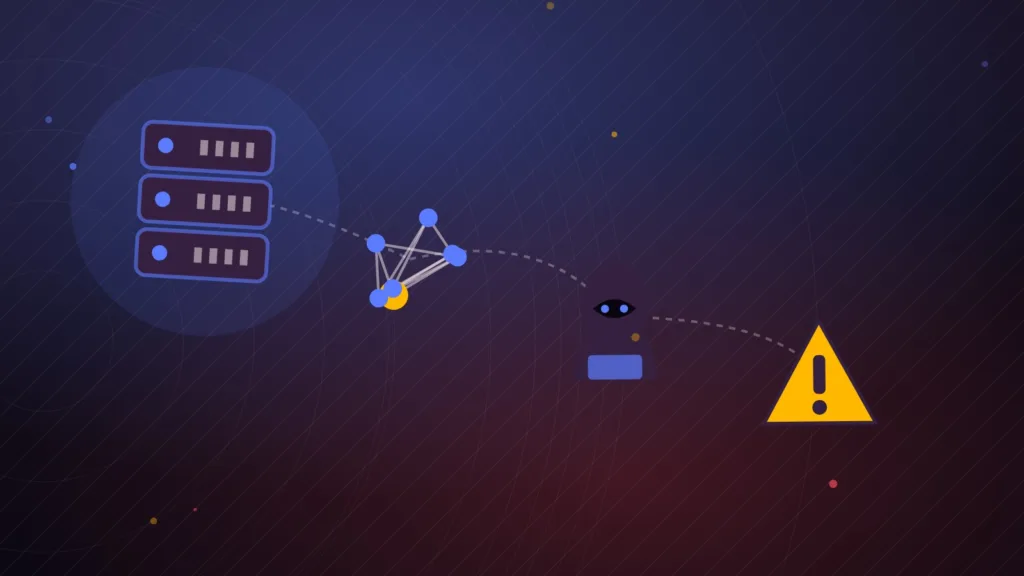
MANRS, a routing-security initiative for network operators, calls this a more-specific or sub-prefix hijack and cites a 2008 case in which a more specific route announced by Pakistan Telecom drew in YouTube’s traffic. Braiins adds a detail that explains why alarms stayed quiet: the forged announcement listed the real owner as its origin. Monitors that only check who originates a prefix saw nothing wrong.
The internet standards body calls this a forged-origin sub-prefix hijack. RFC 9319, a best-practice document published in October 2022, explains why it can still be caught. With RPKI, the registry system run by bodies such as the RIPE NCC, an address holder signs a Route Origin Authorisation (ROA) listing the prefixes it really announces. A router doing route origin validation drops an announcement that no ROA covers. If the ROA lists only the /20, a /24 inside it is invalid even with the right origin; if the ROA allows anything down to /24, the forged route passes. RFC 9319 tells operators to keep ROAs minimal for that reason.
That matches what Braiins reports. Networks that validate routes against RPKI rejected the forged /24, and miners behind them were safe. Many networks do not validate, so miners behind those were exposed. The forged route appeared four times that day. The block’s owner told Braiins it never announced it and that the connections never reached its network. The provider blocked the network that was spreading the route on the evening of 20 November, and Braiins says it has not been seen since.
It may not be over. Braiins says public route data showed similar announcements for address blocks that host the Stratum endpoints of other large pools, some still on Sunday 22 November. Those blocks also host thousands of unrelated services, so the data does not prove that mining was the only target. How the Latin American episodes were carried out is not described.
Braiins also lists what it ruled out. At least 12 firmware types were affected, so no single firmware is to blame, and the sites sat in hundreds of networks, which rules out one internet provider. “Any miner on plain Stratum V1 is a target, on any pool,” the company wrote.
Stratum V1 vs V2: why plain text is the weak point
Stratum is the protocol a mining machine uses to fetch work from its pool and send back shares. Version 1 dates from 2012. It sends JSON messages in plain text over TCP, and it gives the miner no way to check that the server answering is really its pool. Anyone on the network path who can read and alter the traffic can swap the jobs. That is the weakness Braiins described in a 2020 post on hashrate robbery, and a Black Hat Asia talk in May 2021 described ways to divert V1 miners’ work by slipping a rogue pool’s jobs into the connection.
Stratum V2 encrypts and authenticates the connection, Braiins says, and the last part of the URL the miner uses is the pool’s public key. A server that cannot prove it holds the matching private key is refused. Encryption does not stop the resets, Braiins notes, but the miner will not work for the impostor, so the attacker earns nothing.
Stratum V1 over TLS (URLs starting stratum+ssl://) sits in between. It helps only if the firmware checks the pool’s certificate and hostname. “TLS protects you only if the firmware on the miner checks the certificate,” Braiins wrote.
The company tested seven firmware implementations in its lab on 20 and 23 November. Its own Braiins OS 26.11 rejected every bad certificate, which is the vendor grading its own product. Two other widely used firmwares offered TLS but accepted invalid certificates, a flaw Braiins calls critical. The rest had no TLS at all for third-party pools. None of the other firmwares is named.
The pools are not much further along. On Monday 23 November, Braiins checked the public endpoints of the largest pools and found that most offered only plain-text Stratum V1; only a few served TLS with a valid certificate. It does not name them. Cointelegraph summed up the report as saying that most of bitcoin’s hashrate still runs over unsecured V1.
What miners and pools should do now, according to Braiins
These are the recommendations of a company that sells the tools it recommends, so read them with that in mind. Braiins released two of them on 25 November, the day of the alert: Braiins OS 26.11, which adds TLS with certificate and hostname checks and blocks a silent fallback to plain text, and a free Braiins SV2 Proxy, a first release that runs on Linux or on Windows through WSL inside the farm’s network. Machines speak V1 to the proxy, and the proxy speaks V2 to the pool.
- Miners should make sure no pool entry, backups included, starts with stratum+tcp://, and use Stratum V2 where the hardware and pool support it.
- Where only V1 over TLS is possible, the firmware must reject bad certificates; Braiins points to a test page in its Braiins Academy and notes that upgrading firmware changes nothing until the pool URLs are switched to TLS.
- Operators should compare the hashrate their machines report with what the pool credits, and set an alert for share difficulty above the pool’s maximum (16,777,216 at Braiins Pool).
- Pools should add Stratum V2 and a TLS-only port with a publicly trusted certificate, review RIPE RIS or RouteViews data since 1 November for unexpected more-specific prefixes, and ask their hosts to announce a /24 containing the Stratum endpoint, with an RPKI ROA limited to that length, which Braiins says reduces the risk without removing it.
- Network operators should turn on RPKI route origin validation, which Braiins says would have prevented the attacks on every network that checks.
On Whatsminer machines, Braiins says one log line appeared on every connection to the fake server in the logs it examined and never on real-pool connections, but it warns that the same line can show up with legitimate pools. For Braiins Pool itself, it lists TLS on ports 3443 and 33443.
An old attack: $83,000 in 2014, and the Luxor case was different
None of this is new, which is Braiins’ own point: “The weakness they used is not newly discovered.” In August 2014, researchers at Dell SecureWorks documented an attacker who used forged BGP announcements from February to May of that year to send miners to a fake pool. They counted 51 compromised networks at 19 internet providers, Amazon, DigitalOcean and OVH among them, traced the announcements to a single router at a Canadian provider and estimated the haul at about $83,000.
The method also differs from the Luxor case, which began at about 02:00 UTC on Sunday 15 November. There, someone got into Luxor’s Commander management software and changed pool settings on just over a dozen client accounts, as we reported in our story on the Luxor Commander hack and the OCEAN payment. Encryption would not have stopped it. In the cases Braiins describes, the company says pool accounts, balances and payout settings were not affected: the traffic was diverted on the network. No evidence links the two.
For miners, the stakes come on top of thin margins. Our report on bitcoin mining costs and the coming difficulty rise showed how little room many operators have; a farm that loses an hour of output to an impostor still pays the full power bill. Newcomers can start with our guide to how bitcoin mining works and our explainer on hashrate and difficulty.
Still unknown after the Braiins report
The list of open points is long. No independent routing analysis of the 20 November announcements has been published, and the provider and the address-block owner are not named. The pool whose accounts collected the stolen shares has made no statement, and neither have the large pools whose endpoints Braiins found exposed on 23 November. No victim has described a loss, and no total in bitcoin has been given.
The next signs to watch are pool announcements of TLS or Stratum V2 endpoints, firmware makers patching certificate checks, and whether the forged routes come back. Braiins’ alert still describes the threat as live.