




bitcoin++ Seoul 2026: a privacy edition on coinjoin, silent payments and ecash, 5-6 November
→ (Asia/Seoul)
Scheduled In person
Starts in
About the event
The bitcoin++ Seoul privacy edition, a developer conference, runs on Thursday 5 and Friday 6 November 2026 at Community House Masil in Seoul’s Myeong-dong district. Doors open at 10:00 Korea time (01:00 UTC). It is the first bitcoin++ held in Korea, and the organiser says it will focus on “the dark side of transacting with bitcoin”: coinjoin, silent payments, ecash and payjoin, with a privacy hackathon running across both days.
The official bitcoin++ Seoul page lists 29 accepted speakers on two stages, a Main Stage and a Talks Stage. Tickets start at USD 389 paid in bitcoin.
A bitcoin privacy conference for builders, not traders
Each bitcoin++ edition picks one technical theme and one city. The series began in Austin in June 2022 and has since run editions on layer 2, bitcoin script, ecash, the mempool, Lightning, exploits and payments, in Mexico City, Buenos Aires, Berlin, Riga and Florianópolis. Seoul’s schedule has no ETF panel and no talk on the bitcoin price.
Privacy has been the theme twice before. The “onchain privacy edition” took place in Mexico City on 10-12 December 2022 at Hotel Benidorm, with 21 accepted speakers. Riga’s privacy edition followed on 7-8 August 2025 at the National Library of Latvia, with 30 speakers. Both sold out, according to their pages on btcpp.dev. The latest edition, payments in Berlin from 1 to 3 October 2026, had 38 speakers and a 40.65 million sats hackathon prize pool, and also sold out.
The programme: four bitcoin privacy techniques explained
Most sessions on the agenda carry a short description, and four techniques come back again and again. All times below are Korea time (KST, UTC+9).
Silent payments (BIP 352)
A silent payment address is one static address that a receiver can post on a website. For each payment, the sender’s wallet mixes the keys of the coins it spends with the receiver’s public key and derives a new taproot output that only the receiver can spot. Two payments to the same silent payment address look unrelated on chain, and no extra transaction is needed. The cost falls on the receiver, whose wallet must scan new blocks to find its money. The scheme is written up in BIP 352. It tackles address reuse, which ties payments together, as our guide to crypto address formats explains.
Oleksandr Kurbatov of Blockstream Research speaks at 14:00 on day one about combining silent payments with multiparty signatures such as FROST and MuSig2. At 15:30, Anmol Sharma of Bitshala covers a wallet built around silent payments that scans on the phone rather than on a server, and what the method leaves exposed, amounts included. On day two, Pacman of DIYbitcoin runs a workshop on airgapped silent payments with do-it-yourself signing devices.
Coinjoin
In a coinjoin, several users build one transaction together. Each puts in coins and gets back outputs of the same standard sizes, so an observer cannot tell which output came from which input. It works against the chain analysis that follows coins from address to address, described in our guide on how crypto transactions work. JoinMarket pairs users with market makers who are paid to take part, while Wasabi Wallet uses a coordinator and a protocol called WabiSabi.
Kruw of Wasabi Wallet presents “JoinMarket Feeder Coinjoins” at 11:45 on day one, a hybrid that draws on JoinMarket’s liquidity and WabiSabi’s standard amounts. At 13:15 on the Talks Stage, m0wer of JoinMarket NG shows an experiment that hides each participant’s change inside Lightning channels opened by the coinjoin itself.
Ecash: Fedimint and Cashu
An ecash mint holds bitcoin and hands out tokens with a blind signature: it signs a token without seeing it, so when the token is spent later the mint cannot tell who first received it. A Fedimint mint is run by a federation of guardians who share a multisig wallet; a Cashu mint is usually run by one operator. The catch is custody. Users hold claims on the mint, not their own coins, and give up self-custody while they hold ecash.
Eric Sirion of Fedimint gives “Real World Ecash Privacy” at 10:30 on day two, using several years of public usage data to measure how much privacy users get in practice. On day one, Justin Moeller (Spiral, OpenSats grantee) explains how Fedimint moved from a P2WSH multisig, which needs one signature per guardian, to Taproot with FROST and ROAST, which needs a single signature whatever the size of the federation. Matthew Vuk compares Cashu mints powered by Bark with LNbits mints at 13:15, and on day two Joe Miyamoto presents bitCaster, a prediction market that uses Cashu tokens.
Payjoin (BIP 78 and BIP 77)
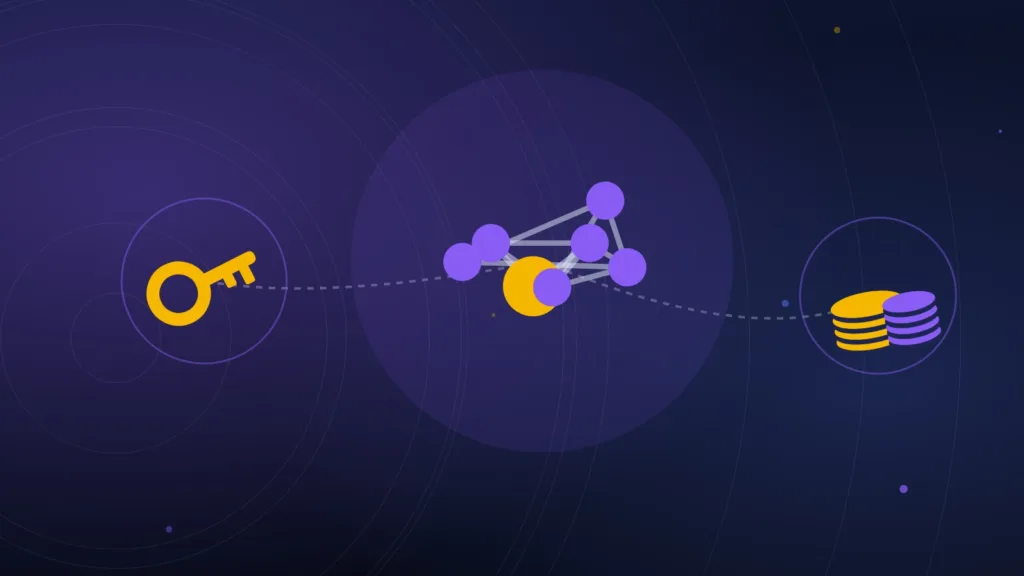
In a payjoin, the receiver adds one of its own coins to the sender’s payment. Chain analysts usually assume that all inputs of a transaction belong to one person, and a payjoin breaks that rule. The amount visible on chain also stops matching the amount paid. BIP 78, the first version, needs the receiver to run a server that is online during the payment. BIP 77, “Async Payjoin”, still a draft co-written by Dan Gould, lets a relay server, called a directory, hold the encrypted messages so the two sides do not have to be online at the same time.
Gould, of Payjoin Dev Kit, takes a wider view at 11:00 on day two with “Who Defines Privacy?”, on how law and society caught up with new technology in the 20th century, after Alan Westin’s 1967 book “Privacy and Freedom”. On day one at 11:00, Fabian Jahr of Brink gives an update on CISA, cross-input signature aggregation, a proposal that would let one signature cover several inputs. That would make shared transactions such as coinjoins and payjoins cheaper. CISA is not active on bitcoin today.
Other talks: Korea, Lightning memos, nostr and AI
After a 10:15 kickoff by niftynei of bitcoin++, Calvin Kim opens the talks at 10:30 on day one with “Privacy is not a concept in Korea”. His description says Korean has no direct word for privacy, and the talk looks at how Korean society handles the subject and how to bring it to local bitcoiners.
At 14:30 on the Talks Stage, Marek Feder of AmityAge leads a workshop on the words compliance teams are trained to flag, such as “anonymous” and “untraceable”, drawing on his scam-prevention work at the National Bank of Slovakia. Danny of IPF/Marmot talks about privacy in the age of AI at 16:00. Asher Pembroke of Fathomx presents Rose, a light wallet for businesses that syncs with compact block filters so it never sends an address to an outside server. Ben Knab of Hoseki traces bitcoin message signing up to BIP 322 and asks how zero-knowledge proofs could turn a signature into a private proof, for example of a minimum balance.
Day two has Jin on a draft that encrypts the free-text notes attached to Lightning payments, which today travel in plain text through custodial wallets and swap services. KIM CHANGHAK of the Korean exchange bithumb and Minseok Song spend an hour on bitcoin-rs, a full node written in Rust, and on where AI helps or fails when writing it. Adam Gibson (waxwing) presents Lichen at 15:30, a layer-2 design where zero-knowledge proofs handle withdrawals and channel liquidity replaces covenants. niftynei hosts the closing panel, “Privacy on Bitcoin”, from 16:15 to 17:15.
Hackathon: 2.5 million sats for the most private bitcoin tool
Teams are asked to build the most private bitcoin project they can, whether a protocol, an application or a payment tool. Calvin Kim and niftynei start the hackathon at 17:30 on 5 November, and hacking runs from 18:00 to 21:30. Finals take place from 13:15 to 15:00 on 6 November, followed by a judges’ meeting, and the awards run from 17:15 to 18:00, the last item of the conference.
Organisers list a prize pool of 2.5 million sats (0.025 BTC), with the same amount shown for first place. Second and third place appear without an amount. Piccolo is named as judge.

bitcoin++ Seoul tickets and prices
On 27 October 2026 the official page showed these prices, in US dollars only:
| Ticket | Price (USD) | Note |
|---|---|---|
| General, paid in bitcoin (on-chain or Lightning) | 389 | No card surcharge |
| General, paid by card | 428 | Processed by Stripe, surcharge included |
| Student and local rate | 121 | Limited; proof may be asked at check-in |
Every ticket covers talks and workshops, lunch and refreshments, access to the satellite events and a swag bag. Earlier price rises on 16 January and 1 August 2026 have passed. The page also shows a rise to USD 526 on 20 November at 15:00 KST, two weeks after the event. Talk applications closed on 26 September.
Venue, hotels and side events in Seoul
Community House Masil is at 14 Myeongdong 11-gil, Jung-gu, according to the Bitcoin Korea Conference site; the bitcoin++ page gives no street address. The organiser suggests three hotels: Royal Hotel Seoul, a minute’s walk away, from USD 190 a night; Travel Lodge Myeongdong Namsan, 10 minutes on foot, from USD 77; and Lotte Hotel Seoul, also 10 minutes, from USD 450.
Two side events are listed. On 3 November, Calvin Kim leads a day trip to the DMZ from 08:40 to 17:00, open to VIP ticket holders and speakers of Bitcoin Korea Conference or bitcoin++ Seoul; a passport is required. On 6 November from 18:00, a Bitcoin Happy Hour at The Hike in Itaewon, hosted by Bitcoin Korea Conference, takes sign-ups on Luma. The separate Bitcoin Korea Conference then fills 7 and 8 November.
Why a bitcoin privacy conference in Seoul matters now
From 3 December, Korean crypto platforms must report every transfer abroad to the Bank of Korea, with sender and recipient details, under an amended Foreign Exchange Transactions Act. The Seoul Economic Daily described the central bank’s draft manual on 23 October. The manual also asks for each user’s month-end balance. The paper counted 1,272,878 users with transfers abroad at the five largest exchanges between July 2024 and September 2026, and the bank said it was considering a much narrower balance report. Transfers between private wallets that never touch a platform are not covered. Our report on Korea’s cross-border crypto reporting has the details.
For readers in Europe, the dates fall on a Thursday and Friday, and prices are in dollars only. The organiser has not said whether talks will be filmed or streamed. Those who want a bitcoin-only event closer to home can look at B-Only 2026 in Annecy, on 7-9 November.
What is still unknown
Markus Schofnegger’s 14:30 slot on day one is still marked “TBD”, and the FROSTY workshop by Nick Farrow has no description. The amounts for second and third place are not published. The site does not name a company behind bitcoin++.
The next trip is far colder. According to Bitcoin Magazine on 26 October, bitcoin++ plans “Antarctica: Cold Storage Edition” from 24 January to 5 February 2028: 22 places on a 13-day voyage from Ushuaia, at USD 14,900 per person in a four-person cabin or USD 16,700 in a two-person cabin, 5% less when paid in bitcoin.
Related
Event
ESMA stablecoin deadline: about 8 January 2027 for non-MiCA tokens, and platforms are not waiting
· Online Scheduled
ESMA stablecoin deadline: national authorities have three months from 8 October 2026 to clear non-MiCA positions. Who acts,…
Event
Lighter (LIT) token unlock: 500M LIT vesting from an estimated 27 December 2026, and trackers disagree on the date
· Online Scheduled
Lighter LIT token unlock: 500M LIT, half the supply, vest over three years. Estimated start 27 December 2026;…

Event
Hyperliquid (HYPE) unlock on 6 November 2026: trackers model 9.9M, no amount announced
· Online Scheduled
HYPE unlock of 6 November 2026: the team has announced no amount. The 9.9M figure is a modelled…
Event
Zcash NU7 upgrade: block 3,543,405 expected on 6 November, and who must act first
· Online Scheduled
Zcash NU7 upgrade countdown: block 3,543,405 is estimated for about 02:30 UTC on 6 November. What Sprout holders,…

Event
Adopting Bitcoin Cape Town 2027 (26-27 February): two price lists, no agenda yet
· Cape Town Scheduled
Bitcoin-only Adopting Bitcoin Cape Town 2027 runs on 26-27 February at Workshop17 Watershed. Two official ticket pages disagree;…

Event
FCA crypto regime: the application window closes on 28 February 2027, nearly eight months before the rules start
· London Scheduled
FCA crypto regime: firms applying by 28 February 2027 get the saving provision if still undecided in October…