
Airdrop ·
Pharos PROS airdrop: claim period ended on 25 October 2026
Ended Verified Risk 2/5
Step by step
- Claim closed on 25 October 2026 at 11:00 UTC: the steps below are how the official claim worked
- Eligible users typed claim.pharos.xyz into the browser themselves
- They connected the eligible EVM wallet (Pharos Mainnet, chain ID 1672)
- They checked the PROS allocation shown for that wallet
- They confirmed the claim transaction (gas of 0.05 PROS pre-funded) and checked the PROS on pharosscan.xyz
- Unclaimed PROS are returned to the Pharos Foundation, according to the claim FAQ
Our notes
Update, 26 October 2026, 08:09 UTC: the Pharos airdrop claim has ended. On 26 October the official claim site, claim.pharos.xyz, showed “Claim Ended”, with its countdown at zero and the claim button greyed out. The settings of the site give 25 October 2026, 11:00 UTC as the end date, and no extension appears anywhere on the official pages. The Pharos FAQ says tokens left unclaimed after the deadline “will be returned to the Pharos Foundation”, and the user guide says the same. Pharos has published no figures (claimers, PROS claimed, total reserved), and we found no closing post and no word of a second airdrop or a new season.
The Pharos airdrop claim closed on Sunday 25 October 2026 at 11:00 UTC. Wallets that qualified for PROS, the native coin of the Pharos layer 1, had 180 days to collect it on the only official claim site, claim.pharos.xyz. Since then, according to the Pharos claim FAQ, unclaimed tokens go back to the Pharos Foundation and the airdrop site is to shut down. The claim itself cost nothing extra: Pharos said the 0.05 PROS of gas it needed was already in eligible wallets.
The official FAQ gives the day but no hour: “You will have 180 days from Apr 28 to claim your tokens.” The 11:00 UTC cut-off came from the countdown settings on the claim homepage, which opened the claim at 11:00 UTC on 28 April, exactly 180 days earlier. Europe left summer time that same morning, so the close fell at noon in Paris and Rome and at 11:00 in London. Before the deadline, no written announcement confirmed the hour, and leaving the claim to the last morning was a gamble. After it, the two official signals agree: the site settings give 25 October at 11:00 UTC as the end date, and the homepage now reads “Claim Ended”. The FAQ and the user guide still give the date only.
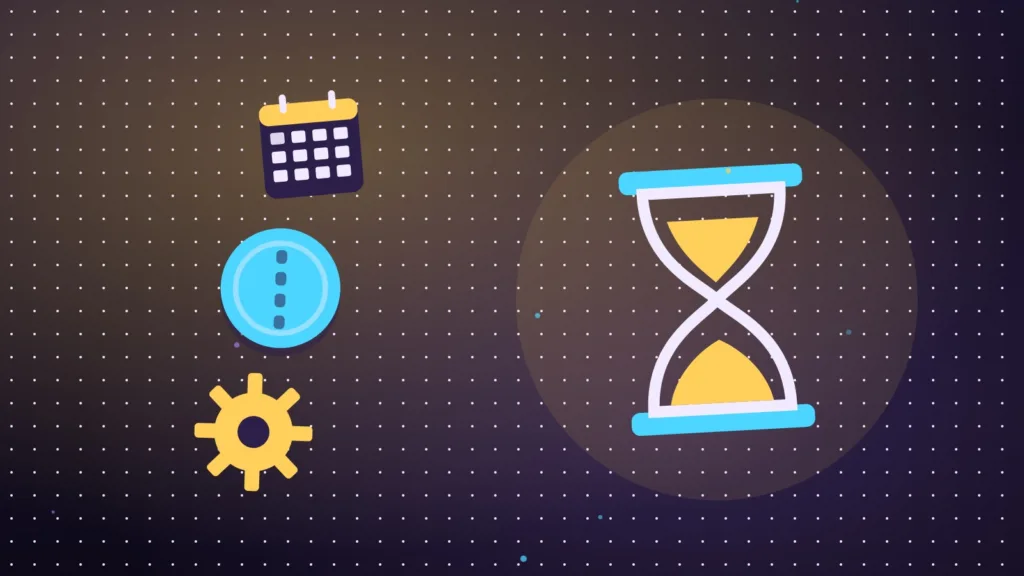
Pharos airdrop deadline and key figures
| Item | Detail | Source |
|---|---|---|
| Claim opened | 28 April 2026, 11:00 UTC | Claim site settings |
| Claim closed | 25 October 2026, 11:00 UTC; “Claim Ended” shown on 26 October | Claim site settings and homepage |
| Registration window | 23 to 25 April 2026 (closed) | Claim FAQ |
| Gas for the claim | 0.05 PROS, pre-sent by Pharos to eligible wallets | Claim FAQ |
| Network | Pharos Mainnet (Pacific), chain ID 1672 | Pharos docs |
| PROS genesis supply | 1,000,000,000 PROS | Tokenomics post, 20 April 2026 |
| Community Airdrop share | 6% of supply, of which 1% for TGE airdrops and mainnet launch activities | Tokenomics post |
| Unclaimed PROS | Returned to the Pharos Foundation | Claim FAQ, user guide |
The table has no figure for the size of this claim because Pharos has not published one, before or after the close. The 1% slice (at most 10 million PROS) also covers “mainnet launch activities”, so the airdrop took only part of it. Individual amounts appeared only when a wallet connected to the claim page.
What Pharos is and why PROS was airdropped
Pharos is a proof-of-stake layer 1 compatible with the Ethereum Virtual Machine. In its tokenomics post of 20 April 2026, the team says it targets real-world financial applications, stablecoin infrastructure and payments, a pitch it calls “RealFi”. Its founders come from Ant Group, according to the company’s funding release.
The timeline is short. Pharos raised an $8 million seed round in November 2024, co-led by Lightspeed Faction and Hack VC, then opened its testnet in May 2025. The 1 billion PROS were minted on 12 December 2025 at the private mainnet launch. On 8 April 2026 it announced a $44 million Series A, bringing total funding to $52 million; the lead investors were not named.
“This funding allows us to scale RealFi from narrative to execution,” said Wish Wu, described as co-founder and CEO in the 8 April 2026 release. Twenty days later, on 28 April, came the token generation event and the opening of the claim.
This airdrop rewarded activity before launch, not purchases: testnet use, community roles and partner campaigns.
Pharos airdrop eligibility: who could claim
Pharos listed four groups on the claim homepage. A wallet that qualified in several of them got one combined claim.
- Pharos testnet participants
- contributors to the “Stake Before the Stake” campaign
- holders of Pharos Discord roles
- users of the OKX Wallet campaign
The exact thresholds behind each group, such as how much testnet activity counted or which Discord roles qualified, were never made public. Neither was the number of eligible wallets. The airdrop terms say Pharos sets criteria and amounts “in its sole discretion”, has no duty to publish them, and that qualifying creates no legal right to tokens.
Registration ran from 23 to 25 April. During that window, eligible users picked how to receive their PROS: an instant claim, a staked option, or a delayed claim with a bonus. The user guide gives the bonus as 1.05 times the allocation for a 30-day lock, 1.12 times for 60 days and 1.2 times for 90 days. Anyone who picked nothing was put on the instant claim. The longest delay, 90 days from 28 April, ran out in late July, so every option could be collected until the close on 25 October. The user guide still mentions an appeal form for eligibility problems; Pharos has not said whether appeals are still accepted now that the claim has ended.
How the Pharos claim worked
For the record, the official procedure had five steps, all on the claim site:
- The user typed claim.pharos.xyz into the address bar.
- They connected the EVM wallet that qualified. The claim ran on Pharos Mainnet, chain ID 1672.
- The page showed the PROS allocation for that wallet.
- They confirmed the claim transaction in the wallet, paid with the 0.05 PROS of gas Pharos had sent.
- They checked that the PROS arrived on the official explorer, pharosscan.xyz.
When the gas was missing, for example because it had been moved, the official docs listed ways to get PROS on the Pharos network: a card payment through Halliday or Alchemy Pay, or a withdrawal from an exchange with the network set to Pharos. Network details (RPC, explorer, chain ID) are on the Pacific Mainnet page of the Pharos docs. The claim had to be signed from the eligible address, so a wallet you control was required. Since 25 October at 11:00 UTC the claim page no longer offers a claim; PROS already claimed stay in the wallets that received them.
France, Italy and the EU were not on the restricted list
The restricted list in the official Pharos airdrop terms names countries and regions such as mainland China (Hong Kong, Macao and Taiwan are left out of that restriction), Iran, North Korea, Syria, Belarus, Cuba, Iraq, Lebanon, Myanmar, Afghanistan and the Crimea, Donetsk and Luhansk regions. People on UN, UK, US or EU sanctions lists are excluded too, along with residents of any place where airdrops are banned.
No EU member state appears on the list in the terms, so France and Italy were not excluded by the official terms. Neither were the US and the UK. That was never a promise of access: the FAQ says some regions are blocked by IP address “due to compliance requirements”, and the terms forbid using a VPN to get around a block, with permanent disqualification as the penalty.
For European readers, PROS also has a crypto-asset white paper on the MiCA register: notified on 11 May 2026 and published on 10 June 2026, with the Netherlands as home member state and the AFM as competent authority. Our guide to the MiCA regulation explains what such a filing does and does not cover.
Vesting, listings and supply to watch
The terms also allow a “Lock-Up” on airdropped tokens, which Pharos may change or extend. Bigger allocations sit elsewhere. According to the official tokenomics table, the team (20%) and investors (20%) received nothing at the token generation event and face a 12-month cliff counted from the coin mint of 12 December 2025, then 36 months of linear release. On that schedule, those unlocks begin from mid-December 2026. The Foundation treasury holds 16%, the Labs company 9%, node and liquidity incentives 14% and the ecosystem fund 15%, each on its own schedule. Staking rewards were set at 0% for the first six months after network launch and 5% a year from month seven.
On the trading side, OKX listed PROS/USD and PROS/EUR for spot trading on its European platform on 13 May 2026 at 11:00 UTC, with the usual warning that not every product is offered in every region. Our OKX review covers the platform. We give no price view on PROS.
Risk score: 2 out of 5, now for scams only
We rated this airdrop 2 out of 5 while the claim was open. The process itself was low risk: one official claim site, written terms, gas pre-funded by Pharos, and nothing to buy or deposit. It was not a 1 because a well-known deadline drew phishing clones and wallet drainers, and because the terms leave amounts and lock-ups to Pharos.
With the claim closed, there is nothing left to collect. The risk that remains for a reader is a fake “late claim”, a paid “extension” or a “second round” that Pharos never announced. We keep the score at 2 because such offers can empty a wallet in one signature. PROS already claimed can also swing in price, with team and investor releases due from December.
Fake Pharos claim sites after the deadline
The airdrop terms put it in capitals: “THERE IS ONLY ONE WEBSITE FOR $PROS AIRDROP: https://claim.pharos.xyz”. They also warn about copycat sites and fake tokens posing as PROS, and say Pharos is not liable for losses to them.
Copycat pages do not disappear when a real claim ends; a closed window gives them a new pitch. Pharos has announced no late claim, no paid recovery of unclaimed tokens and no new season, so any page, post or message offering one does not come from Pharos.
A genuine claim never asked for your seed phrase or private key, or for a payment to release an airdrop, and nothing official does now. Do not sign an unlimited token approval on any page. Skip sponsored search results and “claim now” replies on X, Telegram or Discord. Our guide to avoiding crypto scams lists the common patterns.

What is still unknown after the close
Pharos has not published the total PROS reserved for this claim, the number of eligible wallets or how much was claimed before the deadline. It has not explained how the staked option chosen at registration converts, nor what the Foundation will do with the returned tokens: hold them, burn them or put them into a later programme.
No extension, closing post or second airdrop had been announced as of 26 October 2026. We could not check the exact closing time in the claim contract on the explorer; the “Claim Ended” status on claim.pharos.xyz is the official signal. The next date that follows from the official tokenomics is mid-December 2026, when the 12-month cliff on team and investor tokens runs out.
Crypto-assets are volatile and you can lose all the money you invest. Nothing published on Coindaro is investment advice.
Related
Airdrop
Midnight NIGHT redemption deadline: the final 25% thaws by 4 December 2026, and nothing is paid automatically
Confirmed until
The final 25% of Midnight's NIGHT airdrop thaws by 4 December 2026. Redeem it on midnight.gd yourself: hour…

Airdrop
Grass airdrop Season 2: claim your USDC rewards before 22 January 2027
Confirmed until
Grass airdrop Season 2 claim: Stage 2 rewards are paid in USDC on Solana. Who is eligible, fees,…
Airdrop
Treehouse TREE airdrop: deadline passed, 14.5M TREE still in contract
Ended until
Treehouse airdrop: the TREE Season 2 claim deadline passed on 25 November. A day later the contract still…

Airdrop
Predict.fun airdrop: no 26 November deadline, Option B now paid in 12 monthly parts
Confirmed
Predict.fun airdrop: the 26 November deadline is void. Binance's form now runs to the day before launch, with…

Airdrop
Aster airdrop Stage 6: vested ASTER claim opens 4 November, not 28 October
Confirmed until
Aster airdrop Stage 6: the vested claim of 64M ASTER runs 4 Nov to 4 Dec at 12:00…

Airdrop
Datai Network airdrop ended: the claim closed on 22 November 2026
Ended until
The Datai Network airdrop has ended: the Sablier claim closed at 13:00 UTC on 22 November 2026. Who…