
Airdrop · Solana
Grass airdrop Season 2: claim your USDC rewards before 22 January 2027
Confirmed Verified Risk 3/5
Deadline in
Step by step
- Type app.grass.io/dashboard yourself (no links from messages or ads).
- Sign in with the account that earned Stage 2 points.
- Check your Stage 2 USDC allocation.
- Process the claim; the USDC goes to the Grass in-app wallet (Turnkey).
- Optional: export the key to your own Solana wallet.
- Claim before 22 January 2027 (no hour given by Grass).
Our notes
The Grass airdrop Season 2 claim closes on 22 January 2027, and the reward is not paid in the GRASS token. Grass, the Solana project that pays people for sharing unused home internet bandwidth, hands out its Stage 2 rewards in USDC through its own dashboard. The claim opened on 22 July 2026 and, according to the official Stage 2 allocation page, runs six months or until every claim is made. As of 7 November 2026, about 11 weeks are left.
Grass gives the deadline as a date only, with no hour and no time zone, so do not leave it to the last day. CryptoTicker’s deadline list of 2 November gives the same date. Whatever is not claimed by then stays with Grass.
Grass Stage 2 rewards: the key facts
| Item | What the official sources say |
|---|---|
| Paid in | USDC on Solana; no new GRASS issued, GRASS holdings play no role |
| Eligibility window | Stage 2, epochs 1 to 19: 14 October 2024 to 8 June 2026 |
| Condition | More than 0 Network Points in that window, not in a restricted jurisdiction |
| Claim opened | 22 July 2026, 1:00 pm “EST” as the page writes it (17:00 or 18:00 UTC) |
| Deadline | 22 January 2027, no hour given |
| Network Point rate | $0.0049 in USDC per point |
| Uptime Point rate | $0.00000007 in USDC per point |
| Wallet fee | $0.15 per transaction, only with the Grass in-app wallet |
| Unclaimed rewards | Retained by Grass |
What Grass is, and how the first airdrop went
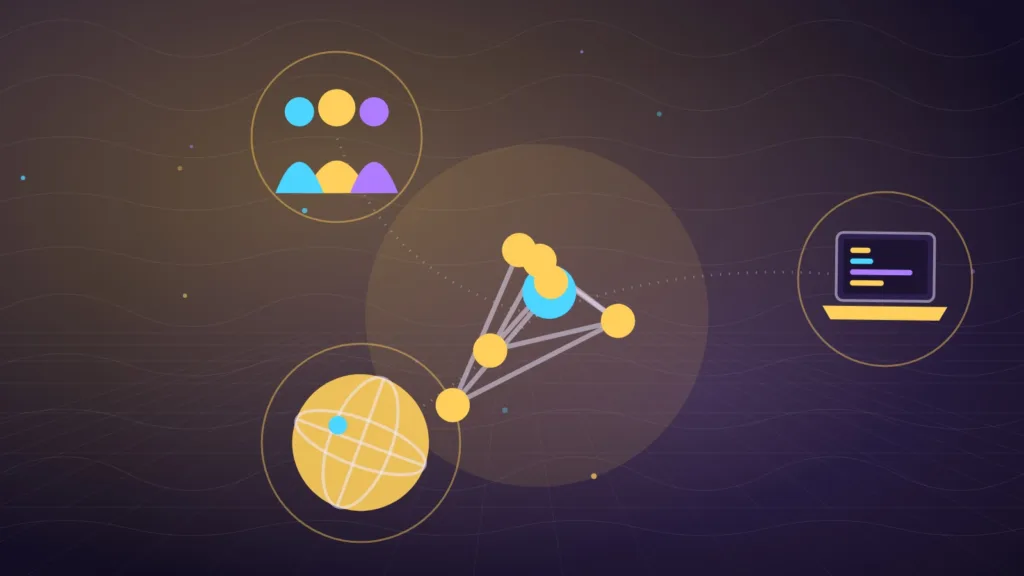
Grass runs browser extensions and apps that resell spare residential bandwidth, mostly to collect public web data for training AI models. Wynd Labs is described as its core contributor. The rewards programme is administered by Grass OpCo Ltd., a British Virgin Islands subsidiary of the Grass Foundation, a Cayman Islands foundation company.
Stage 1 landed on Monday 28 October 2024: Epoch 1 issued 100 million GRASS, 10% of total supply, to early node runners and community members, most of it to users with more than 500 Grass Points. The Block reported two days later that nearly 1.5 million addresses had claimed, citing Dune data, a Solana record at the time, ahead of Jupiter’s 639,000. More than 2.8 million wallets were eligible. The same report said many in the industry found the airdrop too easy to farm, with large bot operations taking tokens, a complaint common to points-based airdrop campaigns.
Why Stage 2 pays in USDC, and how big the pot is
Grass gives its own reason on the official page. It cites “ongoing regulatory uncertainty” and the need “to ensure that users based in all eligible jurisdictions may claim rewards in a timely manner”. A dollar stablecoin also means a claim does not swing with a token price.
Our USDT vs USDC explainer covers the two big dollar coins, and our page on Circle, the issuer of USDC, explains what backs it.
The size of the pool is not on the official page. HokaNews reported on 10 July 2026, citing the Token Holder Call of 7 July, that Grass put it at about $3 million in USDC. Treat it as a reported figure. The outlet also relayed complaints from contributors who found the sum small next to revenue figures quoted from earlier reports; we could not verify those figures.
How your USDC amount is calculated
Two kinds of points feed the allocation. Network Points measure the bandwidth your node actually delivered (Grass says 1 million were awarded network-wide each day). Uptime Points reward time online, connection quality, IP location and extras such as referrals and sign-ups. Both become one USDC figure.
Device type mattered. Network Points from the Desktop app carry a 5x bonus over the Chrome extension, Android points 10x. The 2x Desktop and 3x Android bonuses on Uptime Points were applied daily during Stage 2. No iOS multiplier is named. Grass adds that Android devices earned the most, ahead of desktop and then the Chrome extension.
What the page does not give is a closed formula. It lists the two rates and the factors, says actual bandwidth use weighs most, and adds that about 150,000 users carried roughly 90% of Stage 2 traffic. Grass links this to the network favouring stable, up-to-date nodes in high-demand places. Our reading: much of the USDC is likely to go to that group. Your own figure appears on the dashboard, and nowhere else.
Who can claim, and the countries the terms exclude
You qualify with more than 0 Network Points between 14 October 2024 and 8 June 2026, provided you are not an Excluded Person under the Rewards Program Terms and Conditions (last revised 3 July 2026). The window end is the cut-off; no other snapshot is given.
The terms bar Restricted Persons and minors, as defined in the General Terms, and anyone located in a Prohibited Jurisdiction. That covers jurisdictions under sanctions or heightened sanctions risk, with this list given as examples: Afghanistan, Belarus, Bosnia and Herzegovina, Burundi, the Central African Republic, Cuba, North Korea, the Democratic Republic of Congo, Guinea, Guinea-Bissau, Iran, Iraq, Lebanon, Libya, Mali, Nicaragua, Myanmar, Russia, Somalia, South Sudan, Sudan, Syria, Venezuela, Yemen, Zimbabwe, and the Crimea, Donetsk and Luhansk regions of Ukraine.
France, Italy, the rest of the European Union and the United States are not named. That is no guarantee: a second clause adds any jurisdiction Grass considers high risk for the distribution, and the list can change at Grass’s sole discretion. Grass may also run extra identity and eligibility checks, and its screening can go beyond legal requirements. No KYC step has been announced for the claim itself.
Using a VPN to get around geo-blocking or proxy detection is banned. Every claim goes through location and proxy checks, and anyone caught can be disqualified permanently and lose the allocation. For EEA residents, the terms point to a separate set of USDC terms from the issuer.
How to claim Grass Stage 2 USDC, step by step
- Type app.grass.io/dashboard into your browser yourself and sign in with the account that earned the points. The terms call it the only claim website.
- Check your Stage 2 allocation on the dashboard.
- Process the claim. The USDC goes to the Grass wallet built into the dashboard, a non-custodial wallet run in the background by Turnkey.
- To use your own Solana wallet instead, export the key; the page says this is possible at any time.
- To sell or swap, the wallet links out to MoonPay and Jupiter, third parties with their own terms and KYC.
The terms say you must legally own the wallet you use, and that failing to provide an eligible wallet in time can cost you the reward.
Fees: what comes out of your allocation
The claim is free, but moving the money is not. The Grass in-app wallet charges a Turnkey fee of $0.15 per transaction, only if you use that wallet. The Solana network fee comes on top and varies with congestion; Grass suggests waiting a few days when fees are high. Grass offers to pay these on-chain fees by deducting them from your allocation, in which case it also signs the transaction, and says it earns nothing from them. On a small allocation, a few transfers can eat a visible share.
The 22 January deadline and unclaimed rewards
Grass is blunt: unclaimed rewards will be retained by Grass. The terms put it in legal form. Rewards go only to eligible people who made a claim within the Claim Submission Period that Grass sets, and you accept the risk of failing to claim. Neither text promises an extension, and we found no official update on the deadline in October or November 2026.
With no hour stated, a claim on 22 January itself could fail depending on the time zone Grass applies. Claiming weeks ahead removes the doubt.
Fake Grass claim sites and how to avoid them
Any airdrop with a deadline draws copycat sites, and one paying in a dollar coin is an easy target. Grass says it never sends the first direct message, never asks for a seed phrase or private key, and never runs a check or claim on another site. Its terms say there is only one claim website and tell users to trust no other.
Bookmark the dashboard address, ignore “claim now” replies under Grass posts, and never sign a transaction from a page reached through an ad. Our guide to fake airdrops and giveaways shows the usual tricks.
Risk score: 3 out of 5
We rate this claim 3 out of 5. It is free, needs no purchase, pays in a stablecoin, and the official page and the terms agree on the essentials. Against that, individual amounts are opaque and often small, with no published formula and no official pool size. The high-risk clause lets Grass exclude more countries at will, disputes go to binding arbitration in the British Virgin Islands with a class-action waiver, and Grass caps its liability at gas fees. Add a deadline without an hour, fees taken from the allocation and the usual fake claim pages.
What is still unknown
Still open as of 7 November 2026: the hour and time zone of the deadline, the official size of the pool, the number of eligible wallets, and whether residents of unlisted countries can always claim in practice. The page writes “EST” for the July opening although New York was on daylight time, hence the one-hour doubt on the UTC time.
Grass has said nothing official about a payout after Stage 2. Community posts relayed in July noted mentions of “Season 3” in Grass communications, which may mean points keep counting; no amount or date is confirmed. Rewards may also be taxable where you live.
The next date to watch is 22 January 2027, the last day to claim on the official dashboard.
Crypto-assets are volatile and you can lose all the money you invest. Nothing published on Coindaro is investment advice.
Related

Airdrop
Midnight NIGHT redemption deadline: the final 25% thaws by 4 December 2026, and nothing is paid automatically
Confirmed until
The final 25% of Midnight's NIGHT airdrop thaws by 4 December 2026. Redeem it on midnight.gd yourself: hour…
Airdrop
Treehouse TREE airdrop: docs say 25 November, contract allows a sweep from 4 November
Confirmed until
Treehouse TREE airdrop: docs close Season 2 on 25 November, but the contract lets its owner sweep the…

Airdrop
Predict.fun airdrop claim delayed: Binance postpones PREDICT and no new date is set
Confirmed until
Predict.fun airdrop delayed: Binance postponed PREDICT spot trading and the claim has no new date. The form still…

Airdrop
Aster airdrop Stage 6: vested ASTER claim opens 4 November, not 28 October
Confirmed until
Aster airdrop Stage 6: the vested claim of 64M ASTER runs 4 Nov to 4 Dec at 12:00…

Airdrop
Datai Network airdrop: 942 wallets can claim 397 to 865 DATAI until 22 November
Confirmed until
Datai Network airdrop: 942 wallets share 400,000 DATAI on BNB Chain. Who passed the sybil filter, how to…

Airdrop
Extended XTEN airdrop: 30% of supply set aside for Points holders, claim not open yet
Confirmed
Extended exchange airdrop: 300 million XTEN, 30% of supply, go to Points holders. TGE in November, tokenomics from…