





Metrics
About the project
Wormhole crypto runs on one rule. Nineteen validator companies, the Guardians, watch a set of blockchains, and a message signed by 13 of them is accepted as true by contracts on other chains. Portal Bridge depends on that rule. So does Native Token Transfers, the framework Hyperliquid used for HYPE and Ripple for its RLUSD stablecoin, and so does the BNB Chain share class of BlackRock’s BUIDL fund, which Securitize launched with Wormhole in November 2025.
The history is uneven. In February 2022 an attacker minted 120,000 unbacked wrapped ether on Solana through a bug in Wormhole’s contract, and Jump Crypto refilled the bridge the next day. The project left Jump and raised $225 million in 2023, issued its W token in April 2024 and rewrote the token’s release schedule in September 2025. DefiLlama records no protocol revenue for it. W opened at $1.66 on 3 April 2024, CoinDesk reported; when we checked CoinGecko at about 19:35 UTC on 29 October 2026, it had lost more than 99% of that.
What Wormhole crypto is: a messaging layer, not a chain
Wormhole’s documentation calls it a generic message-passing protocol between blockchains. It has no blocks of its own and no validators producing them. Nor is it simply a token bridge, even though moving tokens is what most people use it for. A message can carry a token transfer, a governance vote, a price reading or any other instruction that a contract on one chain wants a contract on another chain to execute.
Each connected chain has a Wormhole core contract that apps call when they want to send something out. The Guardians watch those contracts and sign what they observe. Once 13 signatures agree, the bundle becomes a VAA (Verified Action Approval), a signed packet that anyone can carry to the destination chain, where a contract checks the signatures before acting. Relayers do the carrying. The current delivery system is called the Executor, and the security documentation treats it as untrusted: it can delay a message but cannot forge or alter a VAA.
Newcomers can start with our explainer on how bridges, cross-chain messaging and intents work, which compares the main designs side by side.
How Wormhole works: 19 Guardians and a 13-signature quorum
The Guardian page of Wormhole’s docs describes VAAs as 13-of-19 multisignature attestations. That is a two-thirds supermajority, and the same two-thirds rule applies to governance actions such as changing the Guardian set. On Ethereum and Solana every Guardian runs a full node and observes events independently. Some chains are delegated: a configured subset of Guardians observes them, and the others sign only after that subset reaches its own quorum. The finished VAA still needs 13 of 19.
The docs do not list the Guardians by name; they link to a dashboard of the current set. Announcements fill in part of the picture. When Google Cloud joined on 18 September 2024, its press release named RockawayX, P2P, Figment and Everstake among the existing Guardians. Google Cloud’s job, according to that release, is to take over the verification work of any Guardian that goes offline.
Two more checks sit on top of the signatures. The Governor tracks value flowing in and out of each chain and delays transfers that look like an exploit. The Global Accountant tracks the total supply of Wormhole assets across chains and stops any chain from bridging out more than the books allow. Neither replaces the signatures. They cap what a forged or mistaken message could move before someone notices.
Every app on Wormhole trusts the same 19 signers. Reviewers have one security model to study instead of dozens of custom ones, but a failure of that set, or of a contract that checks its signatures, would reach every app at once. LayerZero works the other way: each application chooses its own verifiers, called DVNs, chain by chain, and its documentation tells developers to set them explicitly rather than rely on defaults.
Portal Bridge, NTT and the other Wormhole products
Portal Bridge and wrapped tokens
Portal Bridge (portalbridge.com) is the app for Wormhole’s original token bridge. It locks a token on its home chain and issues a wrapped copy elsewhere, such as Wormhole-wrapped ether on Solana. Wormhole said the old interface at legacy.portalbridge.com would be retired on 30 June 2026; on 29 October 2026 that address no longer resolved. Most of the value DefiLlama counts for Wormhole sits in this lock-and-wrap model: $1.50 billion on 29 October 2026, of which about $1.26 billion was on Ethereum.
Native Token Transfers (NTT)
NTT is the newer route, and the one token issuers have chosen lately. The token stays native on every chain, with no wrapped copy. In hub-and-spoke mode, tokens are locked on a home chain and minted on the others. In burn-and-mint mode, they are destroyed on the source chain and created on the destination. The issuer keeps control of ownership, metadata and upgrades and can cap transfers per chain and per period, while a Global Accountant check makes sure no more is burned and moved than was minted. NTT handles ERC-20 tokens and fungible SPL tokens, not NFTs.
Hyperliquid took HYPE to Base, Solana and Unichain with NTT in September 2025, and Wormhole’s announcement named Sky, Lido and WalletConnect among earlier users, along with W itself. Ripple followed with RLUSD in June 2026, adding chains beyond the XRP Ledger and Ethereum, where the stablecoin was first issued. Wormhole says NTT now carries more than 100 assets across 40-plus chains. That count is the company’s own.
Queries, Settlement and MultiGov
Queries works in the other direction. An app asks the Guardians to read data on another chain, a lending rate or a price, for instance. Each Guardian fetches the data, and once two-thirds return matching results the signed answer goes back to the app, which submits it to its own contract. The docs say most queries resolve in under a second and that up to 255 can be batched. Folks Finance, StellaSwap, Infinex and Pyth are the examples they give.
Settlement is Wormhole’s intent product, built on Mayan’s routes. A user states the result wanted, say USDC on one chain turned into ether on another, and solvers compete to deliver it. According to the docs, the main route, Mayan Swift, typically fills in about 12 seconds. The fallback, Mayan MCTP, wraps Circle’s CCTP and is slower because it waits for chain finality.
MultiGov lets a DAO keep its proposals on a hub chain while holders vote on spoke chains. Each spoke’s votes travel to the hub as a VAA, and an approved proposal can trigger actions on several chains. When staking for governance opened in June 2024, Wormhole said its own DAO would be the first to adopt it.
From Certus One to an independent foundation
Wormhole started as a bridge between Ethereum and Solana. Certus One, a Berlin staking firm, was a core developer, and Jump Trading bought it on 3 August 2021, CoinDesk reported. The bridge then sat inside Jump Crypto, the firm’s digital-asset arm. Six months later, that ownership decided who paid for the hack.
The separation came in 2023. About 15 people, most of them from Jump Crypto, left Jump that August to work only on Wormhole, according to Fortune. On 29 November 2023 Wormhole announced $225 million at a $2.5 billion valuation. Investors received token warrants rather than equity, and no one led the round. Backers included Brevan Howard, Coinbase Ventures, Multicoin Capital, ParaFi, Dialectic, Borderless Capital, Arrington Capital and Jump Trading itself. A new company, Wormhole Labs, was presented the same day with Saeed Badreg as chief executive. “Wormhole itself is now completely separated from Jump,” Dan Reecer, then chief operating officer of the Wormhole Foundation, told Fortune.
The Wormhole Foundation runs the governance process and holds the treasury share of W; Wormhole Labs and other contributor firms write the software. The titles we can date come from public documents: Badreg as CEO of Wormhole Labs in November 2023, Reecer as co-founder and COO of the Foundation in Google Cloud’s release of September 2024, and Robinson Burkey as a Foundation co-founder in a Wormhole announcement of November 2025. We found no current list of officers.
The February 2022 Wormhole hack: 120,000 ether minted from nothing
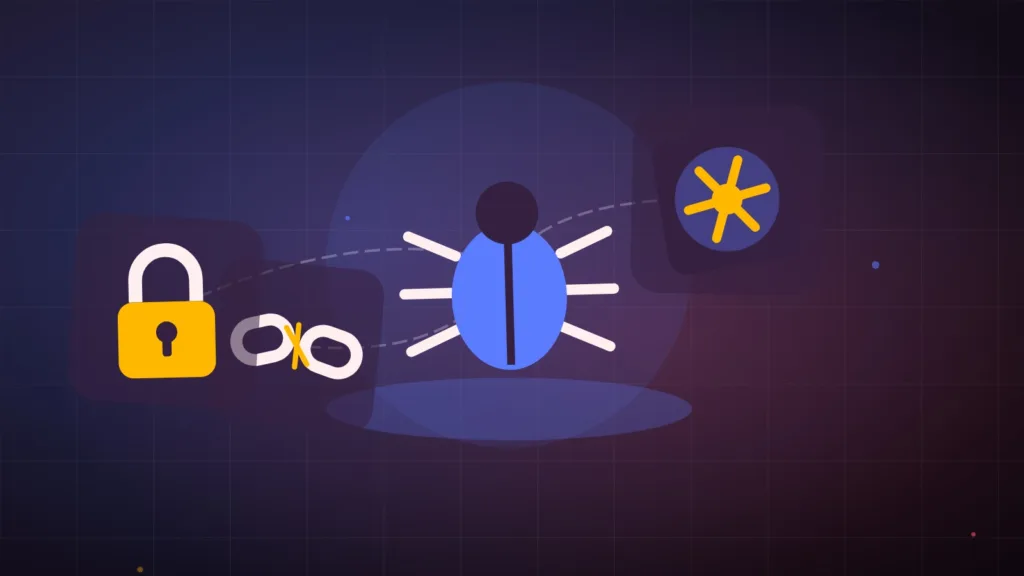
On Wednesday 2 February 2022, starting at 17:58 UTC according to CertiK, an attacker made Wormhole’s Solana contract believe the Guardians had approved a message they had never seen. The Guardians signed nothing wrong. The flaw sat in the Solana code that checks their signatures.
The CertiK incident analysis traces it to a deprecated Solana function, load_current_index, used during signature verification without any check that the “instructions” system account passed in was the real one. The attacker supplied a fake account, so the program accepted a signature set the attacker had built. A message ordering a mint of 120,000 wrapped ether followed, and the bridge, whose minting authority trusted anything that had passed verification, issued the tokens. Rekt’s write-up of 3 February describes the same path, ending with a call to complete the wrapped transfer.
Nothing backed those tokens. About two minutes after the mint the attacker bridged 10,000 ETH to Ethereum, then 80,000 more, CertiK found; the researcher samczsun, quoted by The Block, counted 93,750 ETH bridged back in all. Much of the rest stayed on Solana as SOL. The loss was put at about $320 million at the day’s prices, and Rekt ranked it second on its leaderboard of DeFi thefts. The attacker’s gas money, 0.94 ETH, came through Tornado Cash.
Certus One posted an on-chain offer of $10 million to the attacker in exchange for the funds and the details of the bug. No answer came. On 3 February Jump Crypto said it had “replaced 120k ETH to make community members whole”, and Wormhole announced that Portal was back up. Holders of wrapped ether on Solana lost nothing, because the owner chose to pay. Wormhole has been independent of Jump since 2023, and no comparable backstop has been announced.
Part of the money came back a year later. Oasis said that on 21 February 2023 it had received an order of the High Court of England and Wales and moved assets from a vault linked to the attacker to a wallet controlled by an “authorised third party”. Blockworks Research counted more than 120,000 wstETH and 3,000 rETH taken from the vault, and ForkLog reported that once the vault’s debt was settled, Jump Crypto wallets received assets worth about $140 million. In effect a DeFi app used its admin powers to empty a user’s position on a court’s instruction, which split opinion at the time.
The underlying weakness is common to bridges: a contract on one chain must decide whether something really happened on another. Our guide asking whether a blockchain can be hacked shows why bridges, rather than base chains, account for so many of the large losses.
Is Wormhole safe now? Audits, bug bounty and dropped chains
Wormhole’s security page counts 29 completed third-party audits and names ten firms: Trail of Bits, Neodyme, Kudelski, OtterSec, CertiK, Hacken, Zellic, Coinspect, Halborn and Cantina. The reports are public in its audit repository on GitHub, where file names also show reviews by Runtime Verification, Cyfrin, Sec3, Sherlock and Code4rena. The oldest, by Neodyme, is dated 10 January 2022, before the hack. The latest we found is OtterSec’s review of multi-host NTT on Solana, from August 2026. The figure of 29 is Wormhole’s; we found no outside check that the list is complete.
The bug bounty on Immunefi, live since 11 February 2022, now pays at most $1 million for a critical report, “paid in W token”. It once paid ten times that. A researcher known as satya0x reported a flaw in the core contract on Ethereum, linked to contract upgrades, that could have let an attacker take control of it. Wormhole fixed it on 24 February 2022, and Immunefi said no user funds had been lost. The $10 million award was announced in May 2022. “I am proud to have played a role in mitigating a serious vulnerability and a systemic threat to the ecosystem,” satya0x told The Block.
We found no exploit of the core protocol since February 2022. The chain list, though, has shrunk. The Guardians decide which networks to support, and a Foundation notice first published in February 2025 and updated since sets out the removals. Oasis, XPLA, Karura, Acala and Terra Classic were disconnected on 6 June 2025; three were briefly restored, and messaging from the Terra chains, Karura and Acala ended after 14 July 2025. X Layer and Mantle followed in September 2025 and Fantom in October. Scroll was cut on 21 April 2026, “primarily due to security considerations”.
The August 2026 update scheduled Berachain for 31 August and Injective for 30 September. We could not confirm from Wormhole, as of 29 October 2026, that both cut-offs went ahead on those dates. The earlier notices cite transaction volumes, resource use and long-term sustainability. For users the effect is concrete: a token wrapped on a chain that is dropped has to be moved out before the cut-off.
Our risk rating is 3 out of 5. On one side stand a fixed signer set of known companies, a long audit trail and no core incident since 2022. On the other, the size of the 2022 failure, the absence of protocol revenue to pay for security, and a token that has lost almost all of its launch value.
W token: supply, the W 2.0 overhaul and the unlock calendar
W has a fixed supply of 10 billion tokens. The airdrop gave 674.8 million W, 6.75% of supply, to more than 400,000 wallets measured against a snapshot of 6 February 2024 at 23:59 UTC. Trading opened on 3 April 2024 with 1.8 billion W circulating; the other 82% was locked, to be released over four years. W exists as an SPL token on Solana and as an ERC-20 on Ethereum, Base and Arbitrum, and moves between them with NTT.
The W 2.0 announcement of 17 September 2025 promised a Wormhole Reserve, then “coming soon”, meant to collect value from Wormhole, Portal and ecosystem apps and hold a growing share of it in W. It also set a 4% target base yield for holders who take part in governance, paid from existing supply and protocol revenue. “There is no inflation being introduced to W,” the post says, while warning that rewards “may change or stop at any time”. W rose more than 6.3% on the news, Cointelegraph reported.
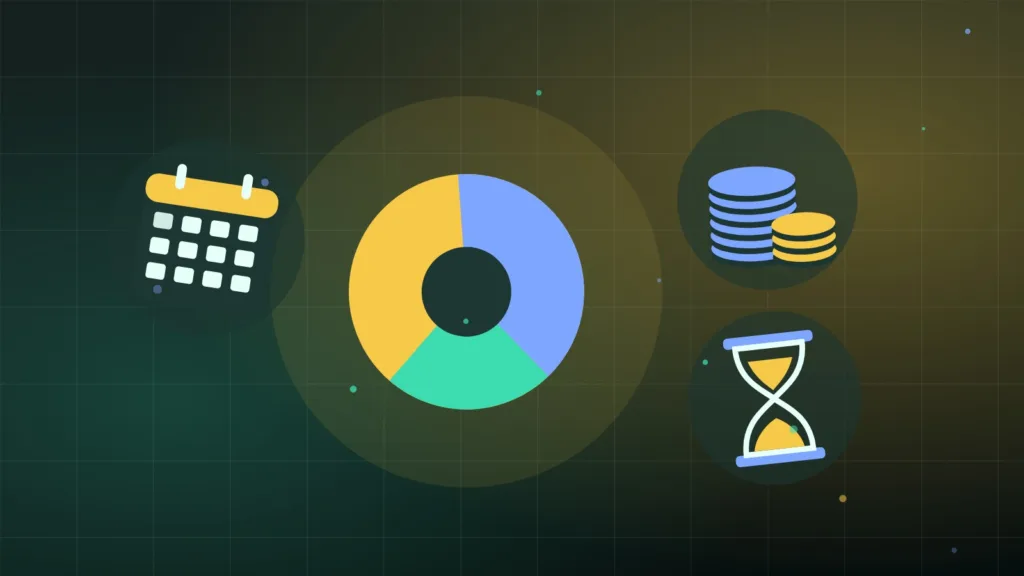
The bigger change was to the release schedule. From 3 October 2025, yearly cliffs gave way to releases every two weeks, over four and a half years, for Guardian nodes, community and launch, ecosystem and incubation, and strategic network participants. The Foundation treasury kept its daily four-year schedule. Core contributor tokens now go to the Foundation every two weeks but are held in escrow, since the legal agreements still follow the yearly schedule. Investors and Guardians accepted six more months of lock-up, to October 2028.
| Allocation | Share of 10 billion W |
|---|---|
| Ecosystem and incubation | 31% |
| Foundation treasury | 23.3% |
| Community and launch | 17% |
| Core contributors | 12% |
| Strategic network participants | 11.6% |
| Guardian nodes | 5.1% |
Circulating supply went from 1.8 billion W at launch to about 4.76 billion on 17 September 2025. Tokenomist counted 6,674,208,368 W, 66.7% of the total, at 19:34 UTC on 29 October 2026, which leaves about 3.3 billion locked. The same tracker lists the next release, to core contributors, for 30 October 2026 without giving its size. Our glossary page on token unlocks and why traders watch them explains what such dates can do to supply.
As of 29 October 2026 we found no Wormhole announcement that the Reserve is live, and no published address or balance for it. Reports in November 2025 said the Foundation had bought W on the market; we could not find a primary announcement, so we leave the amount out. The 4% is a target, and the yield actually paid is not published in one place.
What the W token is used for
W is a governance token. Since 6 June 2024 holders can stake it on Tally to vote or delegate, with no lock-up. The latest executed proposal shown there, WIP-3 of 14 June 2025, set up a grants programme, and no vote was open when we checked on 29 October 2026. Voting power is concentrated. On 17 September 2025 Cointelegraph reported that Dan Reecer, whom it described as a co-founder of the Wormhole Foundation, had about $30.5 million of W staked, 25.1% of voting power at the time. W also pays bug bounties and the yield target.
W carries no claim on fees. DefiLlama’s methodology for Wormhole reads “Wormhole makes no revenue”. The fees it records are paid for relayers, execution, CCTP and message delivery, and execution fees go to relayers. They came to $15,645 in the 30 days to 29 October 2026 and about $359,000 over a year, against the more than $70 billion in cumulative volume Wormhole claimed in June 2026. Until a Reserve runs with published numbers, a W holder gets voting weight and the prospect of a future link to revenue, not a share of current income.
Wormhole crypto partnerships: BUIDL, Uniswap and token issuers
Securitize, which calls Wormhole its official interoperability provider, is the best-known institutional user. In November 2025 a share class of BlackRock’s BUIDL fund went live on BNB Chain with Wormhole handling the transfers. The announcement put BUIDL’s assets at more than $2.5 billion as of 11 November 2025 and listed the fund on Ethereum, Solana, Arbitrum, Avalanche, Aptos, Optimism, Polygon and BNB Chain. “Wormhole provides the backbone for onchain finance,” Robinson Burkey said in it. Our page on Securitize, the transfer agent behind BUIDL covers the fund side.
Uniswap’s DAO set up a Bridge Assessment Committee in March 2023. On 15 June 2023 it found Wormhole and Axelar “currently suitable” for carrying the DAO’s governance messages to other chains, and advised the community to keep reviewing them and other bridge providers. LayerZero and Celer were examined too; The Block’s report gave no verdict on them.
Token issuers make up most of the rest: Hyperliquid, Ripple, Sky, Lido and WalletConnect through NTT, plus W itself. Chainlink offers its own cross-chain protocol, CCIP, to the same kind of issuer.
Wormhole crypto in numbers, October 2026
| Measure | Figure | Source and date |
|---|---|---|
| Guardians and quorum | 19, with 13 signatures needed | Wormhole docs, 29 Oct 2026 |
| Value locked (Portal) | $1.50 billion | DefiLlama, 29 Oct 2026 |
| Peak value locked | $5.49 billion | DefiLlama, 7 Dec 2024 |
| Value locked a year earlier | $2.34 billion | DefiLlama, 30 Oct 2025 |
| Fees recorded, 12 months | about $359,000 | DefiLlama, 29 Oct 2026 |
| Protocol revenue | none recorded | DefiLlama methodology |
| W in circulation | 6.67 billion of 10 billion | Tokenomist, 29 Oct 2026 |
| Audits completed | 29 (Wormhole count) | Wormhole docs |
| Maximum bug bounty | $1 million, paid in W | Immunefi, updated 29 Sep 2026 |
Value locked counts assets parked in Portal’s contracts, mostly on Ethereum. It says little about NTT, where tokens are burned and minted instead of locked. DefiLlama’s bridge-volume data now sits behind a paywall, so we have no independent volume figure to set against Wormhole’s $70 billion.
Wormhole risks and who it suits
For someone moving tokens, the practical risks are wrapped assets and the chain list. A Wormhole-wrapped token on a chain the Guardians drop has to come back before the cut-off. A token moved through NTT carries the issuer’s own rate limits and settings, which limits how much a bug can drain but adds the issuer to the parties you trust.
A W holder faces different risks. Releases continue every two weeks for four and a half years from October 2025, the token has no fee share, and the Reserve has no published balance. In September 2025 a single staker held a quarter of the voting power. Coindaro makes no price forecast for W, and nothing on this page is investment advice.
The next date is the core contributor release on 30 October 2026. After that, watch for a Wormhole post showing the Reserve live with an address and a balance; the extended investor and Guardian lock-ups end in October 2028.
Strengths and points of vigilance
Strengths
- A known set of 19 validator companies, including Google Cloud, with a 13-of-19 signature rule shared by every app.
- Native Token Transfers keep tokens native on each chain, with issuer-set rate limits, and are used by Hyperliquid and Ripple.
- Public audit reports from more than a dozen firms on GitHub, and no exploit of the core protocol found since February 2022.
- Institutional users such as Securitize, whose BUIDL share class on BNB Chain launched with Wormhole in November 2025.
Points of vigilance
- The February 2022 hack cost about $320 million and was covered by Jump, a backstop that no longer exists in that form.
- DefiLlama records no protocol revenue, and W gives holders no share of fees.
- When CoinGecko was checked at about 19:35 UTC on 29 October 2026, W was more than 99% below its $1.66 opening price of 3 April 2024, with a third of supply still locked.
- The Reserve announced in September 2025 had no published address or balance as of 29 October 2026.
Team
- Robinson Burkey Co-founder, Wormhole Foundation (as of 14 November 2025)
- Dan Reecer Co-founder and COO, Wormhole Foundation (as of 18 September 2024)
- Saeed Badreg CEO, Wormhole Labs (as of 29 November 2023)
Funding and audits
| Round | Amount | Date | Investors |
|---|---|---|---|
| Strategic round (token warrants) | $225M | Brevan Howard, Coinbase Ventures, Multicoin Capital, Jump Trading, ParaFi, Dialectic, Borderless Capital, Arrington Capital (no lead investor); $2.5B valuation |
Roadmap
- 2021-08-03Jump Trading acquista Certus One, sviluppatore principale del bridge WormholeDone
- 2022-02-02Exploit del contratto Solana: coniati 120.000 ether wrapped senza copertura, circa 320 milioni di dollariDone
- 2022-02-03Jump Crypto sostituisce 120.000 ETH e Portal riapreDone
- 2022-02-11Il bug bounty parte su ImmunefiDone
- 2023-02-21Oasis sposta gli asset dal vault dell'attaccante su ordine dell'Alta Corte; circa 140 milioni di dollari arrivano ai wallet di Jump (ForkLog)Done
- 2023-06-15Il Bridge Assessment Committee di Uniswap giudica Wormhole idoneo per i messaggi di governanceDone
- 2023-11-29Round da 225 milioni di dollari a una valutazione di 2,5 miliardi; annunciata Wormhole LabsDone
- 2024-04-03W inizia a essere negoziato con 1,8 miliardi in circolazione dopo un airdrop di 674,8 milioni di WDone
- 2024-06-06Si apre lo staking per la governance su TallyDone
- 2024-09-18Google Cloud entra nella rete dei GuardianDone
- 2025-09-17W 2.0: annunciata la Reserve, obiettivo di rendimento del 4%, rilasci ogni due settimaneDone
- 2025-10-03Iniziano i rilasci di W ogni due settimaneDone
- 2026-04-21Scroll scollegata del tutto, principalmente per motivi di sicurezzaDone
- 2026-06-30Ritirata l'interfaccia Portal Legacy (il vecchio indirizzo non risolveva più il 29 ottobre 2026)Done
- 2026-09-30Scollegamento di Injective previsto nell'avviso della Fondazione del 7 agosto 2026 (completamento non confermato)
- 2026-10-30Prossimo rilascio di W ai collaboratori principali (Tokenomist; importo non pubblicato)
- 2028-10Terminano i blocchi prolungati di investitori e validatori Guardian
Crypto-assets are volatile and you can lose all the money you invest. Nothing published on Coindaro is investment advice.
Related

Project
Threshold Network (T): the tBTC bitcoin bridge run by 100 signers per wallet, and a pause with no confirmed cause
Active Arbitrum, Base, Bitcoin, Ethereum, Solana
Threshold Network tBTC explained: 51-of-100 signers, a 6-of-9 committee, the T token and the October 2026 bridge pause,…
Project
ether.fi (ETHFI): a crypto neobank built on liquid staking, and what makes it risky
Active Ethereum, Optimism
ether.fi explained: how eETH and weETH work, the Cash card and Aave V4 market, ETHFI unlocks and buybacks,…

Project
Spark (SPK): Sky’s lender and capital allocator, and the unexplained $180M USDT exit
Active Ethereum
Spark Protocol explained: how SparkLend and Sky's allocator work, what SPK holders get, who controls it, and the…

Project
Kinetiq (KNTQ): liquid staking on Hyperliquid, controlled by a 4-of-8 multisig with no timelock
Active Hyperliquid
Kinetiq on Hyperliquid: how kHYPE staking works, who controls the contracts, the audits, the November 2026 KNTQ cliff…

Project
Usual (USUAL): the USD0 stablecoin, collateral that is mostly loans and a dispute with its developer
Active Arbitrum, Ethereum
Usual USD0 explained: what really backs it, the USD0++ depeg of January 2025, USUAL tokenomics, the 96% fall…

Project
Maple Finance (SYRUP): institutional crypto loans behind syrupUSDC, and what makes them risky
Active Arbitrum, Base, Ethereum, Solana
How Maple Finance works: who funds syrupUSDC loans, what triggers liquidation, who controls SYRUP, the Core dispute and…