





About the project
What is Securitize? It is a Miami company that issues and records securities on public blockchains for fund managers such as BlackRock, Apollo and VanEck, and it is the transfer agent and tokenization platform behind BlackRock’s BUIDL money fund, the largest product it services. Since 2 July 2026 its shares have traded on the New York Stock Exchange as SECZ, after a merger with a blank-cheque company sponsored by a Cantor Fitzgerald affiliate. There is no Securitize crypto token.
In its S-1 prospectus, filed with the SEC on 31 July 2026, the company calls itself “a regulated transfer agent and digital asset platform”. That filing, the second-quarter results published on 12 August, the FINRA record of its broker-dealer and the company’s code on GitHub are the main sources for this page. Figures are dated because they move.
What is Securitize: a regulated transfer agent with its register on chain
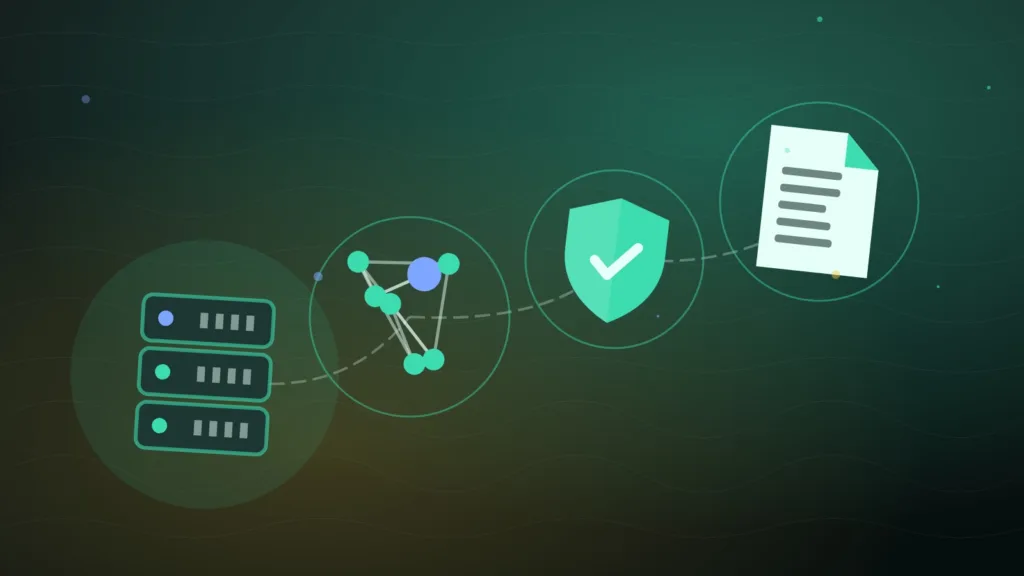
A transfer agent keeps the official list of who owns a security. For decades that list has lived in private databases. Securitize acts as the SEC-registered transfer agent for most of its customers and, according to the S-1, uses a public blockchain as the master securityholder file. Wallet addresses, balances, purchase dates, KYC status and investor type are recorded on chain. Names, postal addresses and tax numbers stay in an off-chain system run by the company.
Around that register the group has added a set of regulated businesses. Securitize Markets is a broker-dealer that places tokenized funds with investors and runs an alternative trading system (ATS) for resale. Securitize Capital is an investment adviser. Securitize Fund Services administers funds, many of which never touch a blockchain. In the EU, a Spanish investment firm holds the licence. The S-1 describes this as the only vertically integrated tokenization provider with SEC-registered entities across all of those functions, which is the company’s own claim.
Carlos Domingo, Jamie Finn and Shay Finkelstein came up with the idea in 2017, the filing says, and the platform reached the market in January 2018. Domingo still runs the company. Its stated philosophy is “regulation-first”, and the S-1 adds that Securitize does not tokenize securities without the issuer’s explicit permission and cooperation.
That rule covers the securities it registers as transfer agent. The stock tokens it launched in October 2026 work differently: they are security entitlements to shares held through its broker-dealer, and the company’s own release says the issuers of those shares have not sponsored or endorsed them.
How Securitize works: from the issuer’s register to a whitelisted wallet
Take a fund manager that wants to sell a fund as a token. Securitize first checks the investors: identity, country and whether they qualify for a private offering. Wallets that pass go on a whitelist, and the fund’s shares are minted to them. In the standard set-up, every later transfer runs through smart contracts that apply the offering’s rules, so a token cannot move to a wallet nobody has approved.
The broker-dealer handles the sale and, where one exists, the resale on the ATS. The fund administrator or transfer agent supplies the net asset value, and oracle providers such as RedStone and Chronicle carry it on chain, according to the S-1. Dividends and redemptions go through the same register. The investor ends up with a security in a wallet instead of a line in a brokerage account, with the transfer limits that come with a security.
The DS Protocol and DS Token v4
The rules sit in the Digital Securities Protocol, or DS Protocol, published on GitHub under the Apache 2.0 licence. Its token, DS Token, is a superset of ERC-20, the standard most Ethereum tokens follow, and it checks separate services before a transfer: a registry of investors, a compliance service and a trust service that decides who may call which function. The registry keeps investors’ personal data hashed on chain. Version 4 adds rebasing, self-service features and a transfer agent role that can freeze and unfreeze a token, the repository’s documentation says.
Not every token has to be whitelisted. The same code base offers a “permissionless” compliance mode in which any wallet can hold and transfer tokens, KYC stays off chain at Securitize, and the on-chain controls shrink to a blacklist and a lock-up for new issues. Token contracts sit behind an upgradeable proxy, so Securitize can replace the logic of a deployed token.
For DeFi, Securitize publishes a vault registrar: a contract that lets approved protocols whitelist vault addresses under existing investor identities. That is how a permissioned fund token can sit in a lending market without becoming freely tradable.
About twenty blockchains, led by Solana
The S-1 lists 21 natively integrated blockchains, among them Ethereum, Avalanche, Polygon, Arbitrum, Base, BNB Chain, Solana, Aptos, Sui, the XRP Ledger, Tron and Hedera. Elsewhere the same filing says eighteen, so “about twenty” is the fair reading. On 23 October 2026, rwa.xyz put the largest slice of Securitize-issued value on Solana, about $1.1 billion across 20 assets, followed by ZKsync Era ($944.0 million), Avalanche ($726.2 million) and Ethereum ($717.3 million).
A worked example: BlackRock’s BUIDL
BlackRock launched the BlackRock USD Institutional Digital Liquidity Fund, BUIDL, on 20 March 2024 on Ethereum, its first tokenized fund issued on a public blockchain. The fund puts all its assets in cash, US Treasury bills and repurchase agreements, aims at a stable $1 a token, and pays daily accrued dividends as new tokens each month. BlackRock’s launch release named Bank of New York Mellon as custodian and administrator, Securitize as transfer agent and tokenization platform and Securitize Markets as placement agent. Investors had to be qualified, and the initial minimum was $5 million; current terms were not checked for this page.
In December 2025 BUIDL held about $1.7 billion, the S-1 says. On 23 October 2026 rwa.xyz showed $2.17 billion, down 4.66% in 30 days, spread across 101 holders. Most of the supply no longer sits on the chain where it started: Solana carried about 40% of the tokens that day, Avalanche about 22% and Ethereum about 19% across two entries. In the second quarter of 2026 BUIDL also became usable as yield-bearing collateral through a framework involving OKX and Standard Chartered, the company said.
Securitize products: BUIDL, Apollo’s ACRED, VanEck’s VBILL and the rest
rwa.xyz counted 39 tokenized assets issued through Securitize on 23 October 2026. These are the ones the S-1 and the company’s releases put forward.
| Product | What it is | Key facts (source) |
|---|---|---|
| BUIDL (BlackRock) | Tokenized money market fund | Launched 20 March 2024; about $1.7 billion in Dec 2025 (S-1); $2.17 billion on 23 Oct 2026 (rwa.xyz) |
| ACRED (Apollo) | Apollo Diversified Credit Securitize Fund, private credit feeder | Announced 30 January 2025; about $133 million in Dec 2025, which the S-1 calls the largest tokenized private credit fund |
| VBILL (VanEck) | VanEck Treasury Fund | Announced in May 2025 for Avalanche, BNB Chain, Ethereum and Solana (press reports of VanEck’s statement) |
| HLSCOPE (Hamilton Lane) | Senior credit opportunities fund | Named in the S-1 notes and tracked by DefiLlama; launch date not found |
| STAC (with BNY) | Tokenized AAA CLO fund | Added Solana in Q2 2026, then a $250 million allocation from Ethena Labs’ USDe (Q2 release) |
| Blockchain Capital fund | Venture capital fund | About $209 million in Dec 2025 (S-1) |
| Exodus shares | Class A and B common stock of Exodus Movement | About $443 million in Dec 2025 (S-1) |
| Securitize Stocks | 12 US stocks as security entitlements on Solana | Launched 8 October 2026 (company release) |
| USAFi | Digital security backed by the Atlas America Fund ETF | Securitize’s first issue under Dubai’s VARA rulebook (Q2 release) |
The client list goes back further. Securitize tokenized KKR’s Health Care Strategic Growth Fund II in 2022, which the S-1 presents as the first fund put on chain by a major global investment manager. The filing also names FG Nexus, a framework for tokenizing the stock of listed companies. By the end of June 2026 more than seven assets on the platform had crossed $100 million each, according to the company.
Stock tokens on Solana and SECZ on chain
On 8 October 2026 Securitize began offering 12 US stocks on Solana, from Apple, Microsoft and Nvidia to Circle, Strategy and Palantir, with trades settled in USDC. Each token is backed one for one by a share and, in the release’s words, “represents a security entitlement under UCC Article 8”. The entitlements are held through Securitize Markets; RQD provides clearing, custody and settlement infrastructure, and Jump Trading acts as market maker. The share price and the launch are covered in our news report on SECZ and Securitize’s stock tokens.
The company did the same with its own shares. On listing day it issued issuer-sponsored SECZ tokens on Avalanche and Solana for eligible US investors, and in August Domingo said this made SECZ the largest tokenized equity in the industry. Outlets give different sizes for that position, so none is given here.
How Securitize makes money
With no token to sell, revenue comes from fees. The S-1 splits the business in two. Tokenization brings a one-time integration fee, a recurring maintenance fee, and tokenization and distribution fees that are mostly tied to transactions. Asset servicing covers the transfer agent, which earns recurring software-style fees, and fund administration, charged per fund and partly on assets.
Fund administration is the part that grew fastest. Asset servicing revenue went from $8.5 million in 2024 to $24.7 million in 2025, mainly because of the Theorem Fund Services and MG Stover purchases, the S-1 says. In the second quarter of 2026 tokenization brought in $7.8 million, down 12%, and asset servicing $6.6 million, up 3%. The S-1 also warns that revenue is not substantially directly tied to assets under management.
Securitize licences: SEC, FINRA and a Spanish passport for the EU
Each licence covers one activity, and the group holds several. This is what the filings and the FINRA record show.
| Entity | Status | Source |
|---|---|---|
| Securitize (transfer agent) | SEC-registered transfer agent for most customers; registration number and date not found | S-1 |
| Securitize Markets, LLC | Broker-dealer and FINRA member, SEC# 8-69743, CRD 283256; SEC and FINRA approval effective 28 Sep 2016; Securitize I, Inc. owner since Nov 2020; registered in 53 US states and territories; no disclosure events | FINRA BrokerCheck |
| ATS of Securitize Markets | Alternative trading system for secondary trades, including securities in digital form | S-1, BrokerCheck |
| Securitize Capital | Exempt adviser from May 2021; full SEC-registered investment adviser since 27 Jul 2026 | S-1, Q2 MD&A |
| Securitize Europe Brokerage and Markets, S.A. | Investment firm licensed by Spain’s CNMV in Dec 2024, passported to 15 other EU countries in early 2025 | S-1 |
| EU DLT Pilot trading and settlement system | Approval pending on 31 Jul 2026; a later approval reported by Spanish press is not confirmed by a primary source | S-1 |
Securitize Markets is older than its owner’s stake. The BrokerCheck report for Securitize Markets shows SEC and FINRA approval since September 2016 under the same CRD number and Securitize I, Inc. as owner from November 2020, the month the S-1 gives for the creation of its broker-dealer arm. The report answers “No” to the question of disclosed events. In the second quarter of 2026 FINRA approved the firm to hold tokenized securities in custody and to settle them against stablecoins, which the company describes as a first for a regular broker-dealer.
A licence does not turn a token into a deposit. A BUIDL or ACRED token is a fund share and carries the fund’s risks. In Europe, the S-1 frames Securitize’s activity under MiFID II and the DLT Pilot Regime, the rules for financial instruments, not under MiCA, the EU’s crypto-asset law. No statement on Securitize by France’s AMF or Italy’s Consob was found.
Securitize in numbers: two AUM figures that both hold
The size of Securitize depends on who measures it and how. The company counts tokenized assets under management. rwa.xyz, a data site, measures the value of tokens distributed on chain. Fund administration counts the assets of funds the group administers, most of them not tokenized. Each figure below keeps its own date and source.
| Measure | Figure | Date and source |
|---|---|---|
| Tokenized AUM | More than $3.1 billion | 31 Dec 2025, S-1 |
| Average tokenized AUM | $4.3 billion, up 16% | Q2 2026, Q2 release |
| Total AUM | $4.3 billion, up 9% | 30 Jun 2026, Q2 release |
| Assets managed onchain | About $5.0 billion | Domingo, Q2 release of 12 Aug 2026 |
| AUM | About $5 billion | As of September 2026, company release of 8 Oct 2026 |
| Distributed asset value | $4.30 billion, down 9.39% in 30 days | 23 Oct 2026, rwa.xyz |
| Transaction volume | $5.3 billion, up 147% | Q2 2026, Q2 release |
| Fund administration assets | $24.3 billion in 663 active funds, down about 20% | 30 Jun 2026, Q2 release |
| Investors | 15,000+ investors; 500,000+ registered accounts | S-1, company figures |
| Token holders | 1,469, up 10.87% in 30 days | 23 Oct 2026, rwa.xyz |
The volume figure is not trading. The S-1 builds it from investments, redemptions, dividends and cross-chain movements, and the second-quarter jump came mainly from subscriptions and redemptions in BUIDL and its BUIDL-I class, plus a new $250 million subscription to STAC from institutional stablecoin reserve accounts, the MD&A says. The gap between 1,469 holders and 15,000 investors has a similar cause: rwa.xyz counts distinct wallets, the company counts people across every product.
Quoting rwa.xyz data for December 2025, the S-1 gave Securitize 19% of the tokenized asset market and 20.5% of tokenized Treasuries. Assets fell in the fourth quarter of 2025 and the first quarter of 2026 as crypto prices dropped, then rose by about $1 billion in the second quarter, according to the company. Monthly transfer volume on rwa.xyz was $414.41 million on 23 October, down 56.58% in 30 days.
Securitize history: from a 2017 idea to the NYSE in 2026
| Date | Event |
|---|---|
| 2017 | Carlos Domingo, Jamie Finn and Shay Finkelstein start the company |
| January 2018 | The issuance platform reaches the market |
| 2018 to 2020 | Series A tranches |
| November 2020 | Securitize Markets, broker-dealer and ATS, under Securitize ownership |
| May 2021 | Securitize Capital set up as an exempt adviser |
| 21 June 2021 | $48 million Series B |
| February 2022 | Purchase of Pacific Stock Transfer, a traditional transfer agent |
| 2022 | KKR’s Health Care Strategic Growth Fund II tokenized |
| 20 March 2024 | BlackRock launches BUIDL and invests in Securitize |
| October 2024 | Purchase of Theorem Fund Services; Securitize Fund Services set up late that year |
| December 2024 | CNMV investment firm licence in Spain |
| 30 January 2025 | Apollo’s ACRED announced |
| 15 April 2025 | MG Stover bought for $21.1 million, net of cash acquired |
| 27 October 2025 | Merger agreement with Cantor Equity Partners II |
| 29 June 2026 | SPAC shareholders approve the merger |
| 1 and 2 July 2026 | Merger closes; SECZ starts trading on the NYSE |
| 27 July 2026 | Securitize Capital registers as an SEC investment adviser |
| 8 October 2026 | Securitize Stocks launch on Solana |
MG Stover, bought in April 2025, made Securitize what the S-1 calls the largest US-based digital asset fund administrator. That arm reported $24.3 billion of assets under administration at the end of June 2026, about 20% less than a year earlier. The accounts changed hands too: Wolf & Company was dismissed as auditor on 27 August 2025 and KPMG engaged on 17 September 2025.
Who runs Securitize and who owns it
Carlos Domingo, 54, is co-founder, chief executive and executive chairman. He ran Telefónica R&D and founded the venture firms SPiCE VC and Sling Ventures. Brett Redfearn, 61, became president and a director in April 2026 after four and a half years as senior strategic adviser. He directed the SEC’s Division of Trading and Markets from October 2017 to January 2021, then led capital markets at Coinbase. He also had a 14-year career at J.P. Morgan.
Francisco Flores, 47, has been chief financial officer since July 2021. Billy Miller, 35, chief operating officer since 2022, joined with the purchase of Pacific Stock Transfer, where he had held the same post since 2016. Jamie Finn appears in the S-1 as a former president; no current role was found for Shay Finkelstein.
The board listed in the S-1 has seven members: Domingo, Redfearn, Tal Elyashiv of SPiCE VC, Brad Stephens of Blockchain Capital, Rebecca Macieira-Kaufmann, Sunil Sabharwal and Manuel Sánchez Rodriguez. Joseph Chalom, BlackRock’s global head of strategic ecosystem partnerships, joined the board with BlackRock’s investment in March 2024 but is not on that list.
Entities of the Korean group Hanwha are the largest disclosed shareholders, with 9.6% of the 163,265,685 shares outstanding after the closing. Blockchain Capital funds hold 6.0% and Domingo 5.4%. The nine directors and executives own 11.7% between them.
The filing discloses loans to insiders. Between December 2024 and February 2025 the private company advanced $1,084,332 to Jamie Finn and a fund linked to him, $152,026 to his brother, $5 million to a trust controlled by Brad Stephens and $810,734 to Tal Elyashiv. Tokenized fund shares secure the loans, with collateral of 100% to 167% of the amount, and they carry a 2% annual facilitation fee. The June 2026 balance sheet shows $8.77 million of notes receivable from related parties.
Funding: venture rounds, BlackRock and about $375 million at the listing
DefiLlama lists several Series A tranches between 2018 and 2020, with Blockchain Capital, Coinbase Ventures, Ripple’s Xpring and Japanese investors such as MUFG Bank, Nomura and KDDI among the backers; the amounts differ between sources. In June 2021 Morgan Stanley Tactical Value and Blockchain Capital co-led a $48 million Series B with Ava Labs, IDC Ventures and Sumitomo Mitsui Trust Bank, Decrypt reported. BlackRock’s strategic investment came with BUIDL in March 2024. The Block, Decrypt and DefiLlama put that round at $47 million, joined by Hamilton Lane, ParaFi Capital, Tradeweb, Aptos Labs, Circle Ventures and Paxos; BlackRock’s release gave no amount.
The listing went through a SPAC. On 27 October 2025 Securitize agreed to combine with Cantor Equity Partners II, with its equity valued at $1.25 billion in the merger agreement. SPAC shareholders approved the deal on 29 June 2026, it closed on 1 July and SECZ opened on the NYSE the next day. PIPE investors bought 19,782,000 shares at $10.00, about $197.8 million, and total proceeds came to about $375 million before transaction costs of about $60 million, the MD&A says.
After the closing the company had about $350 million in cash and no debt, according to chief financial officer Francisco Flores. Domingo described the listing as “becoming the first tokenization company to go public”.
Does Securitize have a token?
No. Securitize has no coin, no governance token and no airdrop. DefiLlama lists it with no token symbol and no contract address, and the S-1 describes a business paid in fees. A site or wallet selling a “Securitize coin” or “SECZ token” outside the company’s own channels is not the company; treat it as a likely scam.
What does exist is different. SECZ is common stock, bought through a broker with access to the NYSE and priced in dollars. The tokenized SECZ shares are the same stock in another form, a security and not a crypto-asset. Fund tokens such as BUIDL belong to the funds and are sold only to eligible investors. The company does hold third-party tokens such as APT, MNT, ZK and W, obtained in the ordinary course of its work with those networks, its MD&A says, but none of them is a Securitize token. For a tokenization firm that does have a tradable token, see our page on Ondo Finance and the ONDO token.
Code audits: what Halborn and Cyfrin found in DS Token v4
Securitize keeps third-party reports in the audits folder of its DS Token repository. Halborn reviewed DS Token v4 from 1 to 25 September 2025 and reported 13 findings: none critical or high, two medium, four low and seven informational. Both medium findings were fixed; Securitize accepted the risk on two low ones and acknowledged three informational notes. Cyfrin’s review of version 2.1, run from 1 to 19 September 2025, counted 78 issues, including one critical: investors could take tokens from other investors because a transfer function never checked spending approvals. Cyfrin lists that issue as resolved. Its report also counts nine medium-risk, 23 low-risk and 25 informational findings.
The same Cyfrin report spells out the trade-off of a regulated token. The protocol is “highly centralized by design including the ability for protocol admins to burn and seize user assets”, it says, so holders must trust the team. Cyfrin has since reviewed add-ons: investor locks (29 May 2026), a compliance change (4 June), a global deny list (11 September) and a display-amount feature (21 October).
No audit was found for the implementations on Solana, Aptos, Sui or the XRP Ledger, nor for DS Token versions before v4, and no bug bounty programme was found. DefiLlama’s hack list had no entry for Securitize or its funds on 23 October 2026, which means no recorded incident, not that none can happen.
Securitize risks: BlackRock, losses and a lock-up ending in December
The biggest risk is one client. BUIDL “represented more than 60% of Securitize’s tokenized assets under management as of September 30, 2025”, the S-1 says. The platform and transfer agent agreement with BlackRock ran for two years and now renews for one year at a time; BlackRock can end it with 90 days’ notice before a renewal, and can end the placement agent agreement at any time with written notice. Customer contracts in general are not long term and carry no exclusivity, the filing adds.
Securitize also loses money. The net loss was $24.3 million in 2024 and $48.5 million in 2025, on revenue of $18.6 million and $62.2 million. In the second quarter of 2026 revenue fell 5% to $14.4 million while transaction volume rose 147%, and the net loss reached $21.7 million, with a $29.3 million charge for the change in value of an option liability, partly offset by a $21.8 million gain on a derivative liability. The auditor of the 2024 accounts found material weaknesses in internal control, and the 2023 and 2024 statements were restated. Cash stood at $14.5 million on 31 March 2026, three months before the listing.

Share supply comes next. The 180-day lock-up on pre-merger holders runs to about 28 December 2026, with early release in thirds if the share price averages above $15.00, $17.50 or $20.00 for 20 of 30 trading days. Earnout shares are issued in thirds above $15, $20 and $25 within five years of the closing. The S-1 registers 151,568,524 shares for resale and gave a last NYSE sale price of $6.60 on 29 July 2026, against the $10.00 PIPE investors paid. Later moves are in our report on the SECZ share price after the listing.
Regulation could help or hurt the stock tokens. The SEC’s innovation exemption of 17 September 2026 for trading tokenized stocks is temporary and conditional. Listed companies have also pushed back on third-party venues: Microsoft and Alphabet were among the 16 issuers that objected to OKXICE, the OKX and ICE tokenized stock venue, by 19 October. Securitize Stocks are expected to trade on that venue too, and the company’s release says the NYSE and OKXICE venues have not launched and trading there may not occur.
The design carries its own risks. A bug in the DS contracts would touch every fund that uses them, as the critical finding fixed in 2025 shows. Because most tokens are permissioned, a holder cannot send them to any wallet or sell them on any exchange; the S-1 warns that tokenized securities may trade in nascent or limited secondary markets and that a token’s price may deviate from the value of the underlying asset.
The risk factors name Domingo as critical to the business, and tie the fall in assets at the end of 2025 to a broad decline in crypto prices.
Securitize vs Ondo, Robinhood and DTCC
The S-1 sorts competitors into three groups: tokenization providers such as Centrifuge, INX and Superstate; managers that tokenize in-house, such as Franklin Templeton and WisdomTree; and Backed and Ondo, which it says issue “freely transferable wrapper tokens”. That is Securitize’s own pitch. Outside that list, Robinhood sells stock tokens structured as debt securities and not offered in the United States, and the DTCC, the US post-trade utility, is rolling out a tokenization service starting with 25 securities on Canton and Besu.
| Securitize | Ondo | Robinhood stock tokens | DTCC | |
|---|---|---|---|---|
| Model | Registered transfer agent issuing securities, mostly permissioned | Issuer of tokens that circulate more freely | Debt securities tracking stocks, outside the US | Market utility tokenizing securities it already holds |
| Own token | None (SECZ is a share) | ONDO | None for the product | None |
| Who can hold | Whitelisted, KYC-checked wallets in most products | Depends on the product | Eligible non-US clients | DTC participants |
Banks are moving into the same space. J.P. Morgan has taken two tokenized money market funds to Solana for qualified US investors with a $1 million minimum, the audience BUIDL was built for.
Securitize roadmap: what comes next
Several plans have no date. Securitize is a design partner and broker-dealer participant for a planned NYSE platform for round-the-clock trading of tokenized stocks. It has a partnership with Cantor Fitzgerald for onchain IPOs and follow-on offerings, and Computershare and Continental Stock Transfer have picked it for issuer-sponsored tokenized shares. In Europe, approval of the DLT Pilot trading and settlement licence has still to be confirmed by a primary source.
One date is fixed: the main lock-up ends around 28 December 2026. Third-quarter results are due, but the company had not announced a date by 23 October 2026.
Strengths and points of vigilance
Strengths
- SEC-registered transfer agent, FINRA-member broker-dealer, ATS and SEC-registered adviser in one group, plus a Spanish licence passported in the EU.
- Clients include BlackRock, Apollo, VanEck, Hamilton Lane, BNY and KKR.
- About $375 million raised at the listing and, per the company, about $350 million in cash with no debt after closing on 1 July 2026.
- Open-source DS Token contracts, with Halborn and Cyfrin audit reports published on GitHub.
- No disclosure events on the BrokerCheck report of Securitize Markets.
Points of vigilance
- BUIDL was more than 60% of tokenized AUM in September 2025, and BlackRock can end the agreement.
- Loss-making: net loss of $48.5 million in 2025 and $21.7 million in Q2 2026, with restated 2023 and 2024 accounts.
- Admins can freeze, burn and seize tokens by design, and most tokens can only move between approved wallets.
- Pre-merger lock-up ends around 28 December 2026, and 151.6 million shares are registered for resale.
Team
- Carlos Domingo Co-founder, chief executive and executive chairman
- Brett Redfearn President and director (since April 2026)
- Francisco Flores Chief financial officer
- Billy Miller Chief operating officer
Funding and audits
| Round | Amount | Date | Investors |
|---|---|---|---|
| Series A (several tranches, 2018 to 2020; amounts differ between sources) | Not confirmed | Blockchain Capital, Coinbase Ventures, Ripple (Xpring), MUFG Bank, Nomura, KDDI and others (DefiLlama) | |
| Series B | $48 million | Morgan Stanley Tactical Value and Blockchain Capital (co-leads), Ava Labs, IDC Ventures, Sumitomo Mitsui Trust Bank | |
| Strategic (BlackRock investment announced 20 March 2024; amount and date per DefiLlama and press reports) | $47 million | BlackRock (lead), Hamilton Lane, ParaFi Capital, Tradeweb, Aptos Labs, Circle Ventures, Paxos | |
| SPAC merger and PIPE (Cantor Equity Partners II) | $375 million | PIPE investors ($197.8 million) and CEPT public shareholders; sponsor affiliated with Cantor Fitzgerald |
Roadmap
- 2018-01Entra in funzione la piattaforma di emissioneDone
- 2021-06-21Serie B da 48 milioni di dollari guidata da Morgan Stanley Tactical Value e Blockchain CapitalDone
- 2024-03-20BlackRock lancia BUIDL con Securitize come transfer agentDone
- 2024-12Licenza di società d’investimento della CNMV in Spagna, estesa con passaporto a 15 Stati dell’UE all’inizio del 2025Done
- 2026-07-02Quotazione al NYSE come SECZ dopo la fusione con Cantor Equity Partners IIDone
- 2026-07-27Securitize Capital si registra come consulente d’investimento presso la SECDone
- 2026-10-08Securitize Stocks: 12 azioni americane come token su SolanaDone
- 2026-12-28 (circa)Scade il lock-up per i titolari precedenti alla fusione
- Senza dataLicenza per il sistema di negoziazione e regolamento del regime pilota DLT dell’UE (in attesa nell’S-1)
- Senza dataPiattaforma NYSE prevista per la negoziazione 24 ore su 24 di azioni tokenizzate, con Securitize come partner di progettazione
- Senza dataIPO on chain con Cantor Fitzgerald; azioni tokenizzate sponsorizzate dall’emittente con Computershare e Continental
Crypto-assets are volatile and you can lose all the money you invest. Nothing published on Coindaro is investment advice.
Related

Project
World Liberty Financial (WLFI): the token, USD1, the owners and the lawsuits
Active BNB Chain, Ethereum, Solana, TRON
World Liberty Financial explained: who owns it, the WLFI token and its votes, USD1 and its KPMG-examined reserves,…

Project
Initia (INIT): the rollup-hosting layer 1, its token, its audits and the 23 October halt
Active
Initia crypto explained: how the INIT layer 1 and its rollups work, who funded it, the token unlocks,…

Project
PancakeSwap (CAKE): The Flip vote, how the DEX works, tokenomics and risks
Active Arbitrum, Base, BNB Chain, Ethereum, Solana
PancakeSwap explained: The Flip vote on LP fees and CAKE emissions, how v2, v3 and Infinity work, CAKE…

Project
Aero (ex-Aerodrome Finance and Velodrome): how the merged DEX works, its audits and its risks
Active Arbitrum, Base, Ethereum, Optimism
Aerodrome Finance and Velodrome merged into Aero on 22 October 2026. How sAERO staking works, DefiLlama data, the…
Project
Fireblocks explained: MPC custody, the Fireblocks Network, its customers and its risks
Active
What is Fireblocks? The private firm whose MPC wallets move crypto for banks and fintechs: products, clients, funding,…
Project
Tether, the company behind USDT: reserves, KPMG audit, regulators and freezes
Active Avalanche, Ethereum, NEAR, Solana, TON, TRON
Tether, the USDT issuer: how it earns $1.5B a quarter, what backs its $187.8B of reserves, its first…