





Metrics
About the project
Aerodrome Finance, the largest decentralized exchange on Base, and its older sibling Velodrome on Optimism stopped running as two separate venues at 00:00 UTC on 22 October 2026, which was 8:00 PM on 21 October in New York. They are now one exchange called Aero, developed by Dromos Labs, with a single AERO token on Base and trading on seven networks: Base, Ethereum, OP Mainnet, Arbitrum, Ink, Arc and Robinhood Chain.
The merger also retires the model both exchanges were known for. Weekly votes, epochs and bribes are gone. Holders now stake AERO as sAERO, point token rewards at the pools they expect to earn fees, and collect the exchange revenue of those pools in return. Aero’s economics page puts it plainly: “no voting, no epochs, and no delay”.
Old AERO converts one for one into the new token, 1 VELO becomes 0.044 AERO, and veAERO and veVELO locks become sAERO positions. Aerodrome holders get 94.5% of the new supply and Velodrome holders 5.5%, a split Aero says matches each protocol’s share of combined revenue in the 52 weeks before the merger was announced. Exchanges run their own conversion for customers. People who hold the tokens in their own wallets upgrade by hand, and the upgrade cannot be reversed.
The steps and the exchange dates are on our page on the AERO and VELO conversion. Below: how the protocol works, where it came from, what the numbers say, how its code was checked and what can still go wrong.
There is no deadline. The upgrade hub is blunt about the alternative, though: “Any tokens that are not upgraded to the new AERO unified token will never reach circulation.”
What is Aero, the exchange that replaced Aerodrome Finance
Aero describes itself as “the unified liquidity layer for all of Ethereum”. Put more simply, it is a decentralized exchange where people swap tokens, deposit them in pools to earn fees, and launch new tokens with their own markets. The core contracts and the AERO token live on Base, the layer-2 network built by Coinbase. Each of the other six chains runs its own pools, gauges and reward contracts, according to the Aero documentation read on 22 October 2026.
The software is called MetaDEX03. Dromos Labs presented it in a 14 November 2025 post as a “DEX OS”, the third generation of the design that ran Velodrome and Aerodrome. The pieces that went live with it, as listed in Aero’s 25 September launch update and in The Block’s launch report of 21 October:
- Metaswaps, cross-chain swaps filled from liquidity already sitting on the chains Aero covers.
- Slipstream V3, the concentrated-liquidity pools, with dynamic fees that rise when markets move fast and MEV capture on the layer-2 networks that support it.
- Predictive Allocation, the new way stakers direct token rewards, and Autopilot, which does it for them and can compound or convert what they earn.
- Permissionless market creation: any team can open a pool for its token and pay incentives to attract rewards to it.
Velodrome has not disappeared everywhere. On Celo, Fraxtal, Soneium and Unichain it keeps handling trades and liquidity deposits, without a token economy behind it. Anyone with deposits on Lisk should withdraw them before 31 October 2026, the upgrade hub says.
Who runs Aero, and who paid for it
Dromos Labs writes the code. Its founder and chief executive is Alexander Cutler, whom The Block described in 2023 as Velodrome’s co-founder. According to ForkLog, Luis de la Cerda is executive director of the Aerodrome Foundation and Dan Wick is Dromos’ chief financial officer; we found no second source for either role. Dromos’ GitHub organisation was created on 27 May 2025. Where the company is registered and how many people it employs are not public.
Next to the developer sits the Aero Foundation, a non-profit that says it “does not control the protocol, which is governed by sAERO holders”. Its main programme is the Momentum Fund. Aero’s site also lists Wonderland, Hyperlane and Vending Machine as contributors. Hyperlane is the one to keep in mind for security: an adapter for its messaging network carries instructions between chains in the audited code.
There was no venture round and no token sale. Aero says it “launched clean without VC backing or token sales”, and Aerodrome’s docs said the same about its own start in August 2023. The closest thing to outside money came on 26 February 2024, when Aerodrome announced that the Base Ecosystem Fund, led by Coinbase Ventures, had bought AERO on the open market, as Mpost reported the next day. The amount was never disclosed, and it was a token purchase, not a funding round. All of the new supply goes to existing AERO, veAERO, VELO and veVELO holders, so any team share comes through older holdings.
Cutler’s case, as he put it to The Block on launch day, is that Aerodrome and Velodrome came out ahead because their model serves the people who use it better. He added that 100% of the revenue Aero earns goes back to the people who stake AERO.
How Aerodrome Finance and Velodrome worked: ve(3,3) in plain words
Both exchanges ran a model nicknamed ve(3,3). It started with Solidly, which Andre Cronje released on Fantom in early 2022 and which mixed Curve’s vote-escrow locks with the “(3,3)” idea borrowed from OlympusDAO. Velodrome rebuilt the design on Optimism. Aerodrome was a fork of Velodrome V2, made for Base.
Locks and voting power
A holder could lock AERO for up to four years and receive a veAERO NFT. Voting power grew with the lock: 100 AERO locked for four years gave 100 veAERO, the same amount locked for one year gave 25. Power decayed as the unlock date came closer, unless the holder chose Auto-Max Lock on Aerodrome or a permanent lock on Velodrome V2.
Weekly epochs, emissions and bribes
Everything ran on a weekly clock. On Aerodrome the epoch flipped every Thursday at 00:00 UTC. Votes cast during one week set how the next week’s new tokens were split between pools, and those tokens then streamed to the pools in proportion to their votes. Liquidity providers who staked their position in a pool’s gauge received the emissions instead of swap fees. Those who did not stake kept the fees.
The swap fees of staked liquidity went to the voters of that pool. Anyone could also deposit incentives (the market called them bribes), paid only to the voters of a given pool. A project that needed deep liquidity for its token could therefore buy votes, and voters earned fees plus incentives. A weekly rebase topped up locked holders so new emissions diluted them less; the more of the supply was locked, the smaller it got.
Aerodrome started with 500 million AERO, 450 million of them locked from day one, and weekly emissions of 10 million. Emissions rose 3% a week for 14 weeks, then fell 1% a week. From around epoch 67 the “Aero Fed” let voters move the rate by 0.01% of supply per epoch, within a ceiling of 1% of supply a week. In April 2026 Aerodrome put annualised emissions at about 10.9%, with 1.88 billion AERO in supply, about 51% of it locked for an average of 3.7 years. Velodrome began with 400 million VELO and 15 million a week from 4 June 2022, falling 1% a week, and reset to 15 million when V2 arrived on 22 June 2023.
The catch was the delay. Rewards followed a vote cast the week before, and fees and incentives could be claimed only after the epoch flipped. That gap between revenue coming in and being paid out is what Aero set out to remove.

What changes with Aero: sAERO, Predictive Allocation and the AER Engine
sAERO replaces veAERO and veVELO
sAERO is AERO staked for a period the holder chooses. Aero calls the people who hold it token operators: they direct AERO rewards to pools and earn those pools’ revenue pro rata. Positions are NFTs that can be transferred or traded. Each has a 47-hour cooldown between changes of allocation at launch, a figure Aero says may change with notice. One transaction can allocate across every Aero chain, with gas paid on Base only. Positions can be merged at launch, not split.
Old locks carry their remaining time over, rounded up to the next full week. Permanent locks become sAERO at the maximum stake duration, and the old veNFT ID is retired. Locks that voted in the final Aerodrome and Velodrome epoch had to wait until 01:00 UTC on 22 October to upgrade.
Predictive Allocation and Autopilot
Under Predictive Allocation, stakers steer rewards toward pools they think will earn fees and are paid from what those pools actually earn while the allocation is live. Nothing waits for a weekly snapshot. Aero’s pitch is that an operator who backs a market early, and turns out to be right, takes the largest share of its revenue. Autopilot automates the choice for holders who would rather not manage it; its first allocation ran at 16:00 UTC on 22 October, under the same cooldown as everyone else.
The AER Engine: rewards priced in dollars
The AER Engine, described in a 7 June 2026 article, changes how new tokens are created. Rewards are set in dollars rather than in a fixed number of tokens. Each pool gets a gauge cap, which Aero expected to recalibrate every 48 hours at launch, and the long-run target is rewards worth about 1.2 times pool revenue across the exchange. Rewards held back by a cap are never minted. The minter creates only what liquidity providers claim.
In June, Aero put inflation at about 12% a year for Aerodrome and about 16% for Velodrome. The new system has a ceiling of 20% a year at launch, which Aero calls “a ceiling, not a target”; it expects 8% to 12% in practice, and the upgrade hub says about 12%. Aero’s own backtest over roughly seven months found weekly emissions of 3.9 million tokens against 4.0 million at the flat rate. Nobody outside the company has checked it. Aero’s 19 October economy page also calls its supply arithmetic illustrative rather than a forecast.
Liquidity providers who take swap fees instead of rewards keep 95% to 100% of them at launch. The cut that goes to stakers is 0% on Ethereum, Arbitrum and Robinhood Chain and 5% on Base, OP Mainnet, Ink and Arc.
REV Engine and Momentum Fund
A second engine, REV, is planned but not live. It would add revenue from services such as an sAERO marketplace, management tools and fees on Metaswaps, used mostly for buybacks and burns. Aero has given no start date or revenue estimate for it. In its November 2025 post, Dromos said REV could raise the value the protocol captures by 40%, the AER Engine could cut emissions by 25%, and MetaDEX03 could create 2.8 times more value for token operators than MetaDEX02. Those are projections.
The Momentum Fund takes over from the Public Goods Fund and Flight School, which together bought back or locked about 110 million AERO, around 11% of circulating supply, Aero says. Counting every Aerodrome programme, the figure is about 180 million. A pilot starting in October 2025 bought 8.7 million AERO over 13 epochs. The fund can burn both AERO and sAERO.
Aero in numbers: TVL, fees and its share of Base trading
DefiLlama tracks the whole family under the slug aero-protocol. We re-read it at 18:33 UTC on 22 October 2026; its last data point, stamped 17:33 UTC, put total value locked at about $374.0 million. Base held $339.2 million of it, OP Mainnet $18.5 million, Ethereum $4.49 million, Ink $4.25 million, Robinhood Chain $3.52 million, Arc $2.99 million and Arbitrum $0.39 million. TVL moves with token prices, so part of any change is price rather than deposits.
Most of that money had not moved yet. Adding up DefiLlama’s sub-entries, the new Aero and Aero V2 pools held about $90 million, while the legacy Aerodrome and Velodrome contracts still held about $284 million, led by Aerodrome Slipstream at $147.6 million. That is our sum of DefiLlama’s launch-day figures.
| Date | TVL on DefiLlama (aero-protocol) |
|---|---|
| 2 June 2022 (first point) | $28.5 million |
| 31 December 2022 | $75.9 million |
| 31 December 2023 | $277.8 million |
| 17 December 2024 (peak) | $1,355 million |
| 30 June 2025 | $621.5 million |
| 31 December 2025 | $505.5 million |
| 30 June 2026 | $344.9 million |
| 22 October 2026, 17:33 UTC | $374.0 million |
Fees follow the same curve. Aerodrome generated about $560.0 million from 29 August 2023 to 19 October 2026, the last day in DefiLlama’s series, with its best month in December 2024 at $42.7 million. In the last 30 days of the series it made about $11.6 million. Velodrome added $46.9 million over its lifetime.
| Year | Aerodrome fees | Velodrome fees |
|---|---|---|
| 2022 | not live | $0.7 million |
| 2023 | $3.0 million | $6.8 million |
| 2024 | $233.1 million | $23.8 million |
| 2025 | $231.4 million | $11.8 million |
| 2026 (to 19 October) | $92.4 million | $3.7 million |
DefiLlama counts bribes in these fees until voting ended with the Aero upgrade on 22 October. Gauge fees were last distributed on 15 October and, DefiLlama notes, stay locked in the gauges until the Aero Foundation reclaims them. Aero counts differently. Its economics page, with data pulled on 21 October, shows $580 million of lifetime exchange revenue and 50.8% of supply staked for an average of 3.89 years.
On Base, Aerodrome Slipstream handled $15.53 billion of the chain’s $29.70 billion of DEX volume over 30 days, about 52%, according to DefiLlama on 22 October. The team gives its own figures: 58% of Base DEX volume in the third quarter for Aerodrome, 60% on OP Mainnet for Velodrome, and about $120 billion of monthly DEX volume across the seven chains Aero now covers, as reported by The Block and Crypto Economy. Those are company numbers, not independent ones.
Aerodrome Finance and Velodrome history, 2022 to 2026
Velodrome went live on Optimism on 2 June 2022, according to its docs, after a Code4rena contest from 23 to 30 May; the report, published on 8 August, listed 6 high and 17 medium findings. Version 2 replaced it on OP Mainnet on 22 June 2023.
Aerodrome followed on 28 August 2023, built for Base, with 40% of its initial supply airdropped to veVELO lockers. Velodrome held about $194 million at the time, The Block reported. Concentrated-liquidity Slipstream pools came in 2024: DefiLlama lists Velodrome V3 from 6 March and Aerodrome Slipstream from 25 April. Velodrome’s Superchain release, audited by ChainSecurity and Sherlock, shipped on 8 November 2024, and the family’s TVL peaked near $1.36 billion on 17 December 2024.
Dromos announced the merger on 12 November 2025, with a target in the second quarter of 2026. It slipped. A first version called Aero Lite went live on Arc on 16 September 2026, and on 25 September Aero set the launch for 21 October (New York time) and added Robinhood Chain and Arbitrum. We found no vote of token holders on the merger: the announcement came from Dromos Labs, as ForkLog reported at the time.
Aero audits: what the public reports say
The reports on the new code sit in Dromos’ public metadex-public repository on GitHub. Aero says Sherlock and ChainSecurity completed five separate engagements, followed by a three-week public contest, and that a Sherlock bug bounty would go live on launch day. We could not find the bounty page.
| Reviewer | Scope | Date |
|---|---|---|
| Sherlock, Blackthorn collaborative audit, phase 1 | MetaDEX03 contracts (interim report) | 23 June to 14 July 2026 |
| Sherlock, Blackthorn collaborative audit, phase 2 | MetaDEX03 contracts | 20 July to 17 August 2026 |
| ChainSecurity, Coordination Layer (draft) | Governance, emissions, cross-chain messaging | Report dated 27 August 2026 |
| ChainSecurity, Application Layer (draft) | Gauges, voting rewards, pools, router | Report dated 29 August 2026 |
| ChainSecurity, Slipstream (draft) | Concentrated liquidity pools | Report dated 29 August 2026 |
| Riley Holterhus, independent researcher | Solo review of MetaDEX03 | 29 August 2026 |
| Sherlock Audit Engine, public contest | MetaDEX03 and its Slipstream | 31 August to 23 September 2026, report 14 October |
The ChainSecurity reports need a careful reading. Every page of all three carries a “DRAFT” mark and the line “PRIVATE: Not for public distribution”, although they sit in a public repository, and we could not tell whether final versions exist. Each summary finds “an improvable level of security”, and each says ChainSecurity believes an above-average number of undiscovered issues remain, citing code that kept changing during the review. The Coordination Layer report calls the accounting of voting power and emissions satisfactory. The Application Layer report rates reward and emission accounting good, but one finding is titled “Malicious Relayer Can Forfeit All Accrued Emissions”. The Slipstream report found liveness “not sufficient at the reviewed commit”: a suspended chain could leave staked positions stuck. Which findings were fixed before launch is not stated in what we read.
The Sherlock contest accepted 116 findings: 8 medium, 79 low and 29 informational, with none rated critical or high. The report says it reflects the sponsoring team’s view of the submissions, not Sherlock’s, and its informational category can include issues judged invalid. Riley Holterhus, an independent researcher, signed a solo review dated 29 August after supporting the team from June to August. An automated GregoAI scan on 18 August flagged 16 issues, two of them high; it is an AI tool, not a human audit.
Older reviews cover the code Aero grew out of. Spearbit audited Velodrome V2, with the second round completed on 16 June 2023, and Velodrome’s Slipstream, completed on 5 December 2023. ChainSecurity and Sherlock reviewed the Superchain release in 2024, and MixBytes checked a pool launcher between 12 September and 3 October 2025. Velodrome also ran a bug bounty on Immunefi worth up to $200,000, according to its docs. The Slipstream repositories also hold 2021 audits by ABDK and Trail of Bits, but those cover Uniswap V3, the code Slipstream was adapted from, not Aero.
Two DNS hijacks, no contract exploit on record
What users lost on these exchanges was taken through their websites, not their contracts. DefiLlama’s hack list, read on 22 October 2026, records two incidents for the family, both DNS hijacks of the front end, and no smart-contract exploit.
The first began on 29 November 2023. Velodrome told users: “Our frontend is currently compromised. Please do not interact with Velodrome for the time being.” Investigator ZachXBT saw more than $40,000 moving to two addresses, The Block reported. On 2 December both sites were hit again. The teams wrote: “It appears our provider has been exploited again.” They had the domain locked at the top-level registry pending a move to a new provider, and ZachXBT put losses above $100,000. DefiLlama lists $250,000, so estimates run from $40,000 to $250,000.
The second came on 21 November 2025. According to a timeline published by Blockaid, the DNS records changed at 20:11 UTC, the first user report arrived at 22:07 and the nameservers were replaced at 22:40. The fake sites ran a kit known as Eleven Drainer. Blockaid says it warned 899 users, prevented about $3.5 million in losses and saw about $700,000 stolen from users outside its network; DefiLlama also records $700,000. The projects told users their contracts remained secure, and Bitcoin.com reported that they pointed people to ENS-based mirrors. We found no published post-mortem on the root cause.
A front-end hijack does not break the protocol. It works by getting people to sign transactions on a fake copy of the site, and a manual, irreversible upgrade is exactly the moment phishers wait for. Our guide to avoiding crypto scams covers fake migration sites and drainer links.
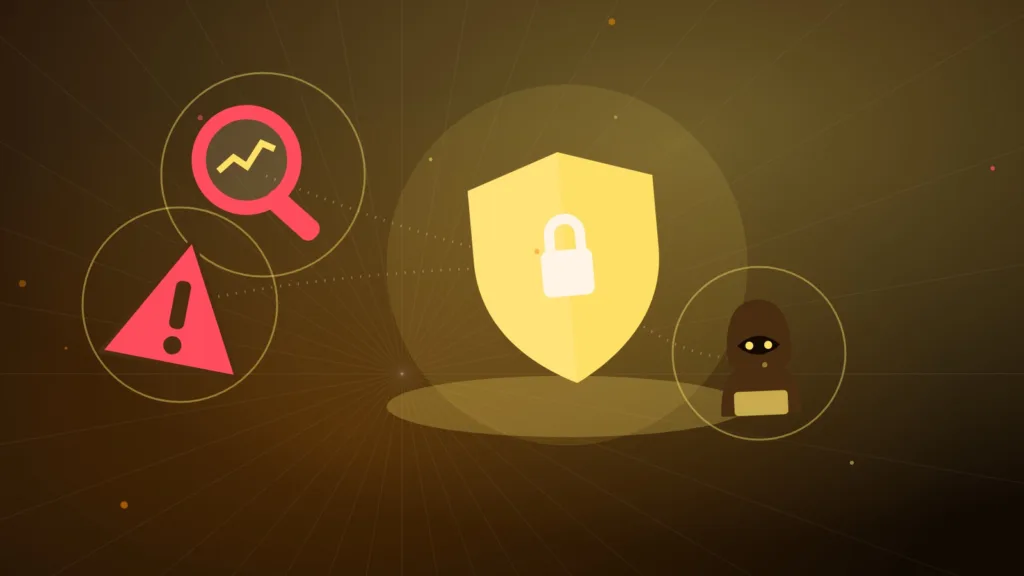
Risks of using Aero in its first weeks
Aero inherits a long track record, but much of what it runs today is new.
- The MetaDEX03 code, its cross-chain messaging and its emission model had hours of mainnet use on 22 October, and all three ChainSecurity drafts expect issues still to be found.
- Two DNS hijacks in two years cost users money, and the upgrade portals on aerodrome.finance and velodrome.finance will attract fake copies.
- The token upgrade is manual for wallet holders and cannot be undone. Take links and the new contract address only from aero.xyz.
- Supply grows by up to about 6% from the conversion, then by an expected 8% to 12% a year, with a 20% ceiling at launch.
- Predictive Allocation has no history, and with about half of supply staked, large stakers still decide where most rewards go.
- Liquidity is concentrated on Base and still relies on token rewards; TVL and fees are far below the December 2024 peak.
Like any liquidity pool, Aero’s pools also expose depositors to price moves between the two tokens they hold, and rewards paid in AERO are worth only what the market pays for AERO.
Aero vs Uniswap, PancakeSwap and Curve
Aero is big on its home chains and mid-sized across crypto as a whole. Over the 30 days to 22 October, DefiLlama counted $69.4 billion of volume on Uniswap and $23.4 billion on PancakeSwap, against $16.5 billion for the Aero family, all chains included. By TVL, Uniswap held about $4.09 billion, PancakeSwap about $2.37 billion and Curve about $1.18 billion, all well above Aero’s $374 million.
The real difference is how each one pays for liquidity. Uniswap’s liquidity providers live mainly on swap fees. Curve invented the vote-escrow lock that Solidly, Velodrome and Aerodrome built on. Aero keeps paying liquidity providers in its own token, but drops the weekly vote: stakers move rewards continuously and are paid the revenue of the pools they back. Aero claims this buys deeper liquidity for less inflation. There is no data yet to show it.
What comes next for Aero
The conversion still has dates ahead. Lisk deposits should be out before 31 October. Binance plans to remove VELODROME trading pairs on 3 November, and Coinbase converts its customers’ AERO and VELO from 2 to 4 November; the launch page has the details. The REV Engine, Foundation grants and the shutdown of the old front ends have no announced dates.
Data sites have not caught up either. On 22 October CoinGecko still listed the token as Aerodrome Finance under the old Base contract, and whether its ID or contract will change is not known. DefiLlama’s adapter for the new Aero pools showed only $1,107 of fees over its latest day. The first full weeks of revenue under Predictive Allocation, and the share of liquidity that leaves the legacy Aerodrome contracts, are the numbers to watch.
Strengths and points of vigilance
Strengths
- Largest DEX on Base, with about half of the chain's 30-day DEX volume on DefiLlama in October 2026.
- Stakers receive 100% of pool-level exchange revenue, and there was no VC round or token sale.
- Public code, several public security reviews and a public contest before launch.
- One token and one interface across seven chains, with cross-chain swaps through Metaswaps.
- No smart-contract exploit on DefiLlama's hack list for Aerodrome or Velodrome since 2022.
Points of vigilance
- MetaDEX03 is brand-new code, and a ChainSecurity draft expects undiscovered issues.
- Two DNS hijacks of the websites, in 2023 and 2025, cost users money.
- The manual, irreversible token upgrade attracts phishing sites.
- Supply grows about 6% at the merger, then an expected 8% to 12% a year with a 20% ceiling.
- TVL and fees are far below the December 2024 peak, and most liquidity was still in legacy contracts at launch.
Where to trade
Decentralised exchanges
Aero (app, Base and six more chains) Aerodrome upgrade portal (AERO, veAERO) Velodrome upgrade portal (VELO, veVELO)
Team
- Alexander Cutler Founder and CEO, Dromos Labs
Roadmap
- 2022-06-02Velodrome v1 parte su OptimismDone
- 2023-06-22Velodrome V2Done
- 2023-08-28Aerodrome parte su BaseDone
- 2024-02-26Il Base Ecosystem Fund compra una posizione in AERO (importo non reso noto)Done
- 2025-11-12Annunciata la fusione in Aero e MetaDEX03Done
- 2026-09-16Aero Lite in produzione su ArcDone
- 2026-10-22Aero parte su sette reti; si aprono i portali dell’upgradeDone
- 2026-10-31Entro questa data vanno ritirati i depositi Velodrome su Lisk
- 2026-11-02Coinbase converte AERO e VELO; invii e ricezioni sospesi fino al 4 novembre
- 2026-11-03Binance rimuove le coppie VELODROME e sospende depositi e prelievi dei vecchi AERO per la conversione
- TBARicavi del REV Engine da servizi, riacquisti e bruciature (nessuna data annunciata)
- TBAChiusura dei vecchi front end di Aerodrome e Velodrome (nessuna data annunciata)
Crypto-assets are volatile and you can lose all the money you invest. Nothing published on Coindaro is investment advice.
Related

Project
PancakeSwap (CAKE): The Flip vote, how the DEX works, tokenomics and risks
Active Arbitrum, Base, BNB Chain, Ethereum, Solana
PancakeSwap explained: The Flip vote on LP fees and CAKE emissions, how v2, v3 and Infinity work, CAKE…

Project
Fireblocks explained: MPC custody, the Fireblocks Network, its customers and its risks
Active
What is Fireblocks? The private firm whose MPC wallets move crypto for banks and fintechs: products, clients, funding,…
Project
Tether, the company behind USDT: reserves, KPMG audit, regulators and freezes
Active Avalanche, Ethereum, NEAR, Solana, TON, TRON
Tether, the USDT issuer: how it earns $1.5B a quarter, what backs its $187.8B of reserves, its first…

Project
Drift Protocol (DRIFT): the $295M Solana hack, the DFX recovery token and the relaunch as Velocity
Building Solana
Drift Protocol lost about $295M in the 1 April 2026 hack. How the takeover worked, what DFX recovery…

Project
Liquid Network: Blockstream’s bitcoin sidechain, L-BTC and the September 2026 hack
Active Bitcoin
Liquid Network explained: how Blockstream's bitcoin sidechain and L-BTC work, what the September 2026 hack took and why…

Project
Kalshi: the CFTC-regulated prediction market, its crypto links and its fight with the states
Active Solana
What is Kalshi? The CFTC-regulated prediction market explained: $1 contracts, fees, crypto deposits, Solana markets and its court…