How to take part
- Check the official CT contract on concretefoundation.xyz (0x0A092E544DA31150b439a1aAA1A3a2214a867F46).
- To trade, use an exchange linked from concretefoundation.xyz that is available in your country.
- If eligible for the airdrop, connect your listed wallet on concretefoundation.xyz, accept the Claim Terms and claim before the deadline shown there.
- To stake, use the Stake CT vault linked from the Foundation site; withdrawals take up to 14 days.
- Never use a VPN to bypass restrictions and never share your seed phrase.
Our analysis
Update, 18 October 2026: The community claim on concretefoundation.xyz still showed “Ready to claim” this morning, with no deadline displayed. The Claim Terms say the claim period and any deadline appear in the claim interface, and that CT left unclaimed may stop being claimable. The Foundation’s list of exchanges has not changed since launch, and it has still not published any token unlock dates.
Update, 16 October 2026: The CT launch itself is over, but the community claim is still open on concretefoundation.xyz. The Concrete Foundation has published no deadline outside the claim interface, and its Claim Terms warn that unclaimed CT may stop being claimable, so eligible users should not leave it for later. The Foundation’s site now also has a Stake section that sends holders to a new Stake CT vault, where staked CT earns Concrete points. No exchange has been added to the official venue list since launch day. Bitvavo lists a CT-EUR market with trading open, the euro pair most readers in France and Italy will look for; its public market data shows CT deposits and withdrawals run on Ethereum only.
The Concrete CT token launch took place on 30 September 2026. CT, the governance and configuration token of the Concrete ecosystem, went live with a fixed supply of 1 billion tokens and was listed on several exchanges on the same day, while eligible users could claim a community airdrop. There was no public sale. This page covers what CT does, how the supply is split and released, how to claim and stake without getting caught by a fake site, and what is still unknown.
What is Concrete?
Concrete presents itself as an operating system for onchain finance, with four product lines: Earn, Vaults, Enterprise and AssetCX. The last one targets institutions whose assets must stay with a qualified custodian; the white paper lists custody integrations with Ceffu, Fireblocks, Copper, HexTrust and Coinbase. At the TGE, the Foundation reported more than $1.2 billion in deposits and over 54,000 depositors. Blueprint Finance develops the protocol. CT is issued by Concrete Network, Ltd., a British Virgin Islands company, and the Concrete Foundation, a Cayman Islands foundation company, coordinates governance and holds the CT treasury.
What the CT token is for
Concrete gives CT two jobs, and both need action from the holder. Locking CT lets holders vote on defined protocol parameters: strategy approvals, collateral classifications, fee frameworks and treasury policies. Staking CT gives access to adjustments of certain protocol-side fees on the holder’s own use of supported modules, within limits set in advance. Simply holding CT in a wallet gives no functional benefit, the MiCAR white paper says.
The same document is clear about what CT is not. It carries no ownership, equity, debt, dividend, profit-sharing or claim rights over the protocol, its revenue or the treasury. Protocol revenue goes to the Foundation treasury, not to holders. Each CT counts as one vote, and submitting a proposal is expected to require about 3% of total supply. For now, governance is still run by a Foundation-led multisig; the move to token-governed timelocks is planned in stages, with no date given.
CT launch at a glance
| Item | Detail |
|---|---|
| TGE | 30 September 2026 |
| Supply | 1,000,000,000 CT, fully minted at TGE, no inflation |
| Networks | Ethereum and BNB Smart Chain (same contract address) |
| Allocation | Ecosystem 35%, Investors 28%, Team 22%, Foundation 15% |
| Community airdrop | 1% of the Ecosystem allocation |
| Public sale | None |
| Audits | Halborn, Zellic, Code4rena and Trail of Bits (protocol) |
| Claim deadline | Shown only in the claim interface |
CT tokenomics and token unlocks
The split is 35% for the ecosystem (community distribution, participation, liquidity and growth, including the 1% airdrop), 15% for the Foundation, 22% for current and future team members and 28% for investors. The Foundation describes contributor and investor vesting as “long-term” without giving amounts or dates in the text.
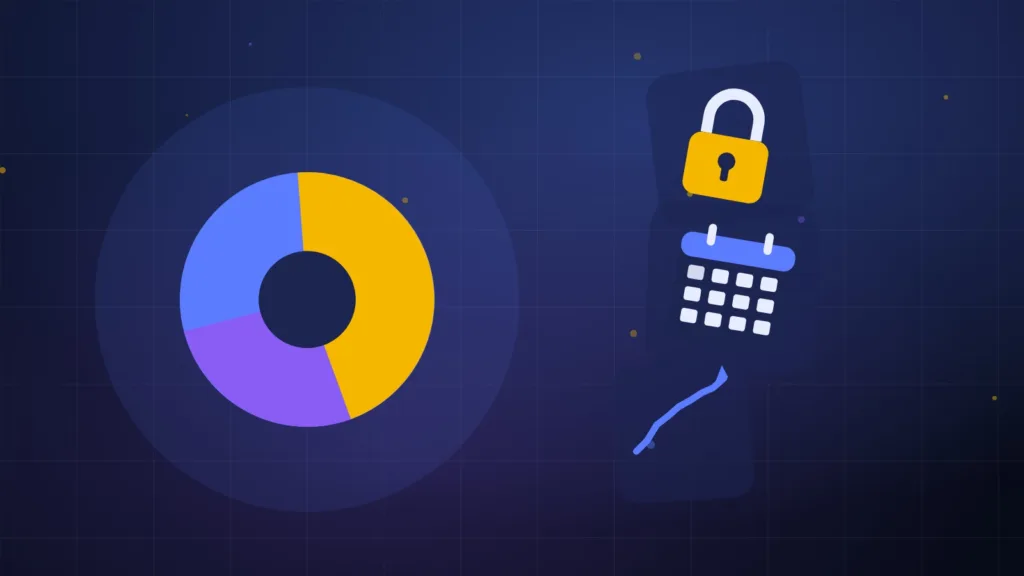
The unlock chart in the Foundation’s TGE announcement adds more. Its caption describes cumulative unlocked CT across the 12 quarters from TGE, “with a 1-year cliff at Q4”. On the chart, team and investor tokens only start to release at the fourth quarter, while part of the ecosystem and Foundation allocations is unlocked from day one; the Foundation has not published exact amounts. The full supply is shown as unlocked by the twelfth quarter, around three years after launch. No table of quarterly amounts or exact token unlock dates has been published, so the first team and investor release, if the chart is followed, should come around the end of September 2027.
Where CT trades
- Binance Alpha was the first venue to feature CT, with trading from 08:00 UTC on 30 September and a first-come Alpha Points airdrop, according to Binance Wallet.
- Kraken opened CT funding and trading on 30 September and said its app and Instant Buy would follow, with geographic restrictions possible.
- The Foundation also links to OKX, Coinbase, Bitget, Gate, Bitvavo (CT-EUR), KuCoin and MEXC.
Pairs, fees and access are set by each platform and depend on where you live. The white paper names a wider group of platforms where admission to trading was sought, including Bybit, Bitstamp, Bitpanda, Crypto.com, Gemini and Revolut, but the Foundation’s site does not list those as live CT markets. Only trust the venue links on concretefoundation.xyz.
How to claim the CT airdrop
Only wallets on the CT eligibility list can claim. You must be 18 or older, eligibility cannot be transferred, and claiming is free apart from network gas. The claim runs on concretefoundation.xyz and uses Merkl, a third-party service, to work out your allocation and send the transaction.
- Type concretefoundation.xyz yourself. Do not follow links from replies, DMs or ads.
- Connect the wallet that is on the eligibility list.
- Read the Claim Terms and tick the box to accept them.
- Check the claim period and deadline shown in the interface, then claim and confirm the transaction.
- Check on Etherscan or BscScan that the CT you received comes from the official contract.
The claim only counts once the onchain transaction is confirmed. The issuer may extend the period or offer another claim route, but nothing obliges it to, which is why waiting is a poor bet.
How to stake CT and what you get
The Foundation homepage now points to a Stake CT vault on app.concrete.xyz. It runs on Ethereum. You deposit CT and receive sCT, a token that represents your stake. The vault page lists Concrete points as its reward, with no conversion rate given, and a 14-day withdrawal queue, so staked CT cannot be pulled out instantly. Points are not a promise of a future token, and we do not treat them as an airdrop.
Staking moves your CT into a smart contract. The vault page lists Halborn and Cantina audits, a Fordefi wallet setup that needs approved signers, and ZeroShadow as the vault pauser, which can halt the vault if it detects a security threat. Audits reduce risk; they do not remove it. Only stake tokens you will not need at short notice.
Check the official CT contract address
The official contract is 0x0A092E544DA31150b439a1aAA1A3a2214a867F46 on both Ethereum and BNB Smart Chain, as published by the Concrete Foundation. Compare every character before you buy on a decentralized exchange, add the token to a wallet or approve a contract. Scam tokens often copy the name and ticker and change only a few characters of the address.
MiCA white paper: what EU readers should know
Concrete Network notified a MiCAR white paper on 15 April 2026 to support CT’s admission to trading in the EU (see MiCA); the document gives 15 May 2026 as its publication date. Ireland is the home member state, and the host states listed include France and Italy. The paper concerns admission to trading only: there is no offer to the public, no issue price and no subscription period. As MiCA requires, it states that no EU authority has approved it, that CT may lose all its value, and that investor compensation and deposit guarantee schemes do not cover it.
For residents of France and Italy, that means CT can be traded on authorized platforms that accept you. The airdrop claim is a separate matter governed by Concrete’s own restricted jurisdictions list, which names no EU country.
Who is excluded
Concrete excludes the United States and its territories, Canada, Cuba, Iran, North Korea, Syria, Russia, Belarus, South Sudan, and the Crimea, Donetsk and Luhansk regions, plus any place under comprehensive US, UN, EU or UK sanctions. It uses IP geoblocking, and the Claim Terms forbid VPNs, proxies or false location data to get around it. The list may change at any time.
Risk score: 3 out of 5
We rate this launch 3 out of 5. On the safer side: the supply is fixed and fully minted, the allocation is public, the protocol has several audits, and a MiCA white paper sets out the risks in writing. On the riskier side: CT gives no claim on revenue, so its market value rests on demand for governance and fee benefits; governance is still controlled by a multisig; the team and investor release schedule is shown only as a chart; and the token depends on cross-chain infrastructure. A new token in its first weeks of trading can also move sharply and thin order books can mean high slippage.
Scams to avoid
Concrete warns about unofficial tokens, websites, claim pages and accounts that claim to represent it. The usual traps are fake “CT claim” pages, copied staking dashboards and lookalike contracts. The real claim is free apart from gas and never needs your seed phrase. Never share it with anyone, check every approval request, and read our guide on avoiding crypto scams.
What is still unknown
- The claim deadline, which appears only once a wallet is connected.
- Exact quarterly amounts and dates for team and investor unlocks.
- How Concrete points will be used, and whether they will ever convert into anything.
- When on-chain governance replaces the multisig.
- Whether more exchanges will add CT.
This page does not give investment advice. Check the official sources below before acting.
Crypto-assets are volatile and you can lose all the money you invest. Nothing published on Coindaro is investment advice.
Related

Launch
infiniFi (INFI) listed on KuCoin: what is confirmed, and what is not
Ended
infiniFi crypto token INFI trades on KuCoin since 17 November 2026. What KuCoin and Etherscan confirm, how the…
Launch
Slop Cash token auction on Umia ends at the cap: 45M SLOP sold at $0.02196, 988,021 USDG raised
Ended
Slop Cash token auction on Umia closed at 16:31 UTC on 10 Nov: 45M SLOP sold at the…

Launch
1win token sale drew US$61 million, 15.64 times its target
Ended
1win token sale: US$61.02M pool, 15.64 times the target. Claim from 31 Oct, 16:00 UTC; by our arithmetic…

Launch
AlloX (ALLOX) token sale on Sonar: three prices, 1.4 times its target
Ended
AlloX token sale on Sonar: prices from $0.039, $1.43M committed against a $1M target, KYC, unclear EU eligibility;…

Launch
Aerodrome and Velodrome merger into Aero: exchanges done, wallet upgrade still open
Ended
Aerodrome Velodrome merger: Coinbase finished converting AERO and VELO on 4 Nov, Binance transfers stay shut, and wallets…

Launch
Jumper JUMP token sale on Legion: results and next steps
Ended
Jumper JUMP sale on Legion: $48.6M deposited for a $3M cap. Refund window, unlocks, claim after TGE, excluded…